0
0

Revenue growth and social imperatives
THE Rs690 billion tax revenue target set for the last financial year is stated to have been exceeded by Rs10.3 billion, indicating a long-term trend in revenue growth. Helped by a fast growing economy and tax reforms, the collection by CBR has risen by 81 per cent over the past half decade. In the past financial year, direct taxes increased by 18.4 per cent, slower than the overall tax revenue growth of 18.6 per cent, with the sales tax on domestic production and sales rising by 29.4 per cent. Despite record imports of $27-$28 billion, the customs duty increased by a mere 16.9 per cent. Notwithstanding the much improved CBR performance over the years, the tax-GDP ratio at 10.4 per cent was much lower than the average 17 per cent for developing countries — definitely not enough to meet the government’s spiralling expenditures. The lower tax-GDP ratio can be attributed to a lack of fair distribution of taxes among various sectors of the economy. Services sector and agriculture, which together account for three-quarters of the GDP, are grossly undertaxed and tax evasion is still quite widespread. Agriculture, dominated by big landlords with a share of 22.5 per cent in the GDP, contributes a mere 1.2 per cent of the total taxes. The lion’s share of 62.2 per cent comes from the manufacturing sector with 17.9 per cent of the GDP component.
With the budget deficit mounting to 4.2 per cent of the GDP, the issue of broadening the tax base has acquired urgency. For the first time since 1996-97, primary budget deficit has resurfaced. The tax potential of an economy growing at seven per cent per annum has not been realised. A proper tax culture cannot be created without developing an equitable tax system, which is not the case at present. When the policy is to focus on taxing incomes and consumption, the imbalance between indirect taxes at 69.4 per cent and direct taxes at 30.6 per cent of the total tax revenue needs to be gradually removed. More so, as some levies like the withholding tax, capital value tax and taxes on bank service charges, though included in the category of direct taxes, are in reality indirect taxes. This situation can be reversed by reducing an abnormally high sales tax rate by half since it has increased at a tremendous pace — from 17.6 per cent in 1900-91 to 62.5 per cent of indirect taxes last year. The burden on the consumer needs to be reduced substantially.
Apart from fair distribution of the tax burden among various segments of the economy, it is equally important that every rupee collected as tax revenue is well spent and that much of it is not eaten away by the government’s non-development expenditure or wasted by a poor delivery system in case of development spending. The first claim on government revenues is that of the poor and weaker sections of society. The tax money needs to be spent in improving the quality of life of the people step by step by increasing health and educational facilities and by providing them gainful employment. Focus on an efficient and cost-effective physical and social infrastructure is also vital to sustain the growth momentum.
Rough justice in Waziristan
THE public execution near Miramshah of a man accused of murdering two other villagers is further proof of the rapid Talibanisation of the NWFP’s tribal areas, where the writ of the state is now conspicuous only by its absence. What is particularly chilling about Friday’s incident, which took place in a village not far from the political headquarters of North Waziristan agency, is the calm and collected manner in which local militants dispensed their brand of ‘Shariah justice’. This was not an assassination in the sense that no one was waylaid, gunned down in anger or strung up on poles to serve as an example to others, which is what militants did earlier in North and South Waziristan. A complaint was lodged with the area ‘authorities’ — the Pakistani Taliban. A man was ‘arrested’, ‘tried’ and subsequently ‘sentenced’ to death by militants acting as judge and jury. The role of executioner was played by relatives of the two murdered men. No one raised his voice against this form of summary justice. Indeed, the proceedings were watched by an appreciative and religiously charged crowd of over a hundred villagers, including children. What was at work, apparently, was an ‘institution’, enjoying the support of local influentials.
The emergence of a parallel judiciary is not a phenomenon unique to the NWFP’s tribal areas. In many parts of the country, village councils routinely pass judgement on matters ranging from livestock theft to murder. Depending on the crime, those found guilty may be sentenced to various forms of punishment including death, as in the North Waziristan case. But the parallels end there. In most parts of Pakistan, the state can and often does enforce its writ, nullifying illegal judgements and arresting those who hand them down. In North and South Waziristan, however, what is being witnessed is the creation of a state within a state. Bigoted clerics and their armed enforcers are calling the shots and rewriting the law of the land according to their own notions and beliefs. This cannot be allowed to go on. Regardless of political and military exigencies, the dispensation of justice must remain the sole responsibility of the state.
For environment’s sake
THAT the Chief Justice of Pakistan has taken suo motu notice of the Punjab government’s plan to fell thousands of trees along the Lahore canal to widen the road — which citizens’ groups, citing environmental concerns have opposed — is welcome. In the absence of environmental tribunals provided for under the law, high courts and the apex court are the only forums to which citizens can turn for safeguarding the country’s fragile environment. Tree cover and the forests have been depleting at an alarming speed, owing mainly to vested interests of the timber trade and the so-called building mafia. The elitist New Murree project in the Himalayan foothills is another example of such callous practices being pursued by a government interested only in making money by auctioning off public and forest land to private developers. Pakistan’s forest cover is already down to less than five per cent; the standard forest cover any country should have for sustainable socio-economic growth is 25 per cent. The environmental challenge faced by our growing cities is no less daunting.
Concerned citizens forming the Lahore Bachao Tehreek (save Lahore movement) include architects, urban planners, environmentalists and lawyers who insist that alternative means are available to pursue development goals without causing irreversible damage to the environment. The group has asked the Supreme Court to consider it as a party to the controversial Lahore canal road development scheme. Ironically, no rival citizens’ body exists which may have supported the widening of the road in question, but the government seems bent on executing the unpopular plan for reasons best known to itself. There is a need to form a wider body of concerned citizens on a countrywide basis to force the government to activate and implement the existing environmental mechanisms to prevent lopsided development policies from being pursued.
Future of relations with Iran
PAKISTAN’s relations with Iran enjoy a unique strategic significance which is too obvious to need elaboration. It is, therefore, with a degree of surprise and dismay that occasionally one comes across statements by some of our leaders which reflect a short-sighted view of both the history and the future potential of Pakistan-Iran relations. The situation calls for a few remarks to highlight the importance of the relations between the two countries.
That Iran was the first country to recognise Pakistan after its independence was not surprising considering the strong historical, cultural and religious links that existed between the peoples of the two neighbouring Muslim countries. It was with good reason that S.M. Burke in his well-known book on Pakistan’s foreign policy observed that Iran was “the mother of Pakistani culture”.
In view of the security threat posed by India, Pakistan’s friendship with Iran from the very beginning enjoyed special strategic significance which was fully appreciated in the past by our foreign policy and security establishment. There was close cooperation between the armed forces of the two countries, helped in no small measure by the fact that both of them were in the western camp during the Cold War until the Islamic revolution in Iran radically changed the strategic scenario in 1979.
The Regional Cooperation for Development (RCD), which was launched in 1964 to promote cooperation among Iran, Pakistan and Turkey, achieved limited success as the leaders and the senior officials of the three countries, while being aware of the need to strengthen economic and commercial ties in tandem with military cooperation, lacked the expertise to develop sound strategies for encouraging regional cooperation.
Iran during this period solidly stood beside Pakistan in its times of crisis specially during the 1965 Pakistan-India war. An Iranian government statement referred to the Indian attack on Pakistan in September 1966 as “aggression” and declared that the people of Iran “shall not fail to extend every possible assistance to their Pakistani brothers and sisters”. Iran supplied jet fuel and gasoline to Pakistan besides using other “national possibilities” to aid the country.
The Islamic revolution in Iran brought about a fundamental change in Iran’s internal and external policies which had a deep impact on Pakistan-Iran relations. The strategic alliance between Iran and the US was replaced by hostility between the two countries. Pakistan, on the other hand, remained in the western camp, a position which was strengthened by the close cooperation between Pakistan and the US in supporting the struggle of the Afghan people to liberate their homeland from Soviet military occupation.
The strategic divergence between Pakistan and Iran in the post-1979 era combined with the sectarian factor created irritants in Pakistan-Iran relations which remained within manageable limits in the 1980s. However, following the Soviet military withdrawal in 1989 and particularly after the fall of the Najibullah regime in 1992, Pakistan-Iran relations were severely strained primarily because of the growing sectarian tensions and the clash of their Afghanistan policies in which Iran was supporting the Northern Alliance while Pakistan was squarely on the side of the Taliban.
The clash of the Afghanistan policies of Pakistan and Iran, which caused deep mistrust between the two countries and inflicted incalculable damage on their relationship, was the consequence of the blind pursuit of short-sighted policies by both. Instead of following policies of mutual understanding and mutual accommodation in Afghanistan as befitted two brotherly countries whose long-term national interests were closely linked with each other, both Iran and Pakistan pursued mutually exclusive policies at the expense of their friendship.
Pakistan’s support to the Taliban not only damaged Pakistan-Iran relations but also isolated Pakistan at regional and international levels as besides Pakistan, the UAE and Saudi Arabia, no other government recognised the Taliban regime. In addition, this policy encouraged extremism in Pakistan and brutalised our society by promoting the Kalashnikov culture, the consequences of which we are still trying to deal with. Looked at from any angle, internal or external, this policy was untenable in the long run. However, our security and foreign policy establishment pursued this ill-conceived policy in a single-minded fashion till the events of 9/11 forced a U-turn on us.
The change in our pro-Taliban policy and the post-9/11 developments in Afghanistan provided another opportunity to Iran and Pakistan to mend their relations by learning from their past mistakes and adopting policies of mutual understanding and mutual accommodation in dealing with Afghanistan and other regional affairs. The period also saw a flurry of high-level visits between the two countries starting with former Iranian President Khatami’s visit to Pakistan in December 2002.
These visits and the declarations from both sides to strengthen Pakistan-Iran relations and make the Economic Cooperation Organisation a dynamic and effective organisation for the promotion of regional economic cooperation led one to believe that the two countries, having drawn the necessary lessons from their past experience and short-sighted policies, were finally poised to provide a fresh impetus to the development of their bilateral relations in full recognition of the fact that their destinies were closely linked with each other. Unfortunately, occasional developments belie this understanding.
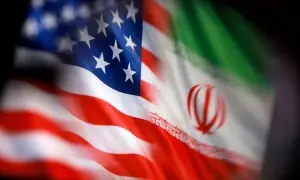
The reported recent statement by President Musharraf in an interview to an Arab television channel that in the event of a US attack on Iran, because of Iran’s nuclear programme Pakistan would remain neutral (assuming that the president has been accurately quoted) is one such disturbing development. This position is indefensible from moral, legal, political and strategic points of view. From the moral and legal points of view, such an attack would be an act of naked aggression. Pakistan, in its selfish interest, cannot afford to take a neutral position on such a development as this would encourage further acts of aggression not only by the US but also by other predatory powers.
Politically, the US attack on Iran would inflame and destabilise the whole region which will inevitably cast its negative repercussions on Pakistan. There is also reason to believe that popular opinion in Pakistan itself will not allow the government to assume a neutral position. Finally, from the strategic point of view, the security and economic well-being of Pakistan and Iran are closely inter-linked. Any US attack on Iran will lead to serious negative repercussions on Pakistan’s security and economic well-being.
It would be, therefore, extremely inadvisable to proclaim neutrality if a neighbouring Muslim country, which stood by Pakistan during most of its moments of crisis, the last being the confrontation with India in 2002, is subjected to aggression, especially when the law is on the side of Iran as far as its nuclear programme is concerned. After all, what is being demanded of Iran by the West (the termination of its uranium enrichment and nuclear reprocessing activities) goes well beyond the provisions of the Nuclear Non-proliferation Treaty and amounts to re-writing the document.
Iran’s obligation under the NPT is no more than to make its nuclear programme fully transparent to the International Atomic Energy Agency to establish its peaceful character. If there is sincerity of purpose on all sides, it should be possible to find a negotiated and diplomatic solution of this issue through appropriate confidence-building measures. Hopefully, the package of proposals offered by the P-5 and Germany to Iran will lead to the reopening of negotiations and a peaceful settlement of the matter.
Under the circumstances and keeping in view our own enlightened long-term national interest, we should state categorically that Pakistan is firmly opposed to the use of military means to resolve the issue of Iran’s nuclear programme and that every possible effort should be made to settle the matter through negotiations in accordance with the provisions of the NPT and the IAEA safeguards agreement.
A proclamation of neutrality in the event of a US attack on Iran sends the wrong signal to all parties. It would encourage the US in its imperialist designs which may hurt us in the long run. It would cause serious disappointment in Iran, which looks up to Pakistan for moral and political support at this difficult juncture, and it would produce negative repercussions on Pakistan-Iran relations.
In a nutshell, the destinies of Pakistan and Iran are closely linked with each other because of strategic, security, political, economic and cultural factors. Neither Iran nor Pakistan can remain immune from negative developments for the security and economic well-being of the other. As the Iran-Iraq war and the recent developments should have brought home to the Iranian leadership, Iran needs Pakistan’s friendship as much as Pakistan needs Iran’s friendship.
The efforts and energies of the leaders of Pakistan and Iran should accordingly be geared towards strengthening this friendship and developing all round mutual cooperation guided by the principle of non-interference in each other’s internal affairs.
It is true that Pakistan must also maintain close ties with the US for obvious reasons. However, this friendship should not be at the expense of Pakistan’s friendship with Iran.
E-mail: javid_husain@yahoo.com