Options in Fata
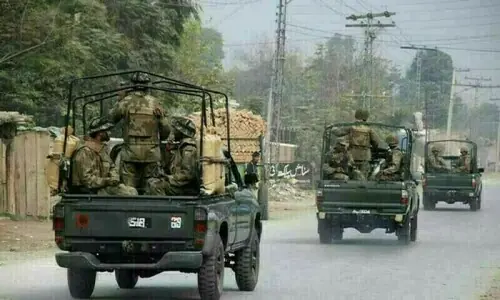
Pakistan’s tribal areas have been hitting world headlines now for several years because of the security operations against Al Qaeda. However, the Federally Administered Tribal Areas constitute a challenge independent of all that has been going on there since 9/11. To begin with, Fata is a great anomaly. Nearly 60 years have passed since independence, but Fata still enjoys the same status as it did during the British days. Pakistan’s laws do not operate in Fata, where the people are governed by centuries’ old customs and traditions. Tribesmen owe loyalty to the maliks, and the federal government basically deals with them through political agents. During the British days, ground rules concerning the relationship between the maliks and state authorities were strictly followed. This relationship stipulated that the tribesmen would not carry arms outside the tribal belt, and that once in the “settled” districts they would obey the law. While the arrangement suited the colonial rulers, who found the deal with the maliks convenient for their imperial purposes, the continuation of this unusual practice after independence has by any standards been an anomaly. Among other things, the supremacy of the maliks in the areas has inhibited economic development and worked against the growth of a middle class, which could fight for its rights and equality with other citizens. Fata has, thus, remained outside the national mainstream.
The great turn for the worse came in the wake of the Soviet invasion of Afghanistan in 1979, when Fata became the centre of operations of mujahideen fighting the Soviet army. This provided a military base not only for home-grown mujahideen funded and armed by the CIA, but also for a host of foreign volunteers who formed the so-called Islamic brigade engaged in the US-led ‘jihad’ against the USSR. The Soviets withdrew more than a decade and a half ago, but foreign volunteers are still there in Fata and serving as Al Qaeda’s activists. No economic development is possible as long as the present insurgency continues.
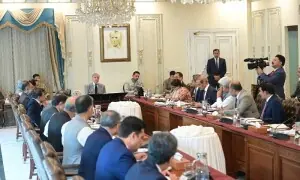
Against this background, President Pervez Musharraf’s declaration that the government wants to set up “economic zones” in Fata at a cost of Rs 10 billion deserves to be welcomed. The mere mention of “zones” means that all Fata areas — South Waziristan included — are not yet ready for a major thrust towards socio-economic progress. As in Balochistan, so also in Fata, tribal elders insist on calling the shots and fear any development schemes that could undermine their authority. That is one reason why the main source of economic activity in Fata is border trade. Such factories as had been built earlier disappeared during the anti-Soviet war, which was followed by the Afghan civil war. The economic situation worsened when millions of Afghan refugees poured into the region, thus straining the already meagre social services. The law and order situation has been precarious since the American attack on Afghanistan, for Al Qaeda’s foreign activists and its local supporters and the neo-Taliban consider it their duty to resort to acts of terrorism in Fata and beyond. A long-term scheme for Fata should involve both economic development and a greater effort on the political side. Those aiding terrorism must be made to pay for their crime against the state, while the political agents need to be given more powers to deal with the proposed reforms, economic development and pacification by political means. Only sustained economic and solid development can break tribalism in both Balochistan and Fata.
Unchanged defence spending
IT IS a positive trend that various committees of the National Assembly have been discussing the government’s financial record every year on the eve of the annual budget. This allows the people’s representatives to debate many of the policy matters which relate to the government’s spending. On Tuesday the Public Accounts Committee was informed that retired officers and employees of the armed forces have been paid Rs 35.6 billion in pension so far in the current financial year. The committee was also informed that this amount was shown in the civilian budget. This raises many questions. Since 2000-01 when the military personnel’s pensions were shifted to the civilian side of the budget, the big chunk that has been removed from the defence spending has not been reflected in our defence budget which has continued to rise over the years in spite of assurances that cuts would be made in it as a peace dividend. The second aspect that needs to be pointed out is the large size of the military pensions. The amount earmarked for this head has grown from Rs 28 billion in 2000-01 to Rs 43 billion this year. Given the fact that armed forces personnel retire at a relatively young age, they receive a pension for a longer period. This partly accounts for the big pension budget. But there may be other factors too that could reflect a shift in the pattern of defence administration. If the number of personnel being recruited is going up because the defence forces are growing in size — according to one source, their size has risen from 400,000 in 1977 to 700,000 today — the pension budget will also increase. Moreover, a top heavy force — with more promotions taking place to the higher echelons — would mean an increase in salaries and that would mean higher pensions. This is something the defence planners should look into. It also needs to be asked: should retired officers from the armed forces who are so liberally absorbed in the civil administration, be entitled to pensions while they are drawing salaries from the exchequer? One hopes that the defence forces have not followed the unhealthy pattern set by the civilian administration that has expanded indiscriminately leading to overlapping and duplication of functions contributing to inefficiency and ineptitude.
Does it have to be this bad?
THE death, from the heat wave, of 31 people in the plains of Punjab in recent days is a reminder of the fury of nature in action yet again. There will be many more vulnerable sections of society, the poor, the old and infirm, the children, about whom it can be said that they are dying a slow death caused by frequent and prolonged power breakdowns and scarcity of drinking water in sweltering conditions. In the Punjab capital itself, neighbourhood after neighbourhood continues to suffer long hours of power failure and water supply closures for weeks now. All this, in 40-plus degree temperatures. The situation in Rawalpindi, Multan, Faisalabad and other big and small cities and towns across the province is even worse. Does it have to be this bad? A long, harsh summer is a fact of life in this part of the country, and not an unforeseen calamity. But why is it that Wapda draws no lessons from its shabby performance, summer after summer, turning the heat wave into a killer wave for many who can barely afford to sit under the fan and drink water as their basic survival kit? The vicious circle of power outages and Wasa water pumps shutting down have the affected citizens clamouring for relief, day and night.
May is just the beginning of the long summer, and the situation is seemingly out of hand already. This calls for immediate remedial action on the part of Wapda and its distribution companies. Hectic efforts should be made to control line losses, admittedly running upwards of 20 per cent. Also, in known vulnerable localities additional transformers should be installed to stagger the load on the existing ones. This is the least the utility serving the greater Lahore area can do to relieve distress and restore a sense of relief.
Fears of a drought
Pakistan faces a treat of a drought hitting hard the kharif crops, cotton and rice in particular, warns the meteorological department. There is little expectation of a significant rainfall in the next two months. And the water level at Tarbela and Mangla reservoirs has already dropped to critical levels, says its report.
The drought which is feared to hit Sindh and Balochistan first will have an adverse impact on the cotton crop which had a record output of nearly 50 million bales last year. The prospect of meeting the rice target, which had a record export of over a billion dollar this year, are also dim.
It will also affect livestock, horticulture and ultimately drinking water almost everywhere. Obviously the lasting remedy for such a recurring crisis is the building of large reservoirs and using the water more economically. But building such mega dams as the Kalabagh and Basha has been a political issue, apart from raising large funds for such reservoirs with the promise of perennial water supply and hydel power, the cheapest source of power.
The issue has arisen again and there is a large trust deficit in respect of these mega dams. The fear is that these dams may not fulfil the promise to the small provinces and may instead lose their share of the additional water. Whether the feared drought improves the approach to the big dams and reduces the trust deficit remains to be seen.
Of course there is the funding issue for the five dams approved. When the country is politically divided on several issues and the small provinces oppose the large reservoirs, the international lenders will be even more reluctant to fund them and may find it difficult to set up consortiums.
Anyway, the World Bank is in the lead to fund them as it finds Pakistan a greatly water-starved country. At a time when the world price of oil has risen to $75 a barrel and may touch $100, hydel power remains the cheapest source of power for Pakistan. So we must opt for these reservoirs along with their power production systems.
As for more economic use of water, Prime Minister Shaukat Aziz has announced a Rs 15 billion scheme for five years to promote drip cultivation. That has been mentioned so often before but this time the government may take it more seriously.
Minister for water and power Liaquat Jatoi says the KESC should not opt for loadshedding in summer without notice. The fact is whether it is loadshedding or a partial or total breakdown in the supply system we suffer these frequently in summer when the power is in short supply while the demand shoots up. In Central Asia it is the other way round as they have surplus power in summer which is exportable.
So, heedless of the minister’s orders that loadshedding should not take place in summer, power failure is common. And we are now reviving an earlier effort to get surplus power from Central Asia with the backing of international financial institutions.
A two-day conference of the ministers for energy in Tajikistan, Kyrgyzstan, Afghanistan and Pakistan was held this week in Islamabad to discuss the possibility of import of the surplus power of Tajikistan into Pakistan via Afghanistan. An agreement has been reached with Tajikistan for import of 1,000 kilo watts of energy through a power line, mounted on poles into Pakistan ten years ago, but the agreement could not materialise because of the fighting in Afghanistan.
Now Kyrgyzstan has also joined the group with two interested oil companies and a less troubled Afghanistan. How the deal backed by the World Bank, Asian Development Bank and International Finance Corporation and some power companies eventually works out remains to be seen. The safety of the power lines also matters.
The next public sector development programme will be worth Rs 245 billion, the current year’s plan being Rs. 272 billion, to keep up the high rate of economic growth and provide education infrastructure for industry and agricultural growth. But allocated 17 per cent more funds are not enough if the additional power and water needed are not available. Power should hence have the top most priority.
The problem with Pakistan is its large population — 165 million of them. Too many people have too little to share and too many privileged claimants among them. Apart from a small number it is not a highly educated population with great skills. That reduces their mobility and makes them confined to their roots as in Balochistan and Frontier province. But not much time Pakistan can afford to waste in a highly competitive world. Even South Asia is awake making rapid progress while Pakistan is grappling with some of the age-old issues. If jobs are available in large numbers, there could be greater mobility and people move to other regions.
Failure to build one of the large dams can cost the country four billion dollars per year, says Dr Salman Shah, Advisor to the Prime Minister. And if the approved five dams were built by 2015 they can add ten to fifteen billion dollars to the GDP of the country. He says that with a $120 billion economy a new mega dam contributes 2.5 per cent to its GDP every year.
Meanwhile, power is being made more costly as the Nepra has approved a 15 per cent rise in power rates for KESC. Earlier, a 23 per cent rise was recommended by Nepra but was ignored by the Government.
The debate continues whether poverty is increasing or decreasing in the country. According to the government officials, led by the prime minister, poverty is decreasing and prosperity is increasing. For others, including President Musharraf, inflation, unemployment and poverty are the problems that badly affect people and need greater attention from the government.
Meanwhile, a study reported by the BBC about Pakistan as being among the tenth vulnerable states is vigorously challenged by the government statistically. The tenth state is Afghanistan and Pakistan comes ninth.
According to another report of the United Nations Children Emergency Fund nearly half the children of South Asia under the age of five are under weight and despite some progress, the region is far from reaching the goal of halving hunger by 2015. They say that South Asia is behind the target. But in case of Pakistan, officials say, that goal has already been achieved and poverty already halved.
In a recent seminar in Islamabad, an expert on poverty suggested that 2.1 million acres of surplus land available with the government should be distributed amongst the poor. Now that leaders like Zafarullah Jamali are opposed to new land reforms and distribution of lands to the landless, distributing the surplus land of the government maybe one way of reducing poverty and increasing the agricultural output.
But according to other estimates far more surplus lands are available with the government and they can be productively distributed among the landless and cultivated. But the government is currently busy distributing more lands to Defence housing authorities in Islamabad and Lahore to expand posh housing as a priority for the affluent.
Now that the planning commission has been expanded and revitalized with a 20-member board it can review the problems of poverty in its entirety and come up with appropriate solutions. The approach to poverty should be non-contentious and the results indisputable more so when the UN is likely to look into it. The planning commission along with the commission for reforming bureaucracy should be able to recommend a better administration set-up.
It was said at the seminar on poverty in Islamabad that poor governance hurt the poor more. That is true indeed, whether that be in the shape of corrupt and inefficient policeman and a feeble or corrupt low judiciary. In addition what is promised to the poor in the shape of more and better schools and hospitals is hardly ever delivered to them and the poor man’s protest in this regard evokes little response unless he takes to violence.
In such circumstances they are promised reforms of the system but real reforms in practice hardly ever come through, more so in the regions dominated by feudal lords and tribal chiefs.
sssssssWiretapping oversight
AT least some spines in Congress are stiffening when it comes to challenging President Bush’s assertion that the National Security Agency can eavesdrop on Americans without a court order. But it will take a stronger show of resolution to call the administration to account.
In a recent meeting with this newspaper’s editorial board, House Minority Leader Nancy Pelosi — who raised concerns about NSA spying with the Bush administration four years before it was publicized — said she is still uncomfortable with limited congressional access to details about the programme. Her colleague, Rep. Jane Harman, the ranking Democrat on the House Intelligence Committee, voted against the 2007 Intelligence Authorisation Bill to protest the administration’s sweeping rationale for the programme and the refusal of the Rules Committee to specify that all surveillance of Americans on US soil must follow the law.
Finally, Sen. Arlen Specter, chairman of the Senate Judiciary Committee, has said that he might seek to cut off financing for the NSA surveillance programme unless the administration is more forthcoming about its scope.
“When you talk about withholding funds, there you’re talking about a real authority,” the Pennsylvania Republican said.
Unfortunately, other members of Congress have been much less assertive about the NSA spying programme, whose existence is known only because of a report in December by the New York Times and whose contours are still unclear.
—Los Angeles Times