0
0

 THE sudden spurt in global oil prices continues to bleed state-owned oil marketing companies in India, who are virtually forced to subsidise not just the poor, but even middle-class and affluent Indians.
With oil prices having shot up last week to $72 a barrel, public sector giants like Indian Oil Corporation (IOC) have raised the alarm, and are seeking a corresponding increase in the retail price. According to S. Behuria, chairman, IOC, if retail prices are not raised, his company – the largest oil marketing company, with a 50 per cent share of the market – would sustain a revenue loss of a massive Rs300 billion in the current financial year (ending March 31, 2007).
The three state-owned marketing companies – IOC, Hindustan Petroleum and Bharat Petroleum – had taken a Rs150 billion hit in the previous financial year, thanks to price controls. Though India had dismantled the administered pricing mechanism of oil products a few years ago, governments – both the previous BJP-led regime, and the current Congress-dominated one – have been reluctant to allow autonomy to oil companies, especially while fixing the retail price.
It’s more than six months now that oil companies were allowed to raise the price of their products, and losses counting mounting by the day. Behuria – who has described the situation as ‘critical’ – has sought a Rs7.6 per litre hike in diesel prices, and a Rs5.6 per litre increase in petrol prices, to ensure parity in import costs.
According to him, IOC loses about Rs800 million daily because of the difference in the retail price and the cost of imports. IOC, and the other two public sector oil firms, also sustains losses in selling kerosene (Rs13 a litre) and domestic cooking gas (Rs191 a cylinder).
But politicians in India are loath to allow sensible pricing of oil products, and governments are fearful of jacking up their prices, especially of kerosene and cooking gas, both products that are beyond the reach of the very poor. The oil companies thus, indirectly subsidise organised racketeers, who buy kerosene in large quantities and mix it with diesel, making hefty profits.
Though top executives of oil companies are pleading with the government for a price hike, they are unlikely to get the clearance, at least not until the ongoing elections in states like West Bengal, Kerala and Tamil Nadu are over.
Petroleum Minister Murli Deora wants Finance Minister P. Chidambaram to slash taxes on fuel, so that the government could avoid going in for a sharp escalation in prices. A high-power panel, the Rangarajan committee, had suggested a combination of measures – instead of just a price hike – to tackle the growing crisis faced by oil companies. But Chidambaram is reluctant to reduce taxes further.
INCREASING the price of fuel should not be a difficult task for the government, as inflation is still under control. Inflation – as a measure of wholesale prices – is under 3.5 per cent, and the Reserve Bank of India (RBI), the country’s central bank, last week estimated inflation of 5.0 to 5.5 per cent for the current fiscal.
In fact, RBI Governor Y.V. Reddy, unveiling the slack season credit policy, refused to raise interest rates, and maintained that inflation would remain under control.
Reddy said that India could not entirely ignore the international trend of rising interest rate, and admitted “there has to be a fuller pass-through of increases in international crude prices.”
Though the bank has factored in the global oil price rise, the second-round effect of oil price increase is still to pass through, said Reddy. The RBI would continue monitoring the situation in the future, and come out with an appropriate policy response, including if need be, a hike in interest rates.
Reddy has vehemently denied that the RBI’s monetary policies were influenced by political considerations. The markets were expecting a rate hike this time, and the RBI took many by surprise by not increasing interest rates.
The central bank last raised short-term lending rates (by 0.25 per cent) in January, which was the fourth rate hike in 15 months. Commercial banks then raised their retail loan rates. The RBI had then cited a spurt in gold and property prices; since then shares, property and gold prices have continued to climb, leading to speculations of a rise in rates.
Last week, Reddy did not tinker with the benchmark bank rate (the short-term interest rate continues to remain at 5.5 per cent). Similarly, the cash reserve ratio (CRR), and the repo and reverse repo rates were also left unchanged. But the governor raised interest rates on rupee deposits by Non Resident Indians.
According to bankers, interest rates on retail loans, mortgages above Rs2 million, and advances against shares are likely to rise following the bank’s decision to increase provisioning of advances on such credits.
The RBI also went in for a more conservative GDP (gross domestic product) growth estimate, placing it in the 7.5 – 8.0 per cent range for the current fiscal. The Indian economy grew by a brisk 8.1 per cent in the financial year ending March 31.
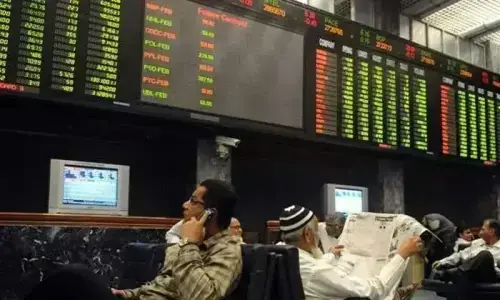
WHILE India’s secondary markets have been buoyant, with bulls dominating the stock exchanges, the primary market too has been witnessing frenzied activity. During fiscal 2005-06 (which got over on March 31), Indian corporates mobilised a record Rs236.84 billion, 11 per cent more in the previous year.
According to Prithvi Haldea, managing director, Prime Database, which tracks the primary market, the amount mobilised was the highest in Indian history. And this happened despite there being virtually no divestment by the government in state-owned firms.
During 2005-06, follow-on public offerings (FPOs) dominated the new issues business, accounting for 55 per cent of total mobilisation. FPOs relate to listed companies coming out with fresh issues, or sale of existing shares. Leading banks, including ICICI, Bank of Baroda and Oriental Bank of Commerce, dominated the FPOs last year.
About 75 companies raised Rs108 billion through initial public offerings (IPOs) The primary markets are expected to be even more active this year, with Indian companies expected to raise at least a third more than the previous fiscal.
One of the biggest issues of the new financial year got an overwhelming response from investors last week. Reliance Petroleum (RPL), part of the Mukesh Ambani-controlled Reliance Industries Ltd (RIL), saw its IPO being oversubscribed by over 30 times.
RPL raised about Rs800 billion, with qualified institutional buyers oversubscribing their quota by 38 times, high net worth individuals by 12 times and retail investors by about seven times. The company had fixed a price band of Rs57 to Rs62 for the IPO of 1.35 billion shares.
The flagship of the group, RIL, subscribed to about 900 million shares, while Chevron Corporation, the second largest US oil company, injected $300 million into the IPO, by buying a five per cent stake at a cost of Rs60 per share.
This is the first major investment by an American oil firm in India in over 30 years. Chevron has the right to acquire an additional 24 per cent of the equity in RPL.
Mukesh Ambani, chairman of the group, pointed out that Chevron’s investment in RPL was the first significant step taken by an American company in participating in the growth story of India, as an emerging refinery destination in the world.
The IPO will fund the 27-million ton refinery that RPL is putting up in Jamnagar in Gujarat. RIL already operates a 33-million ton refinery in Jamnagar.
The new RPL refinery is coming up in the special economic zone, and will sell petrol to the US market and diesel to Europe. When completed, the Jamnagar units – with total capacity of 60 million tons – would be the largest refineries complex in the world.
The Reliance empire split last year, when Mukesh and younger brother Anil (now in-charge of the telecommunications and power units) went in for a clear division. The elder Ambani is now focussed on petrochemicals and oil.