0
0

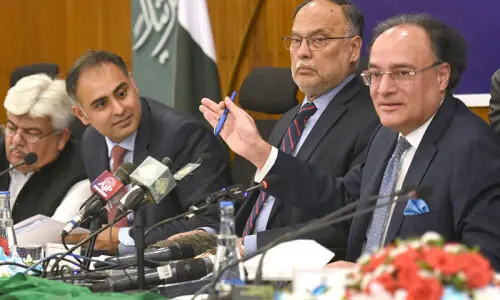
ISLAMABAD, April 21: Pakistan and India will hold back-to-back expert-level talks on nuclear and conventional confidence building measures in Islamabad next week amid guarded optimism that a draft agreement on ‘Reducing Risk of Nuclear Accidents’ would be firmed up.
The two-day nuclear talks aimed at reducing the risk of accidental war and promoting strategic stability begin on Tuesday and will be followed by a meeting on conventional CBMs.
This will be the fourth round of talks on the nuclear issue between the two nuclear-armed neighbours since the resumption of the composite dialogue framework in 2004, and the third on conventional CBMs. The first round of nuclear talks was in New Delhi in June 2004 and the last round was also held there in August 2005 which was followed by talks on conventional CBMs.
The talks acquire special significance as they follow the signing of the controversial Indo-US nuclear deal that has raised concerns in Pakistan about its grave implications for the regional strategic stability. It is believed that the nuclear deal that adds a new dimension to the India-Pakistan nuclear talks is bound to somewhat change the flavour of this crucial dialogue.
An eight-member Indian delegation headed by Mr K. C. Singh, Additional Secretary International Organizations at the Ministry of External Affairs (MEA) will arrive here for the nuclear talks on Monday. Mr Dilip Sinha, additional secretary (Pakistan) at the MEA will be leading another five-member delegation for the talks on conventional CBMs.
The Pakistan delegation will be led at both the nuclear and conventional talks by Mr Tariq Osman Hyder, Additional Secretary UN at the Ministry of Foreign Affairs. Other senior ministry officials in the delegation will be director-general South Asia Division Syed Ibne Abbas, director-general UN Ms Tasnim Aslam and director Disarmament Division. Mr Khalid Banuri, Director Arms Control & Disarmament Affairs at the Strategic Plans Division and representatives of the GHQ and defence ministry will also be present at the talks.
On top of the agenda of nuclear talks will be firming up an agreement on ‘Reducing Risk of Nuclear Accidents or Unauthorized Use of Nuclear Weapons’, it is learnt. Pakistan would be giving its inputs on the draft presented by the Indian side at the last round of talks in August 2005. The two sides will also discuss Pakistan’s proposal of an agreement on prevention of incidents at sea in order to ensure safety of navigation by naval vessels and aircraft belonging to the two sides.
Indications from both sides are that some progress towards finalizing these two proposed agreements is expected.
The joint statement issued at the conclusion of the foreign secretaries level talks in January that marked the beginning of the third round of the composite dialogue process also specifically mentioned these proposed agreements. It said the two sides would continue discussions with a view to finalising these two agreements.
“Some headway on evolving nuclear risk reduction mechanism and prevention of incidents at sea is likely,” informed sources told Dawn on Friday.
Pakistan’s proposal on Strategic Restraint Regime (SRR) that has been on the table for sometime and reiterated by Islamabad recently in the context of US call for a South Asian moratorium on nuclear weapons production will also figure in the talks, sources said. The SRR incorporates three interlinked elements of nuclear and missile restraint, conflict resolution and conventional balance. The general framework of the talks would include strategic stability, crisis management, confidence building, officials here maintained.