



 0
0

 WHEN Prime Minister Shaukat Aziz was elected from the district of Tharparkar in 2004, he must have had the south eastern Taluka of Nagarparkar in mind when he promised to convert Thar into a second Paris.
With its exceedingly low rates of crime and high density of historical and archeological treasures, Nagarparkar has all the makings of a great tourist attraction.
Aziz must have recognized this which is why he assured the local people that a glittering five-star hotel would make Thar its home and with it would come jobs and new income-earning opportunities for Tharis.
Of course his promises now seem long forgotten. Government officials never even came to look at the stunning Jain temples or the historic remains of Pari-Nagar let alone plan a tourism economy. Yet the people of the desert say their land could attract outsiders if the government paid even the most scant attention.
The most obvious attraction is the desert itself. If the UAE can convert their desert into a popular western attraction where dune-bashing desert safaris and overnight camps bring tourists from the world over, why can’t the captivating desert of Thar do the same?
At present, this is an impossibility since not a single hotel or inn exists in the entire district, not even in the capital of Mithi. Then, there is the breathtaking granite mountain range of the Karoonjhar Hills in the south eastern tip.
The sight of peacocks in the wild and a trek through the hills could bring hoards of nature-loving vacationers to Thar.
 Furthermore, there are the multiple historic and archeological attractions in the region. The Bhodesar Mosque, located about six kilometers northwest of Nagarparkar town is built entirely in white marble and dates back to 1505. There are also three Jain temples at Bhodesar dating back to 1375 and 1449 and another at Virawah, 24km north of Nagarparkar town.
Yet another one built in Jodhpuri stone stands at Guri, 22km northwest of Virahwah. All these temples constructed with the most intricate carvings lie in acute disrepair. The structures are crumbling, the statues of gods have been ripped out and sold and the insides are littered with garbage and refuse of all kinds.
One of the temples we visited had been dumped with hundreds of packets of naswar. None of them had even a single caretaker to clean up, and it is clear that no funds have ever been used to preserve the historic structures which are sure to be erased altogether in years to come.
Near Virahwah are also the ruins of Pari-Nagar, an ancient town thought to be a major port and centre of trade said to have been destroyed by the troops of the Emperor of Delhi in 1226 or by an earthquake or fire. Piles of charred brick and stone scattered over a large area in a remote corner of the desert is all that remains of the town now where no excavation appears to have ever taken place.
The well of the legendary Marvi is also in Nagarparkar in area once known as Malir.
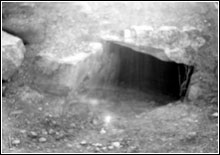
Several forts are being left to ruin in the region too. At the Karoonjhar range, the Chandun Gud fort dating back several hundred years is in serious danger of being wiped out entirely. All that remains of it now is a small window in the ground and a pile of loose bricks. Illegal settlements have begun to spring up around it and are very likely to erase any trace of the fort in the next few years. Another two forts in Mithi dating back to the time of the Talpurs have also been reduced to a pile of brick.
As one local put it: “We have all this. It’s all here. It won’t take much at all to put it to good use. That way we would be preserving our heritage and using it to help the people of this land.” —NM




























