



 0
0

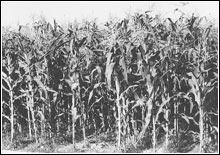 THE increase in per acre sugarcane yield is not sufficient to bridge the production gap because of irrigation water shortage, cultivation of unapproved varieties, high input prices and its unavailability at the required stage, and poor crop management practices.
The cane yield in India is better than Pakistan not because of better varieties and production technology but due to better government policies for sustainable production.
India’s sugarcane scientists have adequate budget and resources for research and development and the crop management is better as inputs are easily available such as fertilizer, more credit facility, subsidized/free electricity for tube well irrigation, and improved marketing system which encourages farmers to grow more sugarcane.
Most of the mills in Pakistan are running at below 60 per cent of their designed capacity thus lifting cane from other mills to meet the requirements. This results in revenue losses to the national exchequer. The factors responsible are i) the unplanned huge sugar-mills set-up; ii) de-zoning of the sugarcane-growing area, and iii) low support price fixed by the provincial governments. These are causing serious problems both for industry and growers due to freight charges in billions. During a weak crop season, the mill management tries to purchase cane from the different places.
The present de-zoning system supports the prevailing cane-shifting war in the country as it encourages the growers to sell their low-quality cane to any mill they like. This results in poor-quality production and consequently low sugar quality.
The mill owners have minimized or even clogged up credit facilities for small growers, closed cane-development activities in their areas which have affected the production. Similarly, low support price also favours to cane-shifting war among the sugar mills.
Such a situation can be avoided in future by restoring the zoning system, improving the flawed cane-disposing system, timely and uniform support price, and by changing the attitude of mill owners towards the growers.
Keeping in view the future demand, sugar mills need to hire agricultural graduates to develop their farms and produce better quality cane. Some mills like the Shakarganj of Jhang, the Jamal Din Wali of Punjab, and the Matiari of Sindh have developed their farms and are producing good quality cane while others are pondering over to follow in their footsteps. This will help improve sugar recovery, consequently making the commodity available at affordable rates.
The Jamal Din Wali Sugar Mills is successfully producing quality cane with the help of scientists/experts from AARI, Faisalabad. Similarly, the Shakarganj Sugar Mills has set up a Sugarcane Research Institute and Research Farm and is in the process of developing sugarcane varieties and production technologies through the coordination of PARC.
There is a great variation in per acre cane yield which ranges from 30 t ha-1 to 200 t ha-1. Many progressive growers are getting the yield of 90-250 t ha-1 which is no less than of Brazil and India. This shows the potentials to raise average sugarcane yield by more than 100 per cent through approved varieties and improved technology. The Coordinated Sugar Crops Research Programme of PARC has developed 23 high-yielding varieties and has released it for commercial cultivation. Another 19 varieties are in the pipeline which will be released soon.
Consequently, cane yield has increased from 38 t ha-1 to 50 t ha-1 since 1982. Sugarcane yield per acre can be further enhanced through the coordinated efforts of PARC and the release of funds by Minfal.
The following suggestions can make sugarcane a more profitable enterprise:
* The mills should develop their own farms by hiring agriculture graduates from the relevant universities.
* Credit facilities in the form of kind and extension services to growers should be provided by mills.
* Multiplication of high-yielding varieties of seeds.
* A competition among growers should be developed thus awarding the best grower.
* Meetings should be planned at planting and harvesting period among the farmers, private companies and experts. The National Coordinated Sugar Crops Research Programme of PARC can play significant role by organizing such activities in collaboration with the mills.
* Farmers should be encouraged to use press mud by supplying them free of cost.
* All sugar mills should establish biological control laboratories at their premises to help farmers in controlling the insect-pests.
* The government should strengthen the existing sugarcane breeding research stations by allocating more budget and resources to bring them at par with the international standards.
* The government should provide the research institutes trained manpower.
* Cultivation of unapproved varieties should be banned.
* Quality payments must be made, immediately.
* The government should fix sugarcane price on the basis of production cost. The support price for new crop should be announced before its planting season starts.
* There should be a zoning system which will avoid cane shifting war among the mills. Cane growers should be paid on time for their produce.
* Attention should be paid on the vertical rather than the horizontal acreage increase.
* Farmer should not cultivate the unapproved, discarded, diseased low yielding varieties.
* They should adopt recommended technology.
* Agricultural extension departments and sugar mills cane departments must educate farmers about the time of harvesting and should plan their crushing schedule, accordingly.
* Farmer should adopt proper measures to control insect pests, diseases and weeds in sugarcane crop.
* They should plant crop in September as it gives better yield than of February.
* Farmer must practice judicious use of resources, particularly irrigation water, balanced use of fertilizers by increasing P and K and organic matter as well.
* Sugarcane growers should supply good-quality cane to mills and the mills must pay the quality-premium price to farmers.




























