0
0

 INDIA’S aviation sector, which has been flying high in recent years thanks to the opening up of the sector by the government, is likely to witness significant churning over the coming months. The government last week cleared a major hurdle that was threatening to block crucial reforms in the sector.
A key, high-level committee of the federal government has cleared the way for acquisitions and mergers in the rapidly growing sector, and the first to benefit from this move is Jet Airways, the country’s largest private airline, which is acquiring rival Air Sahara in a Rs23 billion deal.
The committee has set the ground rules for acquisitions in the industry, allowing 100 per cent transfers of properties (including aircraft), and also parking bays and slots, and flight rights. The absence of these guidelines had stalled the acquisition of Air Sahara by Jet Airways. Civil Aviation Minister Praful Patel, one of the most vocal proponents of liberalization in the industry, is expected to unveil the new rules shortly.
Jet Airways, which has been expanding services rapidly, operating international flights to London and other European cities – besides emerging as the largest domestic airline – announced the acquisition of Air Sahara in January. However, the following weeks saw the deal hitting an air pocket, with many in the industry suspecting it would come unstuck.
The Director-General, Civil Aviation, in the absence of guidelines, was reluctant to clear the deal, especially relating to transfer of infrastructure, and allotting of parking slots and flight rights. Naresh Goyal, the chairman of Jet Airways, noted earlier in the month that the deal made no sense to him, if it did not include Sahara’s parking slots and flight rights.
It was also being suggested that Goyal had over-valued Air Sahara, and was re-negotiating with Subrata Roy, the Sahara group chairman, and offering him Rs10 billion less than the initial offer.
While the Jet Airways scrip took a beating on the stock exchanges, top executives of the two airlines huddled in meetings in Mumbai and Delhi, and last week appeared close to finalising the deal. They also met senior civil aviation ministry officials, seeking an early end to the imbroglio over the transfer of parking bays and flight rights.
Jet has paid an advance of Rs5 billion to Air Sahara, and with the government likely to accept the proposals relating to acquisitions and mergers, it should be smooth sailing for the largest deal in India’s aviation history.
Top executives of Jet Airways have already been deputed to Air Sahara, and they have also assured employees that their jobs would be safe. Jet is likely to retain Air Sahara as a subsidiary, but might consider a merger once the regulatory approvals are through.
India’s booming civil aviation sector has forced many of the new airlines to hire foreign pilots and other technical staff, and some of them have also been poaching on the staff of existing operators. Salaries of pilots and other top executives have doubled recently, as some of the new low-cost airlines are desperately seeking to expand their operations.
Both Jet and Air Sahara have been feeling the heat, with some of the new airlines – including Air Deccan, SpiceJet and Kingfisher – aggressively expanding their market share. Kingfisher, a late entrant, was launched by liquor baron Vijay Mallya, who wants to take on Jet Airways even on international routes. Kingfisher was also keen on acquiring Air Sahara, but Mallya could not match Goyal’s offer and lost out on the deal.
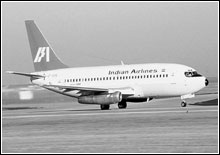
 AN even bigger deal likely to emerge in the civil aviation sector over the next few months is the merger between the two state-owned carriers, Air India and Indian (formerly Indian Airlines). Civil Aviation minister Patel is pushing for the merger, pointing out that it makes sense for the two airlines to combine their resources and to take on competition, both domestic and international.
The federal cabinet is expected to take a final call on the proposal and give the go-ahead by the middle of the year. The $3 billion merged entity would emerge as a mid-size airline, with a fleet strength of around 200 aircraft in a few years time. This is of course half the fleet strength of large international carriers. And unlike in the US, for instance, the merged entity would hardly be able to rationalise its work force and cut down its wage bill, as there would be stiff opposition from the left parties, which control many of the unions in the industry.
The government also has plans to divest part of its equity in the two (or one merged) airlines, and hopes to come out with an initial public offering (IPO). The unions are expected to back the move, as employees might be allotted substantial shares, enabling them to book profits in the booming markets.
Both Air India and Indian have placed huge orders with Boeing and Airbus respectively. Air India is acquiring 68 new aircraft, and Indian 43 new ones. Both airlines are currently competing on several routes, both internationally and even in the domestic sector.
In fact, airlines from India are on a major aircraft acquisition spree. Indian carriers placed firm orders for a record 400 aircraft last year on Airbus, Boeing, and even some of the smaller manufacturers such as ATR, Bombardier and Embraer. Currently, airlines in India have less than 250 aircraft, but this is likely to more than double in less than five years.
India’s domestic civil aviation sector is growing by a hefty 25 per cent annually, and international traffic expanding by 15 per cent. This is expected to continue for the next five years, leading to increased demand for aircraft.
WITH its growing hunger for energy, India last week launched an ambitious global initiative to attract foreign investment in the hydrocarbon sector. The sixth round of the New Exploration Licensing Policy (NELP-VI), and the third round for Coal Bed Methane (CMB-III), has elicited a good response from international energy majors.
The Indian government is auctioning 55 oil and gas exploration blocks (both offshore and onshore), especially in some of the promising new fields in the Krishna-Godavari basin in the southern state of Andhra Pradesh, and in Rajasthan. The latest round covers a huge 350,000-plus sq km of acreage, representing 12 per cent of India’s sedimentary area. It is also auctioning 10 CBM blocks in the third round. Petroleum and Natural Gas Minister Murli Deora met with executives of all the top international firms at a roadshow in London last week.
According to M.S. Srinivasan, secretary, Ministry of Petroleum and Natural Gas, there has been tremendous interest from global exploration and production firms, as the government has obtained all the clearances, including environmental, for these blocks.
The Indian government is also setting up an industry regulator, the Petroleum and Natural Gas Regulatory Board, which would meet the concerns of the international industry.
The new round has already triggered off a process of tie-ups between Indian oil majors and international firms. State-owned Bharat Petroleum Corporation Ltd (BPCL), for instance, last week entered into a memorandum of understanding with Petroleo Brasileiro SA (Petrobras), the Brazilian national oil company, and Foresight Oil Ltd, of the UK, for co-operation in upstream, midstream and downstream activities.
The three firms would scout for opportunities in exploration, refining and marketing of oil and gas in India and abroad. BPCL has expertise in midstream and downstream sectors, and was keen to enter into the exploration business.
Private sector diversified giant Videocon is entering into a similar tie-up with OilEx of Australia, to jointly bid for both the NELF-VI and CBM-III blocks. BP of the UK is negotiating with India’s oil exploration and production giant, ONGC, for its blocks in Gujarat.
And ONGC, which has been expanding aggressively internationally, plans to invest $15 billion in foreign oil and gas assets, according to Subir Raha, its chairman. ONGC Videsh Ltd, its overseas subsidiary, has committed nearly $5 billion in over a dozen countries, including Australia, Egypt, Iran, Iraq, Nigeria, Qatar, and Russia. The firm will also participate in bidding rounds in countries like Yemen and Egypt, while ONGC-Mittal Energy Ltd, a joint venture between the state-owned energy giant, and Lakshmi Mittal’s group, plans to acquire companies internationally.