0
0

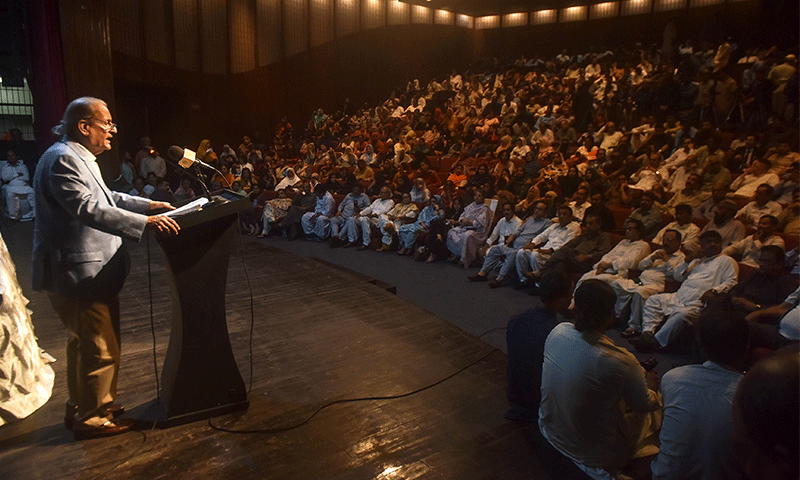
KARACHI, March 31: Sindh Local Government Adviser Waseem Akhtar has said that devolution of power is a major step to ensure prompt and efficient delivery of public services.
He said that the local government department had been actively pursuing this goal to ensure due support to the local government representatives and administrators at all levels, particularly by providing policy guidance to the district governments for clear understanding of its different aspects.
The adviser expressed these views at a workshop, organised by the local government department in collaboration with an organisation - Community Information Empowerment and Training, on Friday.
Recalling that devolution process was a major national undertaking to change a system that was prevailing for more than century, Waseem Akhtar said that it was crucial to keep track of how the devolution system worked and what lessons could be learnt to improve it further.
He welcomed the initiative in the form of CIET social audit that provided a good information and data based on scientific and systematic means which was of immense importance to the district level public representatives and planners for improvement.
“This recent report compares the baseline information with the situation in 2004-5 and hence provides an opportunity to review the progress and identify our strengths and weaknesses as far as local governance and delivery of different devolved services was concerned,” he said.
CIET Country Manager Dr Anne Cockcroft made presentation on the salient features of the report while keynote address was made by Secretary Local Government Mohammad Ishaque Lashari.
Mr Lashari termed the CIET report indicators thought provoking, which provided baseline to evaluate achievements under the devolution system by public representatives and identify drawbacks which call for attention and improvement during the last four years.
He said that indicators in the human resource development pertaining to health and education were eye-opener for people and the government, as it reflected declining trend.
Assuring full support and cooperation to the CIET from the Sindh government, he expressed hope that representatives of people and the government officials concerned would pay attention to provide relief to people by addressing obstacles and improving in the delivery system.
According to the presentation regarding health services by Dr Anne Cockcroft, the proportion of households who usually use government health facilities decreased between 2001 and 2004 from 29 per cent to 24 per cent. There was an increased use of unqualified practitioners, particularly marked in the NWFP from 13 per cent in 2001 to 22 per cent in 2004.
After the address by local government adviser, four groups were formed to evaluate and discuss the findings of CIET report regarding aspects of local government, police, finance and the city district government and present their recommendations in the second session. The groups comprised local government officials, public representatives and media. They explained that people avoided government facilities mainly due to lack of medicines and doctors dealing with patients.
The CIET report indicated that among children aged between five and nine school enrolment increased from 70 per cent in 2002 to 77 per cent in 2004. However, 43 per cent were enrolled in government schools, 30 per cent in private schools, three per cent in Madaris and one per cent in non-formal schools. Between 2002 and 2004, there was a two per cent increase in enrolment into private schools. The increase in enrolment into government schools between 2002 and 2004 was particularly among girls, children from vulnerable households, and children from rural households. Because of the slightly greater increase in enrolment into private schools, the share of enrolled children in government schools fell.
Local Government Planning Director Mr Panhwar gave the background of the CIET assignment given by the National Reconstruction Bureau. The assignment was aimed at evaluation of facilities being provided to people and their delivery under the devolution system after completion of four years of the new system.