Balancing foreign trade
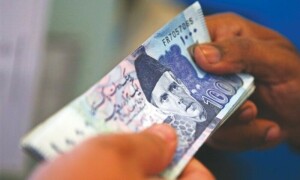
IN the first five months of the current financial year the import bill has outstripped export earnings by $4.55 billion, pushing up the trade deficit to a record 146 per cent over that of the same period last year. This is happening at a time when income from exports is rising by nearly 20 per cent on a monthly average against the figures for the first five months of 2004-05. But then this seemingly highly satisfactory performance has been outpaced by an unprecedented acceleration in imports to the tune of almost 51 per cent on a monthly average in the same period. The import bill has already crossed the $11 billion mark against over seven billion dollars in the same period last year while exports earned more than six billion dollars against $5.39 billion in the first five months of last year. One can easily explain away the skyrocketing trend in the import bill by pointing to the fluctuating world oil prices which, having shot up to over $60 a barrel, are now hovering around $55-60. But then in the same period non-oil imports also shot up by 35 per cent. The trends indicate that by the end of the year Pakistan would have imported about a billion dollars worth of automobiles and cellular phones worth half a billion dollars. The failure of the wheat and sugarcane crops and the subsequent decision to import these commodities has also added to the import bill.
Taking this into consideration and analyzing the trend clinically, one of the international commercial institutions operating in Pakistan has recently projected that the trade gap by the end of the year would be over nine billion dollars; with the non-oil import alone amounting to over $22 billion. It is perhaps a direct result of the widening trade gap that the foreign exchange reserves have in the first five months decreased by over a billion dollars. But then the income of an estimated five billion dollars from home remittances during the year and an expected inflow of at least about three billion dollars from the over six billion pledged by the donors for the earthquake recovery efforts are likely to bridge the gap substantially. However, these flows are not directly related to Pakistan’s economy and cannot be depended on for sustaining the future growth in imports which would certainly keep rising in response to the estimated high growth momentum. Therefore, in order to foot the rising bill for the import of raw material and capital goods, the policymakers have to put some curbs through prudent monetary polices on the import of automobiles, cell phones and other such consumer durables.
At the same time, we need to reduce our dependence on imported fuel by developing our coal reserves and building as many small dams as possible in the NWFP, where there are many natural waterfalls, besides whatever big dam may be contemplated. We must also focus more on value addition in the textile sector and expand the list of other exports in which we have made some progress in recent times by going into the world market with chemicals and pharmaceuticals. The growth in the export of petroleum products is misleading because it is related to high world oil prices and is based on costly imported crude. Also, we must expand the export destination list by entering into free and preferential trade agreements with as many countries as possible.
Plan for crisis management
WHILE the city district government of Lahore has unveiled a plan to reorganize civil defence along modern lines, the Punjab government has decided to broaden its emergency ambulance and rescue services to cover the entire province. The service, Rescue 1122, has been in operation in Lahore for over a year. Established on state-of-the-art models operating in the developed world, Rescue 1122 has been a successful experiment. On an average, it reportedly responds to some 30 distress calls on a given day, with a response time of just seven minutes. A one-window emergency operation and comprising a well-trained staff and equipment, Rescue 1122 not only offers disaster rescue, fire-fighting and medical services but also mobilizes the city’s fire brigades, the bomb disposal squad, the police and relevant civic agencies in case of an emergency. The decision now to expand its scope to cover the entire province is welcome. If implemented within the stipulated 12-month period as announced by the government, the service will help reduce the high number of casualties suffered on account of road accidents alone. The model needs to be adopted in the other three provinces as well, where the existing public sector infrastructure in the field of emergency rescue and relief is woefully inadequate.
The Lahore city government’s plan to reorganize civil defence within a year must also be emulated by other city governments. For its part, the CDGL has already mobilized some 2,500 volunteers who are being trained by the Rangers. The city government plans to enlist and train thousands more over the next few months. The two moves have come about in the aftermath of the devastating earthquake that ravaged parts of the Frontier and Azad Kashmir on October 8, and represent a lesson that must be well learnt. There is a dire need for putting together a national disaster management system that could be activated in case of a major disaster or a natural calamity. The federal government must provide monetary assistance and other resources to those provinces that may not have their own means with which to establish an emergency system modelled on the one Punjab is now planning to develop.
Curbing human trafficking
THE signing of a human trafficking accord between Greece and Pakistan, Iran and Turkey should help fight the growing scourge. Pakistan has been particularly affected by trafficking and transport of illegal emigrants abroad, especially European countries. An alarming number of Pakistanis, harbouring dreams of making better earnings in a developed country, seem to be falling prey to unscrupulous agents who promise them a safe passage to a European destination. To pay the exorbitant fees that such agents charge, the intending migrant often ends up taking a big loan from relatives or sells family assets. The conditions in which the migrants are transported are sub-human and often involve a mix of travel in containers with no ventilation and rickety ferries with no navigational equipment. As can be imagined, this is a recipe for disaster, and dozens of Pakistanis have either lost their lives or been shipwrecked near the shores of their intended countries only to be jailed or sent back home.
The accord should bolster the fight against trafficking through the sharing of information between signatory countries and greater coordination between their border control and law enforcement agencies. At the same time, the Pakistan government needs to adopt a tougher approach to the problem. While some traffickers have been arrested, it needs to be realized that the whole racket could not have been possible on the present scale without the connivance of local officials. In fact, a former interior minister had publicly implied that some very important politicians were backing the traffickers, a charge that the government never sought to investigate, probably because the individuals happened to be key players. Either way, apart from arresting the traffickers and agents and awarding them stiff penalties, the government needs to weed out all unscrupulous elements in the border forces and immigration section of the FIA.
No let-up in friendship with China
ONE cannot but be concerned over the impression, now being voiced by an increasing number of citizens, that our all-weather friendship with China has undergone a decline. The high-profile coverage given to two parallel developments over the recent past are to blame for this unfounded conclusion.
One development that has been highlighted is the considerable improvement in Sino-Indian relations made possible by efforts by both sides. The new relationship is even being described as a strategic partnership in the struggle against terrorism, separatism and religious extremism.
India has joined the Shanghai Cooperation Organization, as an observer along with Pakistan and Iran recently. Other facets of Sino-Indian relations include the rapid increase in trade to a level of $10 billion per annum, and even the holding of joint naval exercises. No wonder the average Pakistani citizen fears that we have done something that has alienated our most reliable friend that has stood by us through thick and thin.
The other highly visible development since the events of 9/11 has been the emphasis on our alliance with the US, which has been praising the current leadership of Pakistan for its steadfast support to the US in its war against terrorism, as well as in its aim of spreading moderation and democracy in the Islamic world. Since the US leadership and media depict China as the most likely challenge to US hegemony, the impression emerges that our alliance with the US extends to supporting its policy of containment of China.
As it happens, the Chinese government has been aware that the globalization of its foreign policy may create misgivings among old friends, like Pakistan, that has stood by it during the years when it was relatively isolated. The most reassuring aspect of Pakistan-China relations over the past half-century has been the establishment of mutual trust. This expression finds a place, with variations, in joint declarations, communiques, and virtually all speeches of prominent Chinese leaders, to convey that “no matter what changes take place in the world, the Pakistan-China friendship will be maintained”.
We need to put our relationship with China in a broader perspective, and analyse the progression of events in the recent past, which have not weakened and have, in fact, reinforced Pakistan-China ties. We also need to appreciate the real nature of our relations with India, China and the US, as well as their ties with one another in today’s complex world that has vastly complicated bilateral, regional and global diplomacy.
The challenges of the new century and millennium were identified in the UN millennium summit five years ago, and it was agreed that the new global agenda required broad international cooperation. There was a broad consensus that the multilateral goals of saving our planet and promoting a more equitable order by eliminating poverty, disease and backwardness offered the best hope for establishing a peaceful and stable world order.
Certain developments, such as the pursuit of global and regional hegemony by certain powers, and the emergence of terrorism, largely as a response to political and economic injustice, have unleashed a new era of tension and conflict, and Pakistan finds itself in the vortex of the threats to peace and stability. The Pakistan-China relationship is not only vital to their fundamental interests but is also a critical factor for peace and stability in Asia and the world.
One may recall that with the end of the Cold War in 1989, the perceptions of the US had undergone a radical transformation and new threats after the defeat of communism were deemed to be Islamic fundamentalism and nuclear proliferation. As Pakistan, hitherto a Cold War ally, was now viewed as being at fault in both respects, the US subjected it to sanctions, by applying the Pressler law that forbade the US to extend any sort of aid, or even to sell or deliver weapons. As a result, Pakistan was denied economic assistance, and even denied access to western technology for its development. China remained the only source of military equipment for self-defence. US sanctions against Pakistan were further reinforced in 1998, following nuclear tests, and in 1999 in the wake of the military take-over of political power. The reliability of Sino-Pakistan friendship was demonstrated over this period.
The terrorist attack of September 11, 2001, on the US soil led President Bush to declare war on terror. He also called upon all nations to join in this war, declaring that those who did not support this war would be regarded as hostile to the US. Both Pakistan and China responded positively and this had a favourable effect on their relations with Washington. Pakistan, in particular, played a vital role in providing logistic support to the US in its military operations against the Taliban regime.
The war against terror has become the most important factor in US foreign policy. President Bush, who had already embarked on a unilateralist approach, used the threat from terrorism to reinforce his country’s dominance, through the Nuclear Posture Review of September 2002, on the basis of which the US claimed the right to launch pre-emptive attacks on a country suspected of planning hostile action.
He had decided to make Iraq the next target of pre-emption, and sought to persuade the UN that Iraq had developed weapons of mass destruction and was also colluding with terrorist groups. When the Security Council sought confirmation through UN inspection, the US lost patience and launched pre-emptive attacks on Iraq on March 20, 2003, without UN backing. The allegations of possession of WMDs by Iraq remain unconfirmed even today.
The US foreign policy remains centred on maintaining Washington’s hegemony, and therefore on countering any challenge to that hegemony. While China’s bilateral relations with the US have stressed engagement to profit from US trade and investment, the US has followed a policy of strategic containment, even though it has responded positively to engaging with China following its adoption of the capitalist road to economic development. As China has achieved the highest rate of growth since 1978, averaging nine per cent per annum, and emerged as a potential challenger to US hegemony, moves to contain and neutralize China have figured increasingly in US foreign policy.
China, on its part, stresses the need for a global environment conducive to peaceful development, and has sought to normalize relations with all neighbours, including India. The improvement in Sino-Indian relations has enabled cooperation in the economic and cultural fields, the political and strategic relations are not tension-free. The differences over the boundary persist after 22 years of negotiations, and India has provided sanctuary to the Dalai Lama.
Perhaps the most serious divergence arises from India’s willingness to become part of the US strategy of encircling and containing China, as its strategic partner. Therefore, a close look on Indo-US and Sino-US relations reveals that China is seen as an adversary, which also explains the US commitment to defending Taiwan, despite the lip-service paid to the one-China policy. The Ballistic Missile Defence initiative launched by the Bush administration in 2001 was opposed by China, but immediately supported by India.
China, despite the remarkable progress achieved in modernization, still views itself as a developing country, with a per capita income of just over $1,000 and with large pockets of poverty in its central and western regions. It has no desire to engage in rivalry with the US, or any other power, because it opposes the concept of hegemony, and has remained steadfast in following the Five Principles of Peaceful Coexistence. The US, on the other hand, is pursuing the goal of maintaining its global hegemony, and has forged links with major Asian powers, such as Japan and India, to contain China.
Certain broad conclusions can be reached from this brief survey of the strategic and economic goals of the major powers that are involved in shaping the role of South Asia, with particular reference to the effect of these trends on Sino-Pakistan ties.
China’s relations with India have not developed in a manner that could threaten the time-tested Sino-Pakistan friendship. The Indo-US strategic alliance, with containment of China as its major objective, rules out any chance of Sino-Indian relations overtaking the all-weather friendship between China and Pakistan. The second cause for concern, namely Pakistan allowing itself to be used by the US against China is also ruled out by the primacy accorded by Washington to its strategic alliance with India. Based on the experience of history and US reliance on its alliance with India and Israel to pursue its goals in the Middle-Eastern and the Asian regions, one can conclude that no government in Pakistan will allow itself to be used against a trusted friend as China.
In April this year, China and Pakistan signed a treaty of peace and friendship during the visit of Premier Wen Jiabao to Pakistan. This treaty provides that neither country will allow its territory to be used against the other. Neither country has such a treaty with any other power. It provides incontrovertible proof that the deep foundation of trust, built up over two generations of independence, will ensure that the comprehensive, principled and all-weather friendship between them will continue.
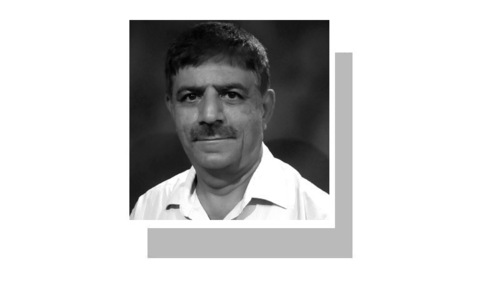
The writer is a former ambassador.
| © DAWN Group of Newspapers, 2005 |