



 0
0

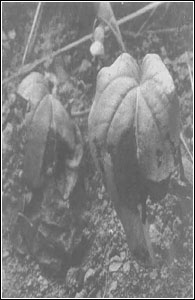 Betelvine locally known as paan, is an evergreen creeper that belongs to the pepper family. Leaves of betelvine are chewed along with areca nut (chaliya) as a masticator. Usually the people of Southeast Asia, Gulf States and Pacific islands chew betel leaves.
As a medicinal plant, it is used for infections, stomach problems and as an aphrodisiac and life tonic. Betel leaves also strengthen the immune system and inhibit certain cancer cells.
However, its greatest role around the world is as the leaf that holds the betel quid together, which is made from Areca nuts, hydrated lime, and optional herbs and spices.
Betel chewing is also considered to be a good and cheap source of dietary calcium. Pan is an important cash crop throughout the Indo-Pak subcontinent. According to Federal Bureau of Statistics, Pakistan imports a major portion of betel leaves for its consumers from countries like Bangladesh, India, Sri Lanka and Thailand, spending more than Rs.200 million in foreign exchange.
In Pakistan, the cultivation of betelvine started on a commercial scale about 30 years ago in Karachi and afterwards spread to Thatta, Tando Adam and Tando Allahyar areas of Sindh and Hub region of Balochistan. Sweet water, high humidity, moderate temperature and soft sandy soil of these areas provided excellent conditions for betelvine cultivation.
Unfortunately, unavailability of sweet water in and around Karachi such as Malir area as well as in some areas of TandoAllahyar and TandoAdam, has compelled farmers to quit cultivation of the betelvine. Betelvine grows as a vigorous vine that is usually supported by a trellis of bamboo poles. The crop is grown in conservatories under shady and humid conditions necessary for the growth of plant. However, these conditions also favour the development of many diseases. Betelvine plants in Pakistan and abroad are reported to suffer from many diseases caused by fungi, bacteria, viruses and nematodes, especially the root-knot nematodes that reduce its productivity considerably.
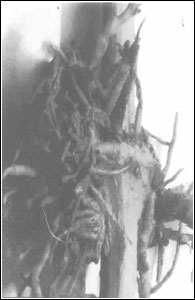 Root-knot disease caused by Meloidogyne incognita and Meloidogyne javanica is the most common disease affecting betelvine plant in more than 90 per cent of the fields. The affected plants show growth reduction and yellowing and abnormal thickening of leaves with necrosis commencing from the tip and margins of leaf and extending inwards.
The disease causes reduction in quality and quantity of leaves, sometimes leading to serious wilt disease that greatly affect the growth of plants and produce heavy losses to the farmers. Heavy losses due to root knot disease therefore requires chemical and/or biological methods of plant disease control.
An interesting situation was observed in Sajanwari area of Keti Bander, Thatta where a farm owned by two partners Mr. X and Mr. Y, was divided into two halves and managed separately by each partner. One of them Mr. X was using Furadan @28 kg granules per month per acre and obtaining an average yield of 615 kg leaves per month as compared to the other partner who was using only eight kg Furadan per/acre and obtaining an average yield of 85 kg leaves per month.
The situation much improved when the second partner was advised to use at least 16 kg Furadan per acre. Furadan was found to reduce the affect of root knot disease resulting in increased yield. However, use of Furadan at high dosages is dangerous since the use of Furadan at one and two kg/hectares requires at least 21 and 33 days, respectively, for reduction of residues to a tolerance limit of 0.2 mg per kg.
Use of betelvine leaves before the reduction of residues below toxic level is, therefore, a great threat to human health. Apart from root-knot nematodes, Aphelenchoides helicosoma, Aphelenchus species, Helicotylenchus digonicus, Helicotylenchus indicus and Hoplolaimus indicus have also been reported from betelvine. We also observed Radopholus similis from roots of betelvine in fields with a history of banana cultivation.
Leaf spot disease is the second most important disease that severely reduces the yield of betelvine since leaves are the yield and any damage to leaf will reduce the yield and the market value substantially. Several pathogens have been reported to cause leaf spots in betelvine. In this disease the older leaves are found more susceptible than the younger ones where premature shedding of infected leaves are observed under severe conditions.
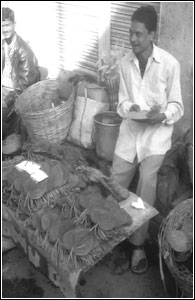 Fungi that were found responsible causing leaf spot disease in our research work are Fusarium solani, Fusarium sporotrichoides, Bipolaris australiensis, B. hawaiiensis, B. papendorfi, Curvularia pallescens, C. tuberculata and Botryodiplodia theobromae which also produced leaf necrosis on betelvine. Fungicides like Benomyl and Topsin-M showed promising control of leaf spot diseases on betelvine. Simultaneous use of Furadan and Benomyl provided significant control of root-knot and root rot disease of betelvine.
Application of chemical fungicides is, no doubt, an effective method of plant disease control. However, indiscriminate use of fungicides could produce environmental and health hazards especially on a crop like betelvine because the leaves are chewed directly by human beings. It was surprising to note that no care is taken by betelvine farmers, and the leaves sprayed with fungicides and insecticides are sent to market with visible deposits of pesticides on the surface.
It is suggested that there is a need to monitor the prevalence of diseases in betelvine since the conditions required for better cultivation are also conducive for disease. These diseases directly affect the yield by reducing the quality and quantity of leaves.
Use of chemical pesticides provides excellent control of the diseases and results in improved yield. However, care should be taken to give ample interval between the application of pesticide and picking of leaves for human consumption to reduce the pesticide residue below the toxic level.
It was awful to note that farmers, even the educated ones, do not take care of it and pick the leaves to send to market after a few days of spray where deposit of pesticides can be seen on leaf surface. It is therefore recommended that the use of biological control agents should be practiced.
During our studies, use of Paecilomyces lilacinus as a biocontrol agent provided excellent control of root knot disease and no significant difference in efficacy of P. lilacinus and Furadan was observed. This biocontrol agent would, therefore, be used for the control of root diseases instead of Furadan and fungicides to avoid the harmful hazards of chemical pesticides.




























