ABU DHABI: Zulfiqar was eight years old when his parents sent him from Lahore to the United Arab Emirates for a career in camel jockeying. His childhood career finally ended last November when he was placed in a special shelter set up by UAE police to rehabilitate and repatriate the under-age camel racers.
“We were treated badly sometimes and I was happy to get out. Now I want to go back home — I hope they will take us back,” says the quiet Pakistani boy, now 15, with an empty, sad look in his eyes.
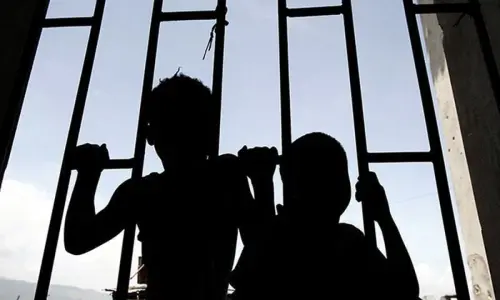
He is one of 46 boys ranging from the ages of 7 to 15 living in this desert camp, part of the UAE’s response to international criticism that boys, some as young as four, work as jockeys in a Bedouin tradition which has been transformed into a lucrative sport in today’s oil-rich Gulf.
Since the centre was set up in November, 60 boys have been returned to their families abroad, and 46 are staying at the camp, free for the first time in years to play football, watch television or just hang out with other children their age.
Most come from Pakistan, with smaller numbers from Sudan, Bangladesh and Mauritania, officials say.
UAE laws were tightened in March to stop UAE nationals employing boys under 16 or weighing less than 45 kg (99 lb). London-based Anti-Slavery International said last year it had photographs to prove little boys were still racing camels, despite a 2002 government ban. It called for proper inspections and prosecution of those trafficking and employing the boys.
How they get to the camel ranches is a point of controversy. Rights groups say they are “sold” to camel owners by agents while the UAE authorities say it is their parents who bring them to the country, find them work on ranches, then leave them.
UAE authorities deny allegations of trafficking, saying it is the boys’ families who obtain passports from embassies in the Gulf which understate their age.
“It’s the mother and father who give their children to the ranches for money, but the point is they should not be left in first place,” said Fadhel Mohammed, the Abu Dhabi police official heading the operation to enforce the new laws.
Four Pakistani women are currently facing prosecution over falsifying passports to allow their children to race, he said.
Both the UAE and Qatar have talked about plans to use “robots” for camel jockeys, operated by remote control. They say the technology has been tried and tested, but locals involved in the sport doubt it will be popular or practical.
In Bedouin culture it’s normal for children to ride camels. Zulficar, reluctant to speak, says his parents gave him to a “distant relative”, who then posed as his parent in the UAE.
“He said he was my father, but he wasn’t. He was a devil,” Zulficar said, adding the man took all of his 1,000 dirhams ($273) monthly wage but sent nothing back to his parents.
But Ansar Burney, a London-based Pakistani rights activist fighting to end the practice, accused police and camel owners of not being serious about rehabilitating the boys, most of whom he says are led directly to camel owners by agents in Pakistan.
“There were about 5,000 boys working last year. Now about one hundred have gone to the shelter, so where have the rest gone? To my knowledge, they are sending them to neighbouring countries, dumping them,” said Burney, currently in the UAE.
Abu Dhabi emirate asked him last year to advise them after a US television network ran a show on Gulf camel jockeys.
“These children have lost their childhood, they are living in hell,” he said, describing starvation to keep the boys light weight to race faster, long hours and sometimes sexual abuse. He said the shelter was paradise but doubted police were able to locate most children’s parents. “These boys should get compensation,” he said, adding he had found one as young as three.
UNDERWEIGHT: Medics at the desert camp in a military zone outside the city of Abu Dhabi say most of the boys had had a hard time.
“They are usually in a bad way psychologically and physically when they first come to us,” says nurse Fatima Hashem, a sympathetic matronly figure dispensing medicines.
Suweilam, a 12-year-old from Sudan, says his ranch chiefs fed him well and as a member of Sudan’s Rashayda tribesmen he had prior experience of camel-riding. But he says it was his father who brought him to the UAE to jockey three years ago for the 1,000 dirhams a month wage it brings.—Reuters