0
0

LAST week’s decision by the State Bank of Pakistan to raise the discount rate from 7.5 per cent to 9 per cent for the first time since November 2002 is aimed at stemming excessive borrowing and curbing a worryingly rising rate of inflation. The financial markets had been signalling the need for higher interest rates for several months and short-term rates like the Karachi Interbank Offered Rate (Kibor) and Treasury bill rates had been rising gradually in anticipation of a hike in the discount rate by the central bank. The discount rate is the rate at which banks borrow from the SBP.
The six-month Kibor, for instance, which had fallen to 5.3 per cent in November 2002 climbed to 6.8 per cent on April 11 before the rate hike. It crossed 7 per cent after the SBP’s announcement. The yield on the six-month T-bill had also crept up from 2.5 per cent in August 2004 to 5.7 per cent in March. Analysts now expect no major jumps in short-term rates because of adjustments already made and forecast that the six-month T-bill yield are likely to stabilize around seven per cent.
The announcement, therefore, did not come as a surprise, although some analysts dubbed it as too aggressive in quantum. Most agreed that the SBP was much behind the curve and should have signalled a rise in interest rates much earlier. “You have to be aggressive to achieve a soft landing,” says Sakib Sherani, chief economist of Abn Amro Bank in Islamabad. “The move was unavoidable but it is belated.”
Longer-term rates like the 10-year Pakistan Investment Bond spiked from 8.15 per cent to 9.25 per cent on the announcement of a rise in the discount rate and are seen to rise further as well.
Impact on inflation: The most pressing need for higher interest rates stemmed from growing price pressures in the economy. Inflation has become a major concern since the beginning of this fiscal year and last month the central bank revised its annual inflation target from 7.6-8.2 per cent to 8.2-8.8 per cent, the highest level in eight years. The original target for the rate of inflation this year was five per cent.
As measured by the consumer price index, inflation rose 10.25 per cent year-on-year in March compared to 9.95 per cent in February. In the first nine months of the ongoing fiscal year, consumer prices have risen an average 9.1 per cent compared to an increase of 3.7 per cent a year ago.
“The central bank should have moved into high gear earlier and sent a message loud and clear that inflation is being controlled,” says a treasurer at a domestic bank.
The government preferred to hold back on interest rate hikes hoping instead to continue encouraging investment and growth. But economists say the SBP should have taken a more independent stance raising rates before the rate of inflation had climbed quite so high. “Looking at growth and investment is okay but an independent central bank’s primary job is to focus on inflation,” says one economist.
The government, which has said climbing inflation is a result of rising food prices, easy availability of cheap credit and spiralling international oil rates, now hopes that monetary tightening and a higher-than-expected wheat crop of 22 million tonnes will put a cap on the rate of inflation. Domestic petroleum prices have climbed 23 per cent since December 2004.
Economists, however, say the rising rate of inflation has been more of a monetary phenomenon which needs to be tackled through monetary means.
“The bulk of this inflationary pressure is coming through the creation of new money because the government has been borrowing directly the SBP through contracts,” one economist says. “The government didn’t want to borrow that amount through T-bills because if they did, the rate would have doubled.”
They therefore propose a combination of two remedial measures. First, the government should route borrowing through banks and let interest rates rise naturally if they do. Second, the government should absorb a larger share of the oil price increases through the budget and meet their incremental needs through the market. The logic is that this will cap inflationary pressures since the increase of one dollar in international oil prices raises the consumer price index by 25 to 30 basis points (one basis point is one tenth of one percentage point).
Since in the medium-term international oil prices are expected to remain firm at around $60 to $70 a barrel, price pressures will continue to build through input inflation unless more of the hit is taken by the government. To make up for the fiscal space lost by absorbing more of the oil price increase, the government could look to truly expanding the tax net, the results of which have not yet been seen even though the CBR admits the country’s direct tax ratio is low.
The argument on the flip side however, is also not without merit. It is argue that if consumers benefit from falling global oil rates then they must also absorb the pain of rising prices.
For the immediate term, economists suggest re-examining the pricing formula for domestic petroleum prices to reduce surcharges to help control input inflation.
Another way to reduce price pressures is to seriously tackle governance and administrative lapses. Rising prices are not always entirely market- driven. During last year’s flour crisis, for example, hoarding and profiteering was evident but not cracked down on. Similarly, strong cartels in industries like cement and automobiles, are responsible for unchecked price hikes. Unless the Monopoly Control Authority develops the teeth to break up cartels, and the government gets serious about improving the governance about food supplies, the manipulation will continue to result in higher prices regardless of the monetary stance of the central bank.
Impact on bank lending: Through higher interest rates, the SBP also likely hopes to slow the pace of credit off-take especially in consumer loans which have multiplied rapidly. The average lending rate, which was at 7.1 per cent in February, will see an upward trend in the weeks and months to come for both corporate loans and consumer lending for home, car and consumer product loans.
Lending to the private sector between July 1, 2004 and March 26, 2005, has leapt 64 per cent to Rs332 billion compared with Rs203 billion in the same period the previous year. In February, the SBP raised its full-year target for private sector credit off-take to Rs350 billion, from the original target of Rs200 billion.
Controlling credit off-take through higher interest rates will be a positive effect, especially because a significant portion of the lending has gone not into productive investments but into the asset markets, especially shares and real estate.
Impact on savings: Similarly, as consumer borrowing and consumption was rising across the economy as a result of the availability of cheap money, some bankers worried about the negative effect on savings. The disincentive to save when bank deposit rates averaged 1.4 per cent—significantly below the cost of inflation—was substantial and bankers reported customers. Viewing spending through consumer loans as a better alternative to low-return savings.
“It’s a necessary evil,” says Nasim Beg, CEO of Arif Habib Investments. “It will help reduce speculative activity that industrial groups were indulging in using cheap credit and banks will now prefer to pay depositors than go to the SBP to borrow at 9 per cent.”
The impact on bank deposit rates is expected to be positive although it is expected to take a longer time for this effect to materialize compared to lending rates which have already begun to rise.
As the rates on Pakistan Investment Bonds rise, the government will also have to raise the returns on National Savings Schemes which had been drastically reduced since returns were benchmarked to PIB rates.
“The timing is right and the quantum is right because it will give some support to fixed-income people,” says Zafar M Shaikh, the central bank’s head of treasury.
Impact on investment: The first cry of blue murder from higher interest rates came from the stock market. One of the major reasons for the run-up in the share market over the last three years has been low interest rates across the economy which left stocks—with average annual returns of 20 per cent—as the most attractive avenue of investment.
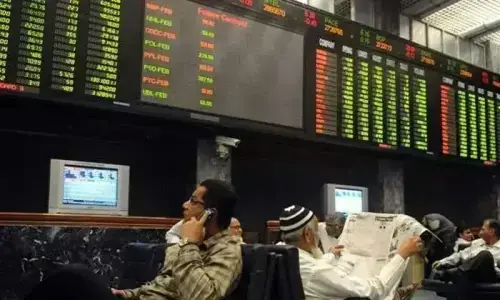
Now, as deposit and NSS returns rise, some money may find its way out of the stock market. That’s why it reacted violently, plummeting 348 points or 4.6 per cent the day of the announcement and another 305 points or 4.2 per cent the following day, taking the KSE-100 index down below the 7,000 points mark.
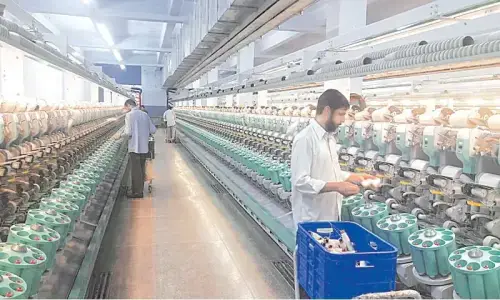
The government has aimed to keep interest rates low in a bid to spur investment and its reluctance to raise rates is aimed at keeping growth robust. The SBP’s move to raise the discount rate may now hurt corporate profits transiently through higher cost of borrowings especially in industries where leveraging is high such as textiles and cement.
However, analysts argue that once industrial growth lifts from a slump and takes off—as it clearly has by 15 per cent growth in the first half of the current fiscal year—then higher interest rates do not affect performance since momentum has already been built up.