0
0

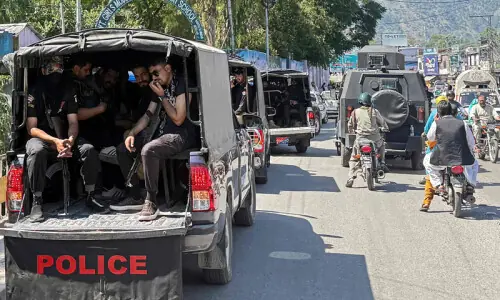
PESHAWAR, March 21: At least 100 members of the Frontier Constabulary posted in the Frontier Regions of Tank and Dera Ismail Khan, have been suffering from leishmaniasis, a severe skin disease, for a couple of months, sources said.
Leishmaniasis produces skin lesions mainly on the face, arms and legs. Although this form is often self-healing, it can create serious disabilities and permanent scars on the body. Children, especially girls in the age of 1-5 years, are common victims of the disease.
“Out of 430 FC men, 100 are confirmed to have contracted the disease at Darazinda in Dera Ismail Khan Frontier Region, whereas 11 cases have been detected in Manzai and 25 in Tank frontier region. The members are waiting for medical treatment,” officials said.
They said that these cases had been reported in early February and despite repeated requests with authorities concerned, no step had been taken for treatment of the suffering members of the FC.
Officials said that the medical officers, paramedics and nurses had no idea about the treatment of leishmaniasis and the disease was spreading with alarming speed.
“The FC Darazinda shares borders with Zhob district of Balochistan province and some of the FC checkpoints are situated on the River Gomal. Four FC pickets of Manzai and FC Tank are also situated on the River Gomal. All these areas are exposed to leishmaniasis caused by sandfly,” the officials said.
The situation is alarming and warrant immediate intervention of authorities concerned to control the epidemic and treat affected FC staff, they warned. They said that medicines and medical professionals were available, but they lacked the capacity to cope with the situation.
“Despite high prevalence of the disease in the province, we have no programme in place and it has turned into an epidemic,” the officials said.
In view of the rapid spread of the ailment in settled parts of the province and Federally Administered Tribal Areas (Fata), the provincial health department had recently included the anti-leishmaniasis drugs in the medical coordination committee (MCC) list so that the people in far-flung areas could be provided with treatment at state-run health facilities free of cost.
But doctors and other staff posted there had no experience to treat the disease, as injections needed by patients infected the disease also needed expert hands.
The disease is stated to have its origin in Afghanistan and the cause of its spread in the local population is due to the migration of Afghan refugees to the NWFP and tribal areas.
Reports from the area say that cases are being reported from the areas bordering Afghanistan such as, Kurram Agency, Bajuar Agency, Chitral and North and South Waziristan and settled areas, such as Dera Ismail Khan, Tank, Swat, Lakky Marwat and Dir.
“The main problem is that people in these areas are illiterate and do not know anything about precautionary measures to protect themselves against the disease,” they said.
The high prevalence of the disease in the Frontier province is evident from the letters addressed to the provincial directorate-general of health services by executive district officers (EDOs) of health from Dir, Chitral, Dera Ismail Khan, Buner, Kohat, Hangu, Mardan, Nowshera and Malakand last year in which government help was Sought.
Doctors say the disease is 100 per cent curable, but the treatment should be provided immediately so that it is not become epidemic, like in the Kurram Agency where the World Health Organization representatives have provided treatment to 5,000 patients.
“The only way to curb the spread of the disease is to educate the people about it and provide them with bed nets on subsidised rates to protect them against sand flies,” some officials suggest.