Controlling inflation
Will the current financial year end with an inflation of seven per cent after it had started in July with a high 9.3 per cent? That will be two per cent above the annual target of five per cent set when the national budget was presented in June; but still far better than what is feared on the basis of the recent and current trends.
Inflation during the first half of the current financial year ending December 31 came down to only 8.8 per cent compared to 3.1 per cent in the same period in the preceding year.
So the government has to strive very hard to bring down inflation to seven per cent which the State Bank of Pakistan has indicated in its statement on monetary policy for the second half of this financial year ending June.
But according to the State Bank, while the food inflation is decelerating the non-food and core inflation is still rising. In a country with massive unemployment, particularly for fresh graduates and matriculates and unskilled workers, the soaring inflation is a variable menace.
The causes of the consumer price inflation are too many, beginning with the basic and other food items like mutton, beef, chicken, eggs and milk. They include the house rent which has a large share in the CPI and rising transport costs.
The fall in the exchange rate of the rupee, which enhances the cost of imports for the manufacturing sector, along with the rising price of oil and oil products enhance the inflation further.
The State Bank has been very candid in listing almost all the factors which increase the inflation. The Bank has been more candid than before and its statement shows that while many sectors show the rising trends in inflation, real relief is coming forth from almost no sector. And that leaves the people with no choice. It is a kind of all-embracing inflation.
The State Bank's ability to contain inflation is limited largely to the monetary sector. It can increase the money supply or reduce that. It can increase the interest rates marginally now or reduce that.
It can reduce loans for certain items which are in short supply or the ones which are being hoarded. Last week the Bank sucked in Rs 77 billion from the money market to reduce the circulation of money and contain inflation. It may do more of that in the second half of the financial year.
Inflation for three years between 2000 and 2003 was at a low four per cent; then it rose to 9.3 per cent in July last. Later, there was shortage of wheat and rise in prices.
Imported wheat was far more costly and had to be heavily subsidized to conform to local prices. Then the hoarders exploited the situation and pushed up prices. World oil prices went up and domestic prices of POL rose fortnight after fortnight until the government froze the prices in May last.
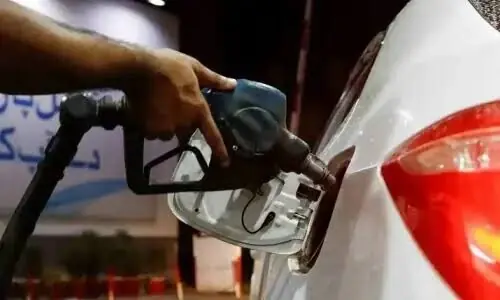
After six months the POL prices were raised twice very substantially, making petrol cost more than Rs. 40 per litre. Transport costs went up all round, along with strikes for higher bus fares.
As the rupee went down against the dollar and far more against the euro and the Japanese yen, imports became more costly, including raw materials for our factories. In this kind of all-round inflation, with every sector pushing up its prices, the government could not do much to bring down the inflation effectively.
Everyone wanted his pound of flesh if he is in any kind of trade and the foremost among them were butchers. Unless the supply side is taken care of by increasing local production or importing the items in short supply or selling for very high prices, inflation could not come down.
Imports cost far more because of the tax structure and procedural complications, and the high profits charged by the importers. And when the items in short supply or high priced are subsidized by the government the World Bank and other major donors protest as they regard subsidy a dirty word even when a third of the population or 50 millions are living below the poverty line of a dollar a day.
We have too many factors aggravating the inflation. The large population, low productivity in the agricultural and industrial sectors, high consumption or conspicuous waste by the affluent and the very corrupt, make the government's task of combating inflation very difficult, if not too exasperating.
Although wedding dinners have been banned by the Supreme Court, chicken prices have not come down. And the colder it gets the more costly are the eggs just as oil prices rise in the US in winter. The oil price there has now shot up to 49 dollars a barrel.
Now vegetable prices are shooting up after prices of pulses had gone up earlier following the rise in meat prices. The poor are left with no option but to buy inexpensive eatables as prices of all alternate food items go up.
What do the very poor families do in such circumstances: either take to crime or commit suicide? Sometimes the whole family together kill themselves as the long starving housewife with four children did in the Hyderabad region recently.
The State Bank says a five to seven per cent inflation is not unusual for developing countries. What matters for a developing country is not only combating inflation but also promoting growth and social sector development, it says. But the problem in Pakistan is that it has been facing a cumulative inflation for several decades together beginning with the oil shock of 1973 when POL prices increased many times overnight.
The inflation of the 1970s was called imported inflation as prices of all imports went up along with oil and oil products. The inflation of the 1980s and 1990s became an oppressive mass. A five per cent inflation over that brought additional hardships.
The fact is while the government calculates inflation in percentages over the accumulated inflation of the previous year, the people calculate the increase in prices, in rupees.
By how many rupees have the food prices gone up, or decreased if at all that happens, or the transport bill risen as he goes to the factory day after day the year round? A householder approaches inflation on the basis of his wages and the large gap between the wages and prices. While the wages are usually static the prices are always floating up.
Asif Zardari, husband of former prime minister Benazir Bhutto, says before he was imprisoned atta was selling at Rs. 11 a kilo and now it is between Rs. 21 and 22 per kilo.
That is the measure of real inflation for the masses as far as he is concerned. An average man is also concerned with how well his neighbour lives without doing an honest job or making an honest living. That may make him take to crime, as too many persons are seen flourishing that way.
During the three years mentioned by the State Bank when the country had four per cent inflation, little of bank credit was available to borrowers and so the demand pull of inflation was not strong.
Finally as the bank credit increased in a big way, and at lower interest rates prices began shooting up and inflation touched 9.3 per cent in July last. Private sector bank credit went up by Rs. 40.7 billion a month between July and December last against Rs. 25.4 billion a month in the same period last year.
Additional bank credit went up by Rs. 224.6 billion in the last six months against Rs 193 billion in the same six monthly period last year. But the welcome feature of that credit was that the manufacturing sector got 52 per cent of that and the textile sector accounts for 39 per cent of the total bank credit. Consumer financing was 15.9 per cent and commercial 11.4 per cent. The service sector got 8.3 per cent of the credit and others 5.2 per cent.
A disappointing feature of the credit distribution is that the automobile sector got almost three times as much as the housing sector which got Rs. 8.3 billion against Rs. 22.1 billion for the automobile sector. But then getting housing loans is not easy. Too many documents to be filed and authenticated. The procedural complications along with corruption they are too many.
The cost of construction has gone up sharply. Land prices are very high; cement and steel are too costly. All that delays house-building and needs large loans which are not easy to get.
Compared to that getting a bank loan for a car which is mortgaged to the bank is easy and the process is simple. And for all the hoopla around the credit cards with large newspaper advertisements, total credit made available through them was only Rs. 3.5 billion.
The State Bank is now to use the monetary mechanism, particularly the interest rates, as an anti-inflationary tool. But there is too much money outside the banking system in the parallel economy and brought in through the Hundi system.
Those who raise such short-term loans on high interest rates find that rewarding, particularly in avoiding taxes and not being detected by anti-crime agencies. Not all the money brought in through the Hundi system belongs to the expatriates.
Some of that is earned here through corruption or crime and then sent out to be brought as back as clean money. Hundi will always be used for that cleansing process. And much of that easily-earned money is easily spent to the envy of their peers. All that aggravates the inflation further.
High inflation in Pakistan then is the product of a multi-dimensional process. It is the outcome of two economies, open and underground, working together with corruption and crime, which makes it difficult for the government or society to check. Above all, we live in a profit-oriented society where the consumer can never prevail over the capitalist or the market.
Current state of negotiations
The benign matrix of time, among other things, has the built-in feature of ironing out seemingly permanent vendettas and jealousies. The states of India and Pakistan, born out of the furnace of animosity and discord, promoted their mutual antagonism for more than half a century.
At the end of the day the stocktaking revealed that the entire exercise was nothing but a protracted process leading to virtual suicide. The time has come for the leaderships of both countries to reverse the process from the precipice reached during the mindless endeavours in the past.
International intervention in the form of American pressure and the rest only provided a catalyst of face saving that both countries initiated the process of confidence-building measures (CBMs).
There has been an appreciable progress on the CBM front, after which initiation of formal negotiations, to remove the countless bugs, including the Cyclops of Kashmir, is under way. Dithering and jittering in the process is but a natural corollary emanating from the baggage of dissention.
It is now a big challenge for both leaderships to exercise prudence and discretion to take the negotiating process to a successful conclusion. We must not lose sight of the reality that we are on the receiving end and as such face a bigger challenge than India.
It has been noticed with dismay that we are not conscious of the precarious position we occupy in the equation. The case has been brought up by our side and not by India.
Therefore we will have to apply cautious restraint to avoid irresponsible utterances and have also to sacrifice a lot to win the case. Our foreign office must not parrot out the long beaten agendas and must not react to every move by the Indian side in a tit-for-tat fashion.
That did not pay any dividends in the past and is not likely to endow any in future as well. Instead, it would be in the fitness of things for the foreign affairs ministry to put their house in order and diligently and professionally pursue the homework required to fight the case.
I take leave to quote an example of the apathy and professional incompetence of our foreign office: During the process of negotiations on Muzaffarabad-Srinagar bus affair, both the parties kept meddling over the type of travel documents to be carried by the tourists.
Indian side insisted on passport to be the travel document as no other reliable document could be thought of. The Pakistani side kept suggesting various documents other than passport.
Consequently a stalemate ensued and the negotiations were deferred for some future date. One hard core Kashmiri, who is in an awesome position in the higher judiciary of Azad Kashmir, contacted the relevant quarters in the foreign office, asking them why did they not suggest the State Subject Certificate to be the travel document, as the document is in vogue in both parts of Kashmir.
The people concerned in the Foreign Office expressed their utter ignorance about the existence of such a document in Kashmir. After frantic verifications, they agreed that the suggestion will be proffered to the Indian side, as the document of State Subject is much higher in authenticity than even a passport.
Only God knows if the needful has been done or will be done or they will keep riveted to their bureaucratic red tape and would keep harping on their already stalemated stand.
Now take the case of Baglihar Dam as another example. It looks as if our Foreign Office suddenly rose from a protracted slumber and briskly took up the issue with the Indian government, at a point of time, when negations on more sensitive issues were on the table and while the dam in question was also nearing its completion. Why must they take up a wrong thing at the wrong time?
The foregoing were some of the tactical points, which should have been taken care of at the bureaucratic levels of the ministry of foreign affairs but were jeopardized due to obvious reasons of indiscretion.
We take the question of the main players in the foreign policy domain, the executives of the government. At the tactical level certain amount of expedient approach could be ignored but at the official level such an approach is catastrophic.
Unfortunately, experience shows that it is only the officials of the country whose approach to international relations is mostly based on expediencies. That is a tantamount to not having a coherent foreign policy at all.
Today, nobody knows as to what is the government's Kashmir policy because the officials keep jumping from pillar to post according to the reaction of the opposition parties of the country.
They do not realize that, come what may, as long as we do not have sufficient training and experience in democratic functioning, the opposition will always oppose any move by the government for "opposition's sake."
Our opposition is not conditioned like the opposition parties in the developed democracies where the entire political conglomerate stands firmly behind their governments on matters of national importance.
This is particularly the practice while the governments are engaged in serious dialogue processes internationally. During our dialogue process it is disgusting to note that the government has to fight on two fronts.
One is internationally and the second is the home front created by the opposition parties. As a consequence the government leadership develops an opposition phobia, which results in faulty reactions jeopardizing the entire negotiation process.
The proceedings of the current round of negotiations reveal that the overall strategy is amended every now and then, according to the political currents prevailing in the corridors of opposition. This is a mockery of statesmanship. It means that whether it is in national interest or not, it has to be in the personal interest.
It must vouchsafe their authority for an indefinite period of time by keeping the opposition elements in good humour and or on the defensive. Unfortunately there is none - like Gorbachev in our political vanguard, in and outside the government, to place national interest before personal interest and to go down in history as a national hero and one of the stars of the century.
As noted above, Pakistan is an aggrieved party and has brought up the Kashmir case for an amicable settlement. For over half a century the Indian intransigence did not accord even the status of a problem to Kashmir case and always repeated the litany of atut ang (integral part).
Due to myriad factors the Indian leadership has conceded to identify it as a problem and has come on the negotiation table. If India has retreated from its established stance, there is no reason why Pakistan should fail to reciprocate by demonstrating certain amount of elasticity in its approach.
The strategy should therefore be to maintain a low profile, not heeding the hawks, who are only paper tigers, and exercise refined diplomacy to extract maximum benefit from the ongoing negotiating process. Such opportunities do not occur repeatedly.
The bitterness of the Baloch
The Baloch feel acutely deprived and are very angry. The causes of their distress are deep-rooted and some suggestions from official quarters that Akbar Bugti wants to extract a heavier pound of flesh than that which he is already getting from the system and that an external hand is exploiting the odious incident at the Sui facility, is a poor attempt to trivialize the significance of the long-standing complaints of the Baloch.
This article focuses on the raw economic hand that has been dealt to Balochistan under different dispensations over the years, by reviewing the present arrangements.
Of Balochistan's total budgeted revenue receipts of Rs. 26.4 billion for this year, close to 94 per cent are expected to flow from the federal government, either as its share from the divisible pool of taxes (Rs. 10.3 billion, a share of 38.9 per cent), as straight transfers (Rs. 7.4 billion, 27.9 percent), or as subvention grants for its backwardness (Rs. 5.8 billion, 22 per cent).
The province only contributes around six per cent of revenues, which also highlights both the heavy dependence on federal transfers and the huge mismatch between the assigned responsibilities of the province and the wherewithal available to it to discharge such obligations.
The high fiscal dependence on federal transfers is on account of the centralized tax structure (especially after the introduction of GST), the almost exclusive powers granted by the Constitution to the federal government to make use of the revenue potential provided by all major, broad-based and buoyant taxes and the skewed distribution of tax revenues brought about by the NFC Award of 1997, which has resulted in a revenue sharing formula that favoured the federal government at the expense of the provincial governments.
For Balochistan, not only have total federal transfers (including straight transfers in the form of the Gas Development Surcharge (GDS) and royalty on gas, subvention grants and the 2.5 per cent provincial share of GST) grown at a modest rate of 1.8 per cent per annum since 2001/02, but they have also tended to be volatile and unpredictable, at least until recently, often rendering the provincial revenue and expenditure estimates unrealistic.
The high degree of dependence on federal transfers has left Balochistan little leeway in absorbing the cost of shortfalls in such transfers, since the potential for mobilization of revenues from its own taxes and user charges for provincially provided services has tended to be limited.
As of now the NFC divisible pool is distributed on the basis of population. This formula uses population as the sole criterion, meaning that all development is about, and for, people.
However, this suggests that all citizens of Pakistan should be treated equally, regardless of the fact that population density is not the same across provinces and all provinces are not starting from similar initial positions of service provision.
There is a minimum overhead and administrative cost of providing a service based on an acceptable standard of service delivery. Balochistan with its scattered and sparsely populated settlements has to bear a higher unit cost for providing services.
Since Balochistan has a low population density, a high level of poverty and backwardness (in terms of provision of infrastructure like roads and electricity and health and education services) A large land-mass, a purely population-based division of the divisible pool puts Balochistan at a distinct disadvantage.
Under the 1997 NFC Award Balochistan has been receiving subvention grants to cater for the special development needs of the province. The problem with this approach is that there are no agreed criteria for setting the level of subvention. Resultantly, the Balochistan government has little leverage in negotiating a specific amount in the form of subvention.
There has been some indexation of the basic amount with inflation, but the criteria for determining the basic amount as well as negotiating raises is not clearly defined, affecting the predictability and certainty of resource flows under this head from the federal government.
As mentioned above, Balochistan also receives direct transfers from the federal government on account of its ownership of gas. These transfers relate to the excise duty and royalty on gas, and its share of the Gas Development Surcharge (GDS).
The excise duty on gas is based on production volumes. The excise duty is set at a low rate (of Rs. 5.30 per BTU), which was established several years ago. The federal government sets the rate and collects the tax, and then transfers the respective shares to the provinces.
Since Balochistan has no role in the entire process, it cannot influence the federal government's policy on this count. The royalty on gas is paid in recognition of the ownership right of the province.
It is fixed at the rate of 12.5 per cent of the gas sold and valued at the well-head price. However, the well-head price has been pitched at a low level for the gas fields in Balochistan, compared with the royalty being paid on gas fields elsewhere, those discovered recently whose well-head prices are much higher.
The well-head prices of the gas fields in Balochistan have been fixed on a cost-plus formula, well below the well-head prices of new gas fields, requiring an adjustment in favour of Balochistan by transferring to it the difference between royalty at a market price and the well-head price for fields which are on the cost-plus formula.
At present, the GDS is determined on the basis of the cost of exploration and is distributed between the provinces according to the proportion of volume contributed by different gas fields to total national gas supply.
This sharing arrangement has been put in place despite the fact that the GDS collected is a function of the difference between the weighted prescribed price (determined on the basis of the well-head price, O&M cost, excise duty, etc.) and the price paid by the consumer.
GoB's gas fields are mature and are fast depleting, which has resulted in the reduction of the share of Balochistan in the GDS. Since the well-head price for Balochistan fields is low, its contribution margin, per unit of gas, to the total GDS is more than the contribution of gas fields in other provinces.
By allocating GDS receipts on the basis of volumes rather than total value of gas sold (being the product of volume and average weighted price paid by the final consumers), Balochistan's share is being artificially depressed.
Whereas it contributes 53 per cent to 65 per cent under different formulas, it is now getting a share of roughly 35 per cent in the GDS distributed between the provinces.
If the formula is changed to give Balochistan a fair share, it would get a GDS of approximately Rs. 9.8 billion instead of the present Rs. 4.8 billion. Also, Rs. three to four billion rupees is due to Balochistan for the difference in GDS payable by gas producers on the basis of collections and the GDS liability paid by them to-date.
In the light of the discussion above this writer strongly believes that to be able to address the kind of grievances being articulated by the Baloch (and for that matter also by the Pashtuns and the Sindhis), a new federal structure has to be devised in the interest of stability in Pakistan.
This will require a recasting of the Constitution and the establishment of a more viable structure that gives meaningful autonomy to the provinces. This realignment will involve a slashing of the Concurrent List and the handing over of full control of all key resources (especially those found below the ground like oil, gas and other major minerals) to the provinces where these resources are located.
In defence of this proposal one can argue that if Pakistan's political and economic structure were to be implanted in the US, Texas (and for that matter in other federations in the world, like Canada and Australia) with all its oil, would not be rich; instead entrepreneurs in New York and Washington would be living it up.
Contrast the situation in the US in which the wealth of Texas belongs to the citizens of that state with that in Pakistan where the gas rich Balochistan, the owner of this country's lifeline and the richest resource, is the least developed province in both physical and social terms and which continues to beg for funds from the federal government to stay afloat.
More importantly, Islamabad has to be persuaded to give up many of the activities that it has taken upon itself to perform, largely because of the massive share of national revenues and resources that it appropriates.
This is why the federal development programme includes not only Gwadar, the Coastal Highway and the Sandak projects but also the construction of provincial roads (like those connecting Chaman and Quetta and Quetta and Kila Saifullah), which should be implemented by the provincial government, essentially because some of them, even under this flawed Constitution, fall entirely within the purview of the provincial and local governments.
Other than problems being encountered on account of poor coordination between different tiers of government and some duplication of effort and expenditures, the projects also suffer from poor design and lack of prioritization, activities that the provincial government is much better placed to carry out.
It is just that the federal government will simply not let go of functions and resources that rightfully belong to lower formations of government. The answer to the injustice felt by the Baloch lies in solutions outlined above and a genuine federal system and not in conjuring at a political system around some misconceived notion of 'supreme national interest' nor by simply increasing the size of the federal government's development programme in Balochistan and enhancing the job quotas for the Baloch in federally managed public services and projects.
The writer is a former finance minister of Punjab.
Shanghai: the dragon awakes
One of the world's great cities is coming back alive - and with a vengeance that is shaking up its competitors and neighbours alike. During the turbulent 1930s, Shanghai was the wickedest city on earth.
Just beyond the stately buildings of the Bund, Nanjing Road, and the European Concessions lay squalid slums, armies of diseased beggars, thousands of child prostitutes, and countless opium dens. Shanghai teemed with gun runners, con men, spies, mysterious White Russians and German Jewish refugees.
This was the fabled seaport of Marlene Dietrich and Humphrey Bogart, of Generalissimo Chiang Kai-shek and his Dragon-lady wife, Madame Chiang, who reportedly proposed to US Republican front-runner Wendal Wilkie they divorce their spouses, marry, and rule the world together.
And this great harbour is also evil-reputed port that gave us the term 'Shanghied,' - meaning being drugged, knocked out, kidnapped aboard a freighter or otherwise robbed, an experience this writer barely escaped one night up a dark Shanghai alley.
This was the revolutionary city of the young communist movement led by Mao and Chou Enlai, where French author Andre Malreaux watched Marxist rebels being thrown live into locomotive furnaces.
The fief of Shanghai's Godfather, Big Eared Du, boss of the notorious Green Gang and Chiang's ally, Shanghai was Asia's capital of cocaine, heroine and white slaves. China's 1930s warlords, with names like 'The Dogmeat General,' and 'The Perfect Governor' and 'the Muslim General,' fought over the prize of Shanghai, China's most important.
Shanghai still retains a sinister flavour. But today, it has become China's economic powerhouse, the world's second busiest port, exporting $74 billion annually, with 13 million registered residents and 7-10 million itinerant labourers, making Shanghai more populous than Australia.
Last week, being driven around a military limousine, I saw 22 huge trucks queued up to deliver cement to one of the city's scores of round-the-clock skyscraper projects that are making the city resemble Manhattan.
Shanghai's natives have their own impenetrable dialect outsiders cannot understand, they are brash, pushy, commercially gifted, and always in a rush. A native New Yorker like me feels right at home in China's Big Wonton.
Shanghai has also resumed its role as China's most avant garde, cosmopolitan city, filled with cultural events, galleries, spectacular restaurants and dazzling architecture that makes the downtown look like a cross between New York and a futuristic capital in a science fiction film. This city is now one of the world's hottest destinations.
When the communists took over Shanghai in 1949, its business elite fled to British Hong Kong, quickly turning that port into an economic giant. Today, Shanghai is beginning to eclipse snooty Hong Kong, which is looking rather old and tired compared to Shanghai's pulsating economic power.
Over dinner at Hong Kong's exclusive Bank of China Club, a local business leader confessed to me his city was becoming a backwater compared to brash Shanghai. New factories are sprouting everywhere up the Yangtze River west of Shanghai, China's most dynamic industrial corridor, bringing the benefits of the coastal boom to the long-neglected, impoverished interior.
Its hinterland has become the world's factory, producing everything from black socks to the most advanced technology. Growth is held back only by shortages of power and steel. Factory owners are moving their plants ever deeper into the interior to take advantage of ever-lower labour rates in places like Inner Mongolia.
Unrestrained credit, a torrent of foreign investment, and China's get-rich-quick policies are producing a dangerous credit bubble and runaway 11-15 per cent annual growth. The Communist Party clearly has a tiger by the tail.
I lunched with a general who had been secretary to China's late leader, Deng Xiaoping. In 1992, Deng went to southern China where he famously proclaimed a new policy of national economic liberalization and free markets.
Deng's reforms set the stage for China's massive boom, unleashing the long pent-up economic power and natural talents of China's 1.2 billion people - one of history's great economic miracles.
Deng had the wisdom to decree that China had first to become a modern economic power before it could develop offensive military forces. Today, China is nearing the point where its surging economy, the world's seventh largest, will make it formidable geopolitical rival challenging US power in north and south Asia.
The likely sale of advanced European arms to China will modernize its armed forces, allowing them to project military power beyond littoral regions. China's voracious industrial appetite is making it America's major rival for Mideast, African and Asian oil, and for other strategic materials. So Big Apple and Hong Kong, watch out! The Big Wonton is hard on your heels. -Copyright Eric S. Margolis 2005
Promises by the numbers
Everyone is going to play numbers games to judge George W. Bush's next economic policies. At the top of the list will be Bush's pledge to cut the budget deficit in half by 2009. Although this promise seems simple, it isn't.
Let's see. Chad Kolton, a spokesman for the Office of Management and Budget, says the pledge was made a year ago, when the projected deficit for 2004 was $521 billion, or 4.5 per cent of gross domestic product. Thus, the administration's targets for 2009 are $260 billion, or 2.2 per cent of GDP.
But wait; the actual deficit for 2004 was $413 billion (3.6 per cent of GDP). Should Bush be aiming for half of that? Then there's Social Security. If Bush proposes borrowing to pay for "personal accounts," will those amounts be added to the deficits? They should be, but in Washington, who knows?
All this suggests much confusion and controversy. What's the right target? Who says? Bush may claim he's halving the deficit, while critics say he isn't. But the convoluted arithmetic also holds a broader lesson about Bush's second term. To succeed, Bush needs a strong economy.
Without it the deficits will balloon as the government loses taxes and pays more in benefits. More important, without it, popular discontent - over jobs, wages, trade - could combine with opposition to other policies (on Iraq, terrorism, judicial nominations) to weaken Bush's popularity.
That would probably doom his ambitious legislative agenda, from Social Security to tax "reform" to immigration. The latest poll from the Pew Research Centre shows Bush's vulnerability. By a 50 to 45 per cent margin, respondents disapproved of his handling of the economy.
Compared with his first term, you might rate Bush's economic prospects favourably. Recall those first-term problems: a recession, the stock market collapse, corporate scandals and the attacks of Sept. 11, 2001.
The White House is now forecasting economic growth of 3.25 per cent annually from 2005 through 2010 (on a comparable basis, growth in 2004 was about 4 per cent). Unemployment, 5.4 per cent in December, will slowly drop to 5.1 per cent by late 2006 and stay there.
The administration's predictions mirror many private forecasts. "We're shifting to growth of 3 to 3.5 per cent a year," says Nariman Behravesh of Global Insight. Caveats? Well, yes. The forecasts don't allow for the next recession - and recessions happen. Moreover, some economists dissent.
Michael Evans, an independent economic consultant, thinks growth will average between 2 and 3 per cent. "I expect stocks to be flat over the next two years," he says. There's also a small minefield of specific threats:
- OIL: Behravesh thinks prices will fall gradually from about $48 a barrel to $37 by early next year. But any unexpected scarcities and higher prices would hurt. He figures that every $10-a-barrel increase shaves half a percentage point off GDP growth.
- THE DOLLAR: Massive U.S. trade deficits have caused it to depreciate by about 15 per cent since early 2002 against major foreign currencies. Up to a point, that helps U.S. exports; they become cheaper on global markets.
The danger is that a continuing drop in the dollar could spill over into stock and bond markets. A falling dollar means foreigners' investments in U.S. stocks and bonds are worth less in their own currencies. They might stop buying U.S. securities or sell. Stock prices could drop or even collapse.
- CHEAP CREDIT: It's ending. Since last June the Federal Reserve has raised its overnight Fed funds rate from 1 per cent to 2.25 per cent. More increases are expected.
Although long-term rates on bonds and mortgages haven't yet risen, many economists think they will. By late 2005, Behravesh foresees rates on 30-year mortgages at 6.5 per cent, up from today's 5.75 per cent. Home construction, housing prices and consumer spending could all weaken.
- GREENSPAN'S REPLACEMENT: The Fed chairman's term expires in a year. No likely successor will instantly acquire his authority. Any mistakes could shake confidence. If Bush dodges these and other dangers (a slowdown in China?), critics will still attack his budget deficits. In some ways, this is unfair. -Dawn/ Washington Post Service