0
0

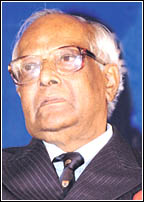
NEW DELHI, Jan 3: India's National Security Adviser Jyotindra Nath Dixit, who was engaged in delicate backstage talks with his Pakistani counterpart Tariq Aziz, died here on Monday following a massive heart attack , family sources said. He was 68.
Mr Dixit spent some of his last moments on Sunday night chatting with Pakistan's High Commissioner Aziz Ahmed Khan at a party where he was described to be hale and hearty.
In his last comments to this correspondent late last month, Mr Dixit had ruled out further direct talks with his Pakistani counterpart but said he looked forward to meeting him in Dhaka where he was to travel with Prime Minister Manmohan Singh for the Saarc summit.
Mr Dixit had served as India's envoy in Islamabad, Colombo and Kabul at the height of the Cold War in which New Delhi was perceived to be close to Moscow. He then played a key role as Foreign Secretary in the 1991-96 Narasimha Rao administration by helping forge closer ties with both United States and Israel.
Mr Dixit was widely acknowledged to be a gifted diplomat who could hold his brief without offending his opponent. He would often say privately that Kashmir was nothing if not a dispute, but stuck to the official line of describing it as an "issue" at best.
His pragmatism endeared him to the Pakistani establishment. One such admirer - Pakistan's India point man at the foreign ministry, Jalil Abbas Jilani - happened to arrive in New Delhi on Monday to participate in the Bahlihar dam talks.
"I was only the other day watching Mr Dixit's interview to an Indian TV channel in which he had defended me to the hilt," Mr Jilani told Dawn. He was referring to Mr Dixit's trenchant criticism of the Vajpayee administration's decision to expel Mr Jilani, who was then acting high commissioner for Pakistan, after declaring him persona non grata. "Mr Dixit was a large-hearted gentleman," Mr Jilani said.
A career diplomat and an acknowledged expert on India-Pakistan ties, Mr Dixit retired as Foreign Secretary in 1994. He was a prolific author and columnist on international and regional affairs.
Since 2003, he had been closely associated with the Congress party's foreign affairs cell and as its vice-chairman played an active role in the drafting of the party's pre-poll paper on foreign policy, defence and national security.
When the Congress-led United Progressive Alliance government came to power, he was appointed the NSA. Expressing deep shock over Dixit's death, Prime Minister Manmohan Singh said he had lost a close friend and the nation a wise strategist.
"I have lost a close friend, a valued colleague and a great source of support and advice," said the prime minister in his condolence message. "The nation has lost a true patriot, a great diplomat and a wise strategist," he added.
Foreign Minister Natwar Singh has called it "an irreparable loss to India". Mr Dixit succeeded Mr Brajesh Mishra as the National Security Adviser in May last year. As National Security Adviser, he was playing a key role in the peace process with Pakistan and the boundary talks with China and was no stranger to matters of national security.
In that capacity, one of Dixit's key roles was in the Nuclear Command Authority that operates India's nuclear arsenal. And as the government comes to terms with the shock of Dixit's death, the important job of finding his successor comes up next.
Our Islamabad Correspondent adds: Pakistan's Foreign Office spokesman Masood Khan said at his weekly press briefing that Mr Dixit was a widely acknowledged and respected person.
The death of Mr Dixit, he said, was a matter of deep sorrow for the Pakistan government, but added that it would not upset the India-Pakistan dialogue which he had worked hard to promote.