A surge or a bounce?
Is the current Washington interest in Pakistan a surge in Islamabad-Washington relations or is it one of those bounces that have characterized this relationship in the past? There is no doubt that the association between the two countries now rests on a new understanding. I underscored this point in the article published in this space last week.
This is the first time in the history of Pakistan's long association with the United States that the two sides agree that they have to deal with the same threat. The source of this threat is the rise of Islamic fundamentalism in Pakistan and the countries in its neighbourhood.
This is a new development. A common understanding on strategic interests was not the basis of the relations between the two countries since they began to work with one another some 50 years ago.
During much of that period, the United States was involved in the Cold War, concerned that it needed to cultivate countries such as Pakistan in order to stem the rising tide of communism.
Pakistan, on the other hand, remained preoccupied with what it perceived as the threat to its very existence posed by India. It sought to protect itself against that threat by finding allies around the globe. It saw - mistakenly as it turned out - that America could be such an ally.
The second aspect of this new relationship with the United States is the extraordinary uncertainty in which it is being forged. There are many developments taking place around the globe that will affect the nature, scope and depth of Pakistan's evolving relations with the United States.
These relations will be shaped by events in Afghanistan, Iraq, Iran, Palestine, Saudi Arabia and several other countries of what President George W. Bush calls the "Greater Middle East". This stretch of land includes Pakistan. But there is one other aspect of this relationship that needs to be understood by Islamabad. Once troubled areas such as Afghanistan and Iraq settle down - if they do any time soon or at all - the United States will return to some other strategic concerns that will affect its relations with Pakistan.
These concerns include Washington's interest in seeing democracy take hold around the world, especially in the Greater Middle East. Nuclear proliferation is another area of great concern for the United States.
In that context, details about the underground network once run by Pakistan's Abdul Qadeer Khan will continue to interest policymakers in Washington until they are certain that they know everything about this particular affair. That point has as yet to be reached.
One indication of the continuing Washington concern with the activities of A.Q Khan is the long story published a few days ago by The New York Times detailing the role played by Dr Khan in developing Pakistan's nuclear programme, and then using the knowledge he had acquired to sell secrets and equipment to countries such as Iran, Libya and North Korea.
My guess is that had Senator John Kerry won the election last November and become president, his administration would have made the "Khan affair" the centrepiece of its relations with Pakistan.
Now to continue with the story I began to tell last week. I started with a quick overview of the different approaches taken with respect to international relations by Pakistan and India after they became independent states.
While Pakistan became a close ally of Washington, India invented something called the "Non-Aligned Movement" based on the premise that the quarrel between Washington and Moscow was of no concern for the developing world.
This line of thinking led to the recognition of a different class of countries called the "Third World" whose interests were very different from the first world of capitalist and industrialized countries and the second world of communist nations.
Pakistan could have also joined this movement, as did so many other developing countries. The only problem was its growing concern about India's intention towards its existence.
The first generation of Pakistani leaders was persuaded that India was determined to undo the plan of partition implemented by the British. Some of the earlier Indian actions - the trade war with Pakistan in 1948, the threat to divert water from the upper reaches of several tributaries of the Indus River that passed through or originated in Kashmir, the way New Delhi handled the Kashmir dispute itself - shook Pakistan's confidence.
I will cover these events later in my articles on the evolution of Indo-Pakistan relations. There was thus reason enough for the Pakistani leaders to look for some means for neutralizing the perceived Indian threat to its integrity.
While the United States was looking for a country in South Asia to become a part of the line of defence it wanted to build to contain the Soviet Union's feared expansion, Pakistan was searching for ways to deal with the possible threat from India.
It was, therefore, in the interest of both countries to enter into a formal alliance. This happened in 1954 when Washington and Karachi signed the Mutual Defence Agreement.
From 1954 to 2001, Pakistan's concern with India's growing military power and the United States' apprehension about the spread of communism - first from the Soviet Union, and later also from a resurgent China - were the principal reasons for the close relationship between Washington and Islamabad.
An important feature of this relationship was that what one side feared was of no concern to the other. Such a relationship by its very nature could not be stable and that was to be the case with this one. On two occasions, the United States did not deliver what Pakistan had expected from the web of alliances into which it had entered.
In 1965, following a brief war with India, the United States cut off the supply of military equipment and materiel to Pakistan. This was a devastating blow since almost all of the equipment in use by the Pakistani military had been procured from America.
It was clear to President Ayub Khan that he could not continue with the war when the supplies available to the military were being seriously depleted. He sought peace and negotiated the Tashkent Agreement with India.
The agreement was denounced by Zulfikhar Ali Bhutto, then Ayub Khan's foreign minister, and contributed to the eventual electoral triumph of the Pakistan People's Party. This was to be the first of many occasions when foreign relations intervened in political developments in Pakistan.
Pakistan returned to favour briefly with the United States in the early 1970s, when it worked hard to facilitate Washington's rapprochement with Beijing. The role Pakistan played in that context is one of the subjects in foreign relations that to this day remains of interest for scholars and the people who were directly involved in the episode. These accounts continue to read like a spy thriller.
In fact, the help Pakistan provided the United States in developing a line of communication with China may have persuaded President Yahya Khan that he could count on Washington's help in its quarrel with the secessionist forces that were gaining political ground in East Pakistan.
That expectation came to nothing. In 1971, when India invaded Pakistan's eastern wing, the only move Washington made was to threaten intervention. It dispatched a section of its vast naval flotilla to the Indian Ocean indicating that Washington would not stay on the sidelines if New Delhi, after having broken Pakistan into two halves, went on to destroy the rest of the country.
Whether the dispatch of aircraft carrier Enterprise deterred India from turning its attention towards West Pakistan after the fall of Dhaka will remain a subject of great historical interest for a long time to come.
There was considerable cooling of relations between Pakistan and the United States while Zulfikhar Ali Bhutto was in power. Washington found it hard to warm up to Bhutto, mindful of the fact that it was the new Pakistani leader who had weakened the chain of defence built around the communist world by President Dwight Eisenhower and Secretary of State John Foster Dulles.
Bhutto had done that by establishing warm relations with China and by attempting to get close to Moscow. It was under Bhutto's prodding that the Soviet Union agreed to finance the construction of a steel mill in Karachi, one of the many initiatives taken by the then prime minister that was to cause so much economic grief to Pakistan and negatively influence its long-term prospects.
Bhutto's overthrow and his later execution, by the military government led by General Ziaul Haq turned Pakistan into a pariah state. However, President Zia was in the doghouse for less than three years. He and his reputation were rescued by the Soviet Union's invasion of Afghanistan. Zia saw an exceptional opportunity for himself and his country in that development.
After famously spurning President Jimmy Carter's offer of a small amount of assistance to Pakistan to build its defences against a possible Soviet assault as "peanuts", Zia was prepared to align himself closely with Washington when Ronald Reagan became the US president.
What was now on offer from Washington was considerably larger amounts of military and economic assistance, provided Islamabad was prepared to get actively involved in the effort to push the Soviet Union out of Afghanistan.
The way the United States fought that proxy war with the Soviet Union and the manner in which Islamabad got involved in that effort were developments that profoundly influenced Pakistan. It later had an impact on the United States as well when some of the people, motivated and trained to fight the Soviet Union in Afghanistan, turned against America.
The Washington-Islamabad-Riyadh axis that financed this war and aided the Afghan Mujahideen laid the basis for the radicalization of Islam in Pakistan. This occurred because of the decision to use madressahs for recruiting, training, and supervising the young Afghans who were prepared to fight the Soviet Union.
Those who managed that war came to the correct conclusion that the enormous military might of the Soviet Union could only be challenged by religious zeal and fanaticism.
In other words, Islamic fundamentalism was deliberately used as a weapon by the United States in order to win the cold war. The war was won. The Soviet Union pulled out of Afghanistan in 1989, 10 years after it had invaded that country.
Two years later, communism collapsed not only in the Soviet Union but in all of Eastern Europe. President George H.W, Bush celebrated these developments by pronouncing the birth of a new world order. Francis Fukuyama, one of the founding fathers of neo-conservatism in America, declared that history had come to an end.
Pakistan's reward for having contributed to these earth-shaking events was the imposition of economic and military sanctions for continuing with the efforts to develop a nuclear bomb.
Islamabad's interest in acquiring such a weapon was ignored by Washington for as long as the Soviet Union posed a threat. Once that threat was gone, America was prepared to totally redefine its relations with Islamabad.
Has a lesson been learnt from history by those who are involved in reshaping the Islamabad-Washington relationship? The various sections in the intelligence reform bill recently passed by the US Congress concerning Pakistan seek to put this new relationship on firmer foundations.
Washington seems to have accepted that its earlier cavalier treatment of Pakistan resulted in the payment of a heavy price by both countries. Is the evolving relationship between Pakistan and the United States a surge - an urgent verb much in use in Washington's policy circles - or a bounce? But surge as we know from the experience of the recent tsunami in South and Southeast Asia can cause enormous damage while a bounce is of a temporary nature.
What bounces up comes down. Whether it is a surge or a bounce, experience tells us that the eventual quality of relations will depend in part on how the various other developments mentioned in this article change the US perception of Pakistan's strategic value.
The wrath of nature
The great tsunami came calling at the eleventh hour of 2004 to deliver a parting kick to a truly wretched year. The death toll now exceeds the number of Iraqis killed, though in both cases the counting goes on.
The money pledged by countries and raised by private contributions is so far less than what the war in Iraq costs per week. There has been saturation coverage of the tsunami by the main television channels, BBC, CNN, Sky even Fox, and so much so that one gets the impression that the war in Iraq is over.
Those who subscribe to conspiracy theories see this as an attempt to create a diversion, to turn away the attention of a people from a man-made tragedy to a natural calamity.
How does one respond to a disaster of such terrifying magnitude? With the acknowledgement of how puny are one's own troubles and with gratitude that we were spared the onslaught of nature's fury.
I got an e-mail from my nephew Amar who is a doctor and who works in Germany. A wonderful young man but one who startled me by sending me a poem he had written on this Asian tragedy.
I use the word "startle" because he chose to express his grief in verse and I had no idea that he was a poet. It is a deeply moving poem and asks some very tough questions. It is a fairly long poem but this is one of the questions he asks: "Why is it written/Those who have little shall have even less/And those with less will have even that/Taken away? "
Perhaps, he hopes that I might have some answers or explanations. Unfortunately, I don't. I will e-mail him and ask him to count his blessings and hold on to them and live each day with zest. Those who died in the tsunami and those who have been rendered homeless were in the wrong place at the wrong time.
We may not be able to rejoice but there is some solace to be had from the fact that not governments alone and private charities have risen to the challenge but individuals throughout the world have been touched by the tragedy and the world stands united in grief.
Muslims, Buddhists, Hindus, Christians, Jews have come together to mourn the deaths of countless lives and to raise money, food and clothing, to make a contribution. No contribution is too small for with it comes an act of compassion and John Donne's words have a special relevance: "Any man's death diminishes me because I am involved in Mankind."
But it says something about human nature that it should grieve with such intensity about a natural calamity but not about man-made disasters, which cause a greater loss of lives.
To take recent examples, how many millions were killed in World War I? How many in World War II? And how many in all the other wars we have had since then? Three million Vietnamese and 58,000 Americans died in Vietnam alone. There is a need to bring some perspective to our grief.
Television pictures of areas hit by the tsunami are harrowing but after a time one gets numb. The pictures begin to look alike but they manage to keep the story alive even though they highlight our helplessness. And soon a tsunami-fatigue will set in.
The aid required for relief and rehabilitation will be massive and pledges now made will not be redeemed as has happened so frequently in the past for the grief felt now and which creates its own momentum will become a memory. But for the moment and until the law of diminishing returns begins to take its toll, the money must be flowing in.
Given its own financial limitations, Pakistan is doing whatever it can. But what about our own people? Pakistan may be short of many things but it is not short of rich people.
I have not read of too many or even some who have come forward and open their wallets. Edhi has got into the act but he was expected to do so. Why don't the president or the prime minister come on television and make an appeal.
Though the tsunami has struck from Sumatra to Somalia, the worst affected areas are in our neighbourhood. I am sure if a fund was to be opened, thousands of Pakistanis will contribute and there are other ways of raising funds through musical concerts and sports events.
We could even volunteer manpower and we could establish a corps of social workers who could go to the affected areas and roll up their sleeves and do some relief work.
My mind goes back to Bob Geldhorf and how he not only raised money but also won the hearts of the people of the world. He became a celebrity in his own right and was knighted. But the hearts he won was mainly of the young and I would like to see our own people assume leadership roles. We must try and take some positives out of this ghastly tragedy.
It is an opportunity, in a way, of forging the bonds of a common humanity that transcends nationalities, religion, race and all those barriers that we put up. No one better to do this than the young of the world who must shed all the prejudices that we passed on to them as either sacred obligations or twisted loyalties. The Tsunami re-affirmed that all men, women and children were indeed equal for the angry tidal waves made no distinction.
Controversy on HEC measures: Reforming our universities-II
For three decades Pakistani education planners toyed with grand plans to build MITs and Harvards in the country. Nothing materialized. But three years ago the first serious effort to deal with Pakistan's chronically ill universities was finally initiated. Unfortunately, this effort by the Higher Education Commission has now become mired in an intense, growing controversy.
The immediate cause centres on the award of fake degrees and the flourishing of substandard higher education institutions, as well as on the HEC's head, Dr. Atta-ur-Rahman, having personally punished the whistle-blower who brought this important issue to his (and the public's) notice.
While unpleasant, this controversy is important because it addresses the deeper underlying question of the quality and credibility - rather than just the quantity - of higher education.
In the previous article, I explained how badly the existing university system has been broken and how the current university reform strategy is compounding the problem by concentrating on glitzy things like internet access, digital libraries, virtual learning, etc., while ignoring basic problems.
Allowing these "reforms" to continue will destroy what little there is today. On the other hand, it will be a tragedy for Pakistan if the current HEC attempts collapse in a heap of dust. So, how to proceed if we are serious in trying to improve our universities?
The policy don'ts are clear. Some have already been discussed earlier: stop the creation of worthless new universities; stop funding and rewarding research that really isn't research; stop dishing out useless PhDs; stop playing the numbers game; and stop feeding academic corruption.
The do's are far more than can be discussed here. Broadly speaking, they can be divided into two mutually distinct sets. One set must deal with raising the level of general competence of teachers and students by ensuring that they actually have an understanding of the subject they teach or study, and with increasing the amount of research in specific disciplines.
Universities everywhere prepare engineers, doctors, economists, business managers, and other professionals needed to fulfil the stringent demands of a modern society. Pakistani universities obviously need to do the same.
The second set relates to the broader function of universities - to create thinking minds, pursue research in subjects that are important but are not of immediate economic utility, to create and organize discourses on social and political issues, and to raise the cultural and aesthetic level of society.
Whereas the Soviet and Chinese models concentrated exclusively on the first set of goals, western universities - or at least the good ones among them - successfully synthesized both sets and were far superior.
It is a mistake to believe that inadequate financial resources have prevented Pakistani universities from achieving the goals of the first set. In fact, the real need is for deep administrative and organizational reforms, together with the strong political will needed to handle the counter-reaction they would inevitably provoke.
First, there must be university entrance examinations at the national level to separate individuals who can benefit from higher education from those who cannot. No such system exists in Pakistan.
Only local board examinations - where rote memorization and massive cheating are rampant - are used to select students. But, on our borders, both Iran and India have centralized university admissions systems that work very well.
Although corruption in India is perhaps as pervasive as in Pakistan, admissions to the IITs have nevertheless retained their integrity and intensely competitive nature over several decades. Honest examinations are presumably also possible in Pakistan, provided extreme care is taken.
Having such university entrance examinations would be important for another reason as well - they would set the goal posts for colleges and high schools all over Pakistan.
In the US, the Scholastic Aptitude Tests, centrally administered by Princeton, are extremely useful for deciding student aptitude for university education. The "A" level examinations in Britain have similar importance.
At the PhD level, if the HEC is at all serious about standards, it should make it mandatory for every Pakistani university to require that a PhD candidate achieve a certain minimum in an international examination such as the GRE. These exams are used by US universities for admission into PhD programmes.
Given the state of student and teacher knowledge, and the quantity and quality of research in Pakistani universities, selection through GRE subject tests would have the welcome consequence of cutting down the number enrolled in HEC indigenous PhD programmes from 1,000 per year to a few dozen.
The present safeguard of having "foreign experts" evaluate theses is insufficient for a variety of reasons, including the manipulations commonly made in the process of referee selection.
Second, we need to test those who would be university teachers. The system has remained broken for so long that written entrance tests for junior faculty, standardized at a central facility, are essential.
Without them, universities will continue to hire teachers who freely convey their confusion and ignorance to students. Most teachers today never consult a textbook, choosing to dictate from notes they saved from the time when they were students in the same department.
No teacher has ever been fired for demonstrating incompetence in his/her subject. Third, the recruitment of non-permanent foreign faculty, whether of Pakistani origin or otherwise, is essential.
Although this country is home to 150 million people, there are perhaps fewer than 20 computer scientists of sufficient calibre who could possibly get tenure-track positions at some B-grade US university.
In physics, even if one roped in every competent physicist in the country, it would not be possible to staff even one single good department of physics. As for mathematics: it is impossible to find even five real mathematicians in Pakistan. The social sciences are no better.
In this grim situation, it is fortunate that the Higher Education Commission has initiated a programme for hiring foreign faculty with attractive salaries. But the success of this programme is uncertain.
Jealously at salary differentials, and a fear that local incompetence will be exposed, have led local teachers and university administrations to block the hiring of faculty from abroad.
There is another problem: Pakistan's image as a violent country deters most foreigners from wanting to come and live in Pakistan for any considerable period of time. Therefore, westerners are almost totally absent from the list of those who have applied under the foreign faculty hiring programme. Apart from Pakistani expatriates in the Middle East, the bulk of applicants are Russian speakers from the former Soviet Union countries.
One wishes it could be otherwise. It would be a major breakthrough if Indian and Iranian teachers could be brought to Pakistan. Indians, in particular, would find it much easier to adapt to local ways and customs than others and also have smaller salary expectations.
The huge pool of strong Indian candidates could be used to Pakistan's advantage - it could pick the best teachers and researchers, and those most likely to make a positive impact on the system. In the present mood of rapprochement, it is hard to think of a more meaningful confidence building measure.
Fourth, we need better, more transparent, and accountable ways to recruit vice-chancellors and senior administrators. What we have now is a patronage system that appoints unqualified and unsuitable bureaucrats or generals as vice-chancellors, and that staffs universities with corrupt and incompetent administrators.
While a tenure-track system for faculty is currently under discussion and may allow for breaking with the system of life-long jobs independent of performance, there is no corresponding system being contemplated for the top leadership. But without good leadership, and people who can set an example, no institution can be reformed.
Finally, it is crucial to bring back on to the campuses meaningful discussions on social, cultural and political issues. To create the culture of civilized debate, student unions must be restored, with elections for student representatives. They will be the next generation of political leaders.
Such a step will not be free from problems - religious vigilantes rule many Pakistani campuses although all unions are banned. Extremists would surely try to take advantage of the new opportunities offered once the ban is lifted. Political parties have also been less than responsible.
But the reinstatement of unions - subject to their elected leaders making a pledge to abjure violence and the disruption of academic activity - is the only way forward towards creating a university culture on campus. Ultimately, reasonable voices, too, will become heard.
To condemn Pakistani students as fundamentally incapable of responsible behaviour amounts to a condemnation of the Pakistani nation itself. If students in our neighbouring countries can successfully study, as well as unionize and engage in larger issues, then surely Pakistan's can do so as well.
The task of university reform has not yet seriously begun. Nor can it do so until issues of the purpose and philosophy of higher education and of the goal of the reforms are squarely confronted.
It is time to decide whether we are serious about education being something more than merely giving out certificates. Do we want to build institutions for creating knowledge and helping students to be informed, critical, active citizens? Or not?
The author is professor of physics at the Quaid-i-Azam University, Islamabad.
Indo-Israeli arms collaboration
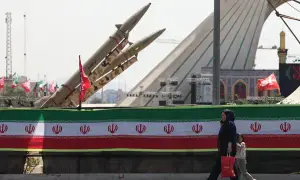
India's collaboration with Israel in defence and acquisition of Israeli military technology will attain new heights in the coming years, especially after it agrees to joint production of new version of the Barak II naval missiles.
Hints about the Israeli proposal for joint manufacture of the Barak II missile in India were given at a recent conference of naval commanders in New Delhi called by the Indian Navy Chief Admiral Arun Parkash after a high-level visit to Israel and talks with its military top brass there.
The ship-borne Barak missile is designed to intercept and destroy two approaching anti-ship missiles, at sea. It can also detect and tangle with sea-skimming missiles at low altitudes, locking on to two enemy missiles at the same time.
The Barak missile can also hound and destroy supersonic missiles detected by radar. Barak's defence system is capable of detecting and intercepting incoming targets 500 metres away.
The Bark missile's Rafael-made warhead makes up 22 per cent of its 1,00-kg weight, bestowing on it a wider killing range. India began importing the earlier Barak I missiles from Israel in 2003. The Barak I missiles from Israel are now installed on India's aircraft carrier, INS Vikrant, three destroyers and three frigates.
India is currently negotiating with the US the purchase of Patriot missiles in order to build an anti-ballistic missile defence system for which the advanced capability PAC 3 PATRIOT Missile system from the US will be a boon.
India has shown a lack of interest in a reported US sale offer of the older version of Patriot missile system. Indian diplomats in Washington are currently urging the US not to give any sophisticated weapons to Pakistan claiming that the threats to US security come from India's neighbourhood in Pakistan.
Israel and Russia are now huge suppliers of arms and military technology to India. But India's hunger for more lethal arms seems to be insatiable. Pakistan's growing concern over India's burgeoning arms arsenals is justified. Pakistan foreign office spokesman, Masood Khan, had rightly spotlighted Pakistan's acute concern while briefing newsmen in Islamabad on November 11.
India and Israel are said to be working on a number of deals in the military field for which negotiations are to be held between the two countries in the near future. Their cooperation in the defence field continues at a swift pace.
According to a report, Russia will supply engines for an Indian Air Force intermediate jet trainer aircraft and a contract in this regard will be signed soon. Each engine will cost about $1 million a piece.
India is also interested in buying Russian jet engines for its 165 MIG-27 fighters. These aircraft were made in India under Russian licence. The new engines for these aircraft are undergoing tests at the Salyat engine building company.
According to Washington reports, India has imported from the US military hardware manufacturing giant, Raytheon, global positioning equipment (GPS), installing them on India's Mirage 2000, Russian SU 30 Jaguar and Ilyushin tanker aircraft, operating in the Indian Air Force.
India has also imported from the same corporation 12 radars costing million 190. India is keen to get more such sophisticated military equipment from the US. India's defence officials take advice from the Israeli officials for listing the most sophisticated US weaponry and intelligence gathering systems of which Israel has full details for procurement for India.
This can't go on forever
The beginning of each year is high season for economic forecasters. With few exceptions, Wall Street economists try to give as upbeat an interpretation as the data will allow: gloom-and-doom forecasts do little to sell stocks. But even the salesmen are predicting a weaker American economy in 2005 than in 2004.
The biggest global economic uncertainty is the price of oil. Oil producers failed to anticipate the growth of demand in China. Supply side problems in the Middle East (and Nigeria, Russia, and Venezuela) are also playing a role, while George Bush's misadventure in Iraq has brought further instability. High oil prices are a drain on America, Europe, Japan, and other oil-importing countries.
America's oil-import bill over the past year alone is estimated to have risen by around $75bn. If there were any assurance that prices would remain permanently above even $40 a barrel, alternative energy sources would be developed.
But we are now in the worst of all worlds - prices so high that they damage the global economy, but uncertainty so severe that the investments needed to bring prices down are not being made.
Meanwhile, the world's central bankers have been trained to focus exclusively on inflation. Many will recall how oil-price increases in the 1970s fuelled rapid inflation, and will want to show their resolve not to let it happen again. Interest rates will rise, and one economy after another will slow. The march towards higher interest rates has already begun in the US and elsewhere.
For the past three years, falling interest rates have been the engine of growth, as households took on more debt to refinance their mortgages and used some of the savings to consume.
Central bankers are hoping that this will not play out in reverse - that higher interest rates will not dampen consumption. Hope may not be enough. House prices could well decline; at the very least, the rate of increase is likely to slow down.
This is only one of the uncertainties facing the US economy. Clearly, some of the growth in 2004 was due to provisions that encouraged investment in that year - when it mattered for US electoral politics - at the expense of 2005.
Then there are America's huge fiscal and trade deficits, which jeopardize future American generations' well-being, and represent a drag on the current US economy.
As one of my predecessors as chair of the Council of Economic Advisers, Herb Stein, famously put it: "If something can't go on forever, it won't." But no one knows how, or when, it will all end.
Indeed, President Bush 's election promises include partial privatisation of social security and making his earlier tax cuts permanent, which, if adopted, will send the deficits soaring to record levels. What, exactly, this will do to business confidence and currency markets is anybody's guess, but it won't be pretty.
As a result, an even weaker dollar is a strong possibility, which will further undermine the European and Japanese economies. Moreover, America's gains will not balance Europe's losses: the uncertainty is bad for investment on both sides of the Atlantic.
Europe, for its part, is finally beginning to recognize the problems with its macro-economic institutions, particularly a stability pact that restricts the use of fiscal policy and a central bank that focuses only on inflation, not on jobs or growth. But there is a good chance that institutional reforms will not come fast enough to lift the economy in 2005.
China - and Asia more generally - represents the bright spot on the horizon. It may be too soon to be sure, but prospects for taming the excessive exuberance of a year ago appear good, bringing economic growth rates to sustainable levels that would be the envy of most other countries. By contrast, the world's other major economies will probably not begin performing up to potential in the next 12 months.
They are all caught between the problems of the present and the mistakes of the past: in Europe, between institutions designed to avoid inflation when the problem is growth and employment; in America, between massive household and government debt and the demands of fiscal and monetary policy; and everywhere, between America's failure to use the world's scarce natural resources wisely and its failure to achieve peace and stability in the Middle East. - Dawn/Guardian Service
The writer is professor of economics at Columbia University and a Nobel laureate.