0
0

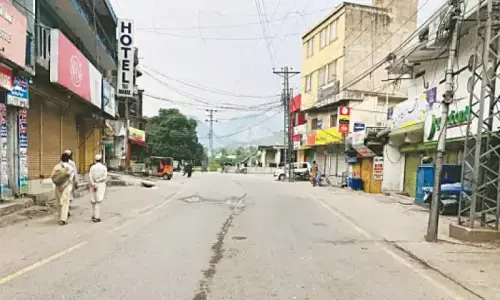
POKHARA: The silence of the deserted streets of Nepal's normally bustling second city, nestled beneath the towering Himalayas, speaks volumes about the growing sense of fear and despair across this country.
The king and prime minister are in Pokhara but, despite a security lockdown, most locals are too scared to defy a strike called by Maoist rebels to disrupt a royal rally.
King Gyanendra and the unelected ministers he appointed are losing control of the country and the situation is worsening by the day.
Nepal is beset by a growing Maoist revolt and a political crisis which opposition leaders say will, unchecked, turn it into a failed state, a dangerous zone of instability between the nuclear giants of China and India and what one general here warns could be a new Afghanistan - a nest for international militants.
"It seems the state is going to be helpless and one day we will have to declare the state has failed because there will be anarchy, there will be chaos," says Madhav Kumar Nepal, head of the Communist Unified Marxist-Leninist (UML) party and leader of an alliance of five opposition parties.
The parties themselves have been frozen out since Gyanendra replaced the elected prime minister with his own loyalist appointee in 2002 and delayed polls due that year.
Although a constitutional monarch on paper, all power now effectively lies with Gyanendra, whose public standing is fading and who faces mounting pressure at home and abroad to replace the royalist government with a multi-party team.
Analysts are convinced there can be no progress towards ending the Maoist rebellion, which has killed more than 9,250 people and destroyed the economy of one of the world's poorest nations, until a government of national unity is formed. That would pave the way for new talks with the rebels, who want all parties involved, and, ultimately, national elections.
The key is Gyanendra, crowned in 2001 after his popular brother, King Birendra, and nine of his relatives were killed by the then crown prince, Dipendra.
"If we could solve this great problem between the king and the parties, and if we could form a government of national unity... then I believe we could get peace talks," says human rights activist Padma Ratna Tuladhar, a mediator in the talks. "But the king's ego problem makes him very strict."-Reuters