0
0

Growth without relief
Preparations are underway for the unveiling of the federal budget for financial year 2003-04 amidst an atmosphere of reassuring promises. Finance minister Shaukat Aziz says that this year's will be an investment and growth-oriented budget, and will ensure continuity of the government's successful policies.
However, prior to the presentation of the budget, the finance minister has to get the award of the Sixth National Finance Commission finalised. He also has to tie up loose ends with regards to the revenue situation faced by provinces and give some relief to the provincial finance ministers who seek larger resources.
Unlike the period of political vacuum when there were no assemblies, the budget can come under severe criticism from the opposition parties who may object to its proposals on political grounds instead of adopting economic or financial grounds.
Let us hope that regardless of how it is tackled, the approach will be rational and will take into account the economic problems of the country. Here, a third of the population lives below the poverty line and this is a serious issue that demands a solution that is realistic.
The investment and economic growth, of which the finance minister talks, are inter-linked. Growth depends on investment, except to an extent in the agricultural sector where weather can be exceedingly helpful, as has been witnessed this year.
This should result in a wheat crop of 20 million tonnes. The sugar cane harvest, which can give a record sugar output, could reach 4.1 million tonnes. This would add to the large surplus we already have.
But while the economic growth is approaching the pre-1995 level of six per cent a year, investment is not adequate. Of particularly worry is foreign investment, which has remained elusive for varied valid reasons. And even if we take the official line that the investment is adequate, this is not reflected in the form of rising employment and overall buoyancy of the economy.
The six per cent growth which the finance minister confidently predicts for the current year is a distinct improvement over the 5.1 per cent growth recorded last year and the 5.3 per cent growth projected for the current year.
And it is certainly a leap forward from the 2.2 per cent growth achieved in 2000-01 and 3.2 per cent growth of 2001-02 - both years of military rule. The textile sector has, remarkably, achieved an investment of four billion dollars in three years (about Rs 230 billion) and that has resulted in a growth in textile exporters of 15 per cent, says the finance minister.
But the overall variety or quality of the exports or per unit export earnings have been disappointing, as in the past. While Pakistan is ninth when it comes to textile exports, it is the 20th when it comes to garment exports.
The late Dr. Mahbubul Haq used to lament the fact that we exported so much for so little, while other countries were exporting garments or fashionwear and earning far more.
If a country like Bangladesh could, without growing cotton, have a thriving garment exporting industry, largely manned by women, there is no reason why Pakistan cannot do better.
The weather has been helpful to us this year. It is not only enabling us to produce 4.1 million tonnes of sugar but also saves on the import of oil by 21 months in the first seven months of this year.
And that is because of the higher hydel power output created thanks to the weather in the upper parts of the country. Along with better availability of gas, these factors have reduced the import of furnace oil.
More hydel projects, better energy conservation and prudent use of gas coupled with larger gas discoveries can reduce the import of oil, particularly now that the Saudis have ended the oil subsidy which they began giving in 1998 following the tests of our nuclear bombs.
What hurts most Pakistanis is the fact that in spite of increasing discoveries of gas and its subsequent supply to the market, the common man has to pay more and more for their gas.
This is done under pressure from the World Bank and the IMF. The foreign oil companies refuse to invest more on oil exploration unless we pay world prices for our oil and gas.
Those in the Gulf countries do not pay world prices for their oil or gas as they are not under the IMF and World Bank regime.
The government for its part is too happy to receive large royalties from oil companies and share the profits through the OGDC, PPL and other companies. And now that OGDC and PPL are being privatized along with Sui Northern and Sui Southern, consumers may not get any benefit in terms of gas or oil prices. What they will see is gas prices going up and up.
The finance minister is delighted that the manufacturing sector, led by the textiles, has recorded a growth of 15 per cent in the first half of current financial year 2003-04.
Simultaneously, the revenues have recorded a growth of 15 per cent. Evidently the private sector is doing very well. And that means it should be ready to invest much more and not hold back by adopting a wait and see attitude.
The private sector has been calling for lower taxes, cheap energy, cheaper loans through lower interest rates and more credit without too much hassle. Private sector credit in the first eight and a half of this financial year has shot up to Rs 230 billion against the target of Rs 85 billion.
In the same period last year total borrowing was Rs 78 billion. Where has all this money gone? The banks are reaping large profits through such lending. But then, what has pushed up the banks' lending rates from their bottom levels?
Maybe, much of that money has gone into wild speculative trading in the stock market where the Karachi Stock Exchange Index has touched 5,150 points. Or has much of such money gone into the property deals where the value of property has risen by 30 to 50 per cent or more? How much of such loans has gone out as consumer finance which is very lucrative for the banks as they carry a high rate of interest? Consumer finance rates too have come down in some areas.
Prime Bank now charges 7 per cent interest on housing loans. Car purchase interest rates have also been coming down and there is a stampede for buying cars.
It seems all these factors have combined to make heavy demands on private sector loans. These have shot up to Rs. 230 billion. No wonder the interest rates are inching up and may discourage such heavy borrowing or lending eventually.
The housing industry has received a double jolt. Prices of steel products have been soaring for a long time now. Steel prices rose from Rs. 19,000 per ton in January 2003, to Rs. 33,000 in December 2003, and then to Rs. 55,000 in March 2004. As a result, contractors for the public sector works stopped activity as they did not want to go bust.
Housing construction by middle income groups also halted as they could not just afford the steel. Now cement prices have also gone up. All that has hit the housing industry very hard. And the reduction of the interest rates by banks for house building brings small relief to it.
The government is too slow to act where the interests of the public are concerned, particularly of the low income groups and the poor. And it has a tendency to approach the economy sectorally instead of realising the impact of soaring cement or steel prices for the economy as a whole.
And it should not be promoting the interests of Pakistan Steel at the cost of the public or the economy as a whole. Various sectors of the economy are too inter-dependent. A serious injury to one sector affects all other sectors.
Eventually the country as a whole suffers. Soaring steel price is the best example. The government should not have sat tight for so long and done too little too late, presuming the interests of the government are far more important than that of the people and the people are accustomed to putting up with hardships and pain.
In such a situation the government has launched the Pakistan Poverty Alleviation Fund's Phase II which would enhance the access of the poor to micro-credit, promote infrastructure, health, education, skill-enhancement programmes and training. The World Bank is financing this phase with $238 million, in the manner it financially assisted the first phase of the programme.
Mr Shaukat Aziz who launched the programme says the PPAF used an integrated approach to address many facets of poverty through challenging the vulnerability of the poor through well managed NGOs with a good track-record.
The PPAF has already reached 86 districts benefiting 4.6 million people through 26,000 community organizations. It has a base of 316,000 micro-credit borrowers.
In a country where about 50 million people are living below the poverty-line the first phase of the Poverty Alleviation Programme has brought relief to barely one-tenth of them. That mean that it would take a long time before the poor of the entire country is covered and the pervasive poverty is reduced.
A third party evaluation of the first phase funded by the World Bank showed those who borrowed money as micro credit are far better now than before. While it is not easy to fight poverty effectively or quickly in our kind of chaotic social and economic conditions, far more has to do done than is proposed under the second phase and a lot more people covered by the programme.
And although Zakat is not part of this scheme, it is not good to be reported too often that Zakat is being distributed on a political basis and the ruling party members and local leaders get too much of that.
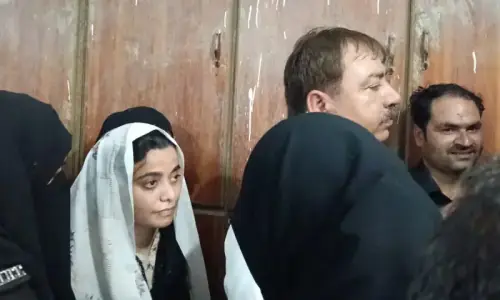
Of late, the country has been familiar with too many unemployment suicides and killing of wives and children by unemployed heads of families. 18 women had proposed to commit mass suicide at the Mazar of the Quaid on March 28.
Official intervention following the initiative of Imran Khan has averted the tragedy. Eight of the women had wanted their bodies to be buried in Islamabad to awaken the conscience of the rulers. Will the rulers wake up before it is too late?
Putin's growing popularity
Few experiences in my life have been more thrilling or terrifying than visiting the headquarters of the Soviet secret police - KGB - at Moscow's notorious Lubyanka Prison in 1991, a place so dreaded that even Russians were afraid to even utter its name. KGB told me I was the first western journalist to enter its HQ as a guest.
I was shown the cells where the 'enemies of the Soviet state' waited to be shot, walked the Lubyanka's musty, dimly-lit corridors, inspected the fascinating secret museum of Soviet espionage, and interviewed two senior KGB generals.
I sat at the desk on which the mass murderers of the Soviet secret police - Yagoda, Yezhov, Beria - wrote orders sending over 20 million to their deaths. The same desk used by their post-Stalinist successors, like Andropov and Chebrikov.
The KGB generals and colonels that I met and socialized with during my extended visits to Moscow from 1989-1992 made me understand a profound revolution was under way at KGB HQ, better known as Moscow Centre.
A younger generation of KGB, mostly from the elite 1st Chief Directorate that conducted foreign intelligence operations, had become totally disgusted by the corruption, cronyism and incompetence of the Communist Party. Unlike party bigwigs, the intelligence people knew Russia was heading for economic collapse.
The famed dissident, Dr Andrei Sakharov and a group of his scientific colleagues had warned in 1981 that unless drastic steps were taken to cut military spending and renew the USSR's run-down industrial and agricultural base, the Soviet Union would collapse within ten years. The USSR crumbled in 1991.
That year, I reported from Moscow that the younger generation KGB, who were the USSR's best educated and brightest youth, with extensive experience abroad and contempt for communist ideology, were going to ditch the moribund Communist Party and attempt to seize power themselves.
Intriguingly, KGB's Young Turks repeatedly told me their role models for the 'new' Russia were two rightwing military strongmen, South Korea's Gen. Park Chung-hee, and Chile's Gen. Augusto Pinochet. 'We will make lazy Russians work at bayonet point,' were the words of an exasperated KGB colonel.
A decade later, KGB alumni have assumed total power under former KGB colonel, Vladimir Putin. After ten years battling corrupt bureaucrats of the Yeltsin years, ruthless gangsters, robber barons and rebellious regional governors, Russia's security establishment - known collectively as 'siloviki' - have consolidate their grip on power.
The recent barely contested elections in Russia confirmed Moscow's hard men are now completely in charge of a one-party state. President Vladimir Putin has ruthlessly scattered Russia's feeble democratic forces, brought the media totally under his control, broken the robber barons, and crushed regionalism. He is now an absolute ruler.
During the wildly corrupt Yeltsin era, less than 5% of senior government positions were held by 'siloviki.' In 1998, the security apparatus ousted the drunken Yeltsin and brought to power a former KGB colonel, Vladimir Putin. This was a first: a coup by intelligence services rather than the military.
Now, six years later, ex-intelligence and security officers control 60 per cent of all senior government positions. As the USSR was collapsing, KGB hard men quickly moved into business: security, information, banking and finance, oil, metals, trucking and foreign trade. Switzerland became the unofficial headquarters and banking centre for the KGB Inc.
After a decade of bitter infighting, often against local mafias, former KGB men now control much of Russia's major industries and services. The 'siloviki' dominate the military, and are pressing Russia's exceptionally brutal repression of Chechen independence seekers in the Caucasus. In fact, Putin came to power after KGB agents blew up a number of apartment buildings in Russia, killing 300 people, and blamed Chechen 'Islamic terrorists' for the crime.
Most Russians are content to see Putin and fellow hardliners in charge. During the degenerate Yeltsin era, foreigners - notably the US - exerted unconscionable influence over Russia's political and economic affairs, deeply humiliating nationalistic Russians. Gangsters waged wars in the streets. Putin ended foreign domination and semi-chaos, restoring Soviet-style order in Russia.
Some Russians are dismayed by Putin's crushing democracy and return to autocracy, particularly Moscow and St Petersburg's western-oriented elite. But most Russians (polls say 80 per cent) say they crave economic and political stability far more than the luxury of democracy.
High oil prices have injected sufficient money into the economy to compensate for the loss of political and press freedoms which, after all, were uncertain novelties to most Russians.
Putin has turned out to be a level-headed, pragmatic leader who commands great respect from his people and manages to avoid censure for incessant national disasters. He has so far balanced ruthlessness with remarkable caution, using his mailed fist only rarely, but to great effect. Trite as it is to say, Russians do crave strong leadership - and Putin is probably the most popular leader since Stalin. -Copyright Eric S. Margolis
Wana operation in perspective
So Kaloosha II is to be wound up. Forty-six Pakistan army soldiers killed (eight of them in cold blood) in the space of two weeks; 60 odd militants and 163 "miscreants" captured. Hardly a cause for a sense of achievement.
Apparently, the army has yet to achieve its objective. After going in with threats spewing and guns blazing, it suffered some losses and, of course, an unexpected hostage situation led to a rapid change of strategy. Instead of force the army opted for negotiations. In return for agreeing to lift its cordon and pull out of the area, eleven army hostages were released.
This was not the only setback for the government. The operation failed to capture a "high value target" - something the president had rashly hinted at in an interview with CNN. The one Al Qaeda scalp our fighters claimed - "chief spy Mr Abdullah" - no one had ever heard of before. To add insult to injury, the very much alive and kicking Ayman Al-Zawahiri sent a tape to Al-Jazeera in which he called on Pakistani citizens to overthrow their unIslamic rulers.
At least two previous military operations also displayed a marked lack of strategic thinking: the Kashmir war in 1965 and Kargil in 1999. Lack of strategic thinking means an inability to consider and factor in the wider, long-term implications of military action.
Where was the long-term vision when Kargil was seized? Did our military planners really believe that the Indians would just let them hold on to the peaks they had seized? Did they really expect the international community to allow territorial control to be determined by the use of force? Kargil is, thankfully, part of our history.
The government sent thousands of soldiers and paramilitaries into South Waziristan to cleanse the area of foreign "terrorists" responsible for acts of militancy both in the wider world and in Pakistan which included the attempts on the life of President Musharraf. As an ally in the US-led war on terror, Pakistan cannot possibly allow such "miscreants" to operate from its territory.
Then, there is the whole sordid reputation and history of the Federally Administered Tribal Areas. The question arises: should, in the twenty-first century, be there some parts of the country where the rule of law does not apply, the writ of the government does not extend, and the army cannot enter? Here, there is a community that does nothing but engage in crime: smuggling, kidnapping, theft and now harbour "terrorists". This is how the government looks at the problem.
The United States will be having presidential elections in less than eight months. The two leading candidates are incumbent George W. Bush and Democratic challenger John Kerry. Bush is hoping to win on his record in the war on terror.
The only problem is the war on terror has achieved little and lost much: no Osama bin Laden or Zawahiri, no end to global terrorism, massive haemorrhaging of US credibility and standing across the world, and a disastrous (in every possible sense) war in Iraq.
Add to this a growing wave of embarrassing and damaging revelations about the internal workings of the Bush administration - and the fact that he is facing a decorated war hero.
If he has any hope of winning re-election, George Bush desperately needs Osama bin Laden. Where does everyone believe Osama bin Laden and other Al-Qaeda leaders are hiding? In our tribal areas. The military operation in Wana started on the eve of US Secretary of State Colin Powell's visit to Pakistan.
So, many believe this operation is about wiping out "terrorists" and cleaning up the tribal areas and that the Musharraf government sent thousands of troops into Wana to try and capture Osama bin Laden, Ayman Al-Zawahiri or any other Al- Qaeda leader they could get their hands on, to support George Bush's re-election campaign.
Aside from a tendency to say "yes" to Washington's "requests" almost before they are made, President Musharraf was under pressure because of the proliferation of nuclear technology by our leading nuclear scientists - of course, acting totally alone with no knowledge of the army or government.
To relieve short-term American pressure we sent our troops into Wana. Think strategically for a moment and the potential long-term consequences of this action - the long-term pressures we will come under - become apparent. The fact remains no Pakistani soldier ever set foot in the Fata before 9/11. The British ruled the subcontinent for two hundred years but gave up trying to control the tribal areas.
There is a history here, of a fiercely independent people, all too willing to fight, totally unable to forgive or forget. You do not try to win your way with such a people using guns. You learn - as the British did many decades ago - that force leads to a bloody nose. What happens next in Wana depends on our military plans.
The recent fighting in the tribal areas included an attack on a distant military check post in Kurram Agency, and mortar attacks on the Frontier Constabulary HQ, the Judicial Complex and the Civil Secretariat in Peshawar - the seat of provincial government.
If that is an indication of things to come, we could soon be dealing not with a small-scale clash in the far-off tribal areas, but a conflict that encompasses the whole of the NWFP.
One cannot rule out the impact of military action on our troops, and on the wider Pakistani public. Much as the president would like to present this as a straightforward battle between good and evil, us and them, it is far from black and white.
True, many of those firing back in Waziristan are lawless militants, and at least some are terrorists - but many of them are also Pakistani, and they are all Muslim. Muslims who - whatever the means they choose - are fighting against US aggression and injustice.
The majority of Pakistanis would wholeheartedly condemn their tactics, but equally a majority of Pakistanis would wholeheartedly share their anti-US sentiment.
The cost-benefit analysis of military operations in the tribal areas therefore reads as follows. Short-term gain: Washington is happy with us, we have joined the club of major non-Nato allies.
Short-term loss: dozens of dead Pakistani soldiers, a couple of dozen dead civilians. Possible long-term gain: nothing - the US will slap on sanctions as soon as we outlive our utility.
As for bringing law and order to the tribal areas - this can never be imposed by force. Such change comes slowly through investment of time, money and effort; social and economic development; political interaction.
In conclusion, had the Wana operation indeed been motivated by what the government claims, one could at best have lauded the intention. But its Bush-pleasing objective deprives it of anything laudable.