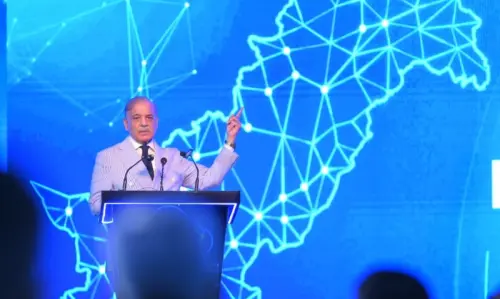
ISLAMABAD, Dec 4: Commerce Minister Humayun Akhtar Khan said on Thursday Pakistan would strongly oppose any amendment in the rice import regime that would impact Islamabad’s export of super Basmati to European Union member countries.
Speaking at a news conference, the minister said that the possible changes would exclude super Basmati from the abatement scheme resulting in duty of 250 euros per ton, which would make Pakistan’s rice less competitive with others in the EU market.
The minister said that he had conveyed Pakistan’s concern to European Commission (EC) trade commissioner Pascal Lamy that EC has omitted super Basmati from the list of varieties qualifying for abatement.
Mr. Khan said that the trade commissioner has given him an assurance that the EC would further consult Pakistan in the matter before any final decision would be taken.
Regarding the anti-dumping duty on bedlinen export to EU, the minister that Pakistani exporters will be allowed to maintain its competitive edge in bedlinen export and no anti-dumping duty would be levied on its normal market share.
“We are asking for that the minimum duty free quantity might be 60,000 tons to EU to reflect the current level of our export and the commission should enhance this level each time so that Pakistan’s market share register an increase in the coming years,” he said.
The EC, Mr. Khan said, has agreed to examine how the duty free quantity could be converted to a percentage of market shares for determining yearly quantities of duty free access to Pakistan’s bedlinen.
On Pakistan’s request, he said the EC had also agreed that any anti-dumping duty over and above the duty free access would only be imposed after considering Pakistan concern for maintaining its export competitiveness.
The EC would also examine the possibility of two tier duty rate for such quantity so that lower duty could be applied for the first quantum of additional export over and above the zero per cent market access, he said.
He said the EC also agreed to keep institutional bedlinen out of the arrangements if it was technically possible to cover it in to a separate classification.
Presently Pakistan’s export of bedlinen to EC is covered under EC’s GSP drug arrangement incentives at zero per cent duty and if for any reason this incentive is subsequently withdrawn, the EC agreed that Pakistani exporter may request review of the anti-dumping mechanism that would be introduced by the EC. The minister said that it was decided that the arrangements would be reviewed if at any stage the GSP concessions enjoyed by Pakistan were to lapse or end.
The representatives of the Pakistan bedlinen industry would now hold separate meetings with EC officials to work out the details of this arrangement, the minister said.