0
0

SUKKUR, June 3: Chief Minister of Sindh Sardar Ali Mohammad Khan Mahar has said that the Sindh government was taking effective measures to solve the unemployment problem by setting up a network of industries in the province by providing maximum incentives to the industrialists.
Talking to journalists at the Mahar House, Ghotki, he said that there was no scarcity of water in Sindh and that the province was getting its due share.
He said that the Sindh minister for irrigation and power has already said that water to the Thal and Reni canal would be provided in case of floods.
Regarding the law and order situation in Sindh, Sardar Ali Mohammad Mahar, said that a tangible improvement in law and order had been achieved and hoped that a visible change would be felt as a result of better planning in the field.
He said that Sindhis and Mohajirs were brothers. They were dwelling in Sindh and must work together for the development of the province.
Earlier, the Sindh chief minister held an open kutchehry and listened to the people’s problems, he received many complaints and issued on the spot orders for solution of people’s problems.
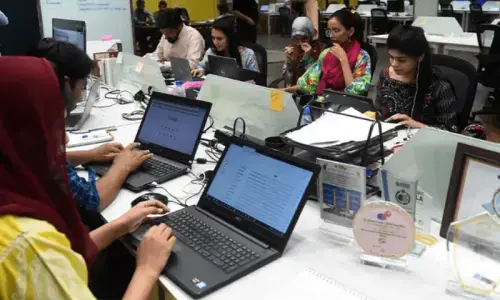
poverty: The Sindh poverty reduction strategy paper district consultation workshop was held at the DCO office, Sukkur, on Tuesday.
The main speaker of the workshop was the senior chief, Poverty Planning and Development Department, Sindh, G. M. Abro.
Giving a detailed briefing, he said poverty in the world was growing day by day, and added that about 25 per cent of the world population was living in the grip of poverty, and the major portion of it was dwelling in South Asia.
He said that 40 per cent of Pakistan’s population lived in poverty and more than 50 per cent of the population of Sindh lived in poverty, and added that at least 82 per cent of the population of the eastern districts of Sindh lived in poverty, while the ratio of poverty was increasing rapidly in the rural areas.
He said keeping this aspect in view, the government was preparing a poverty reduction strategy in consultation with the provinces through the districts, so that the majority of development projects could be implemented in consultation with public representatives, government officials, notables, students, agriculturists, industrialists, etc. He said that six districts were selected from Sindh which included Sukkur, Jacobabad, Naushahro Feroze, Dadu, Badin and Thar because of having different geographical conditions.
He said that the Government of Pakistan initially prepared an interim poverty reduction strategy to make suggestions and recommendations.
The project officer, UNICEF, Sindh, Tariq Khan, said that in Sukkur district, 50 per cent population was under 19 out of which only 40 per cent attend school, immunization coverage was low, and water sanitation facilities were not available.
He said that all these factors were the main cause of poverty and the UNICEF was making serious efforts regarding poverty reduction in Pakistan.
The workshop was attended by Anwar Khan Mahar, MPA, the Taluka Nazims, Sukkur and Pano Aqil, Syed Kazim Ali Shah and Ali Gul Mahar, EDOs and the heads of various nation-building departments.