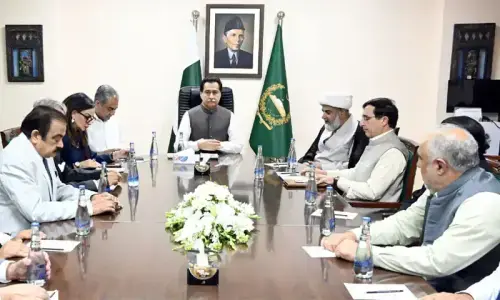
WASHINGTON, April 15: Pakistan has informed the United States that it would not extradite its nationals suspected of helping the Taliban or Al Qaeda networks and instead would prefer to try them inside the country, Interior Secretary Tasneem Noorani told Dawn.
Mr Noorani, who was in Washington this week to attend the second meeting of the US-Pakistan joint working group on terrorism, said even Ahmad Omar Shaikh, the man accused of killing American journalist Daniel Pearl, would not be extradited.
The British Muslim militant was convicted and sentenced to death on July 15 for the kidnapping and murder of Pearl, a Wall Street Journal reporter.
Mr Shaikh was convicted with three other men — Salman Saqib, Fahad Naseem and Shaikh Adil — who were sentenced to life in prison.
Mr Pearl, 38, disappeared on Jan 23 in Karachi while working on a report about Muslim militant groups.
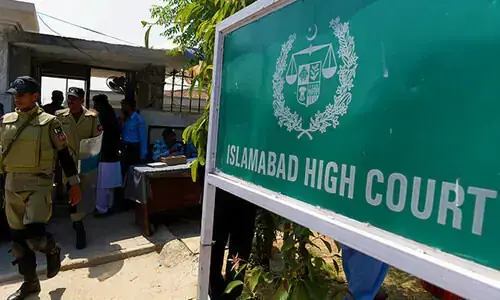
“None of these or other suspects would be extradited to the United States,” said Mr Noorani. Ahmad Omar Shaikh, he said, had appealed against the death sentence and his appeal was pending before the high court. “All such cases will be decided by Pakistan courts according to Pakistan laws,” he added.
The interior secretary said that the Americans were aware of “this principled stand” and during his meetings in Washington they did not even ask for the extradition of any terrorism suspect.
Mr Noorani, however, acknowledged that the US administration was seeking the extradition of some of people of Pakistani origin who had later taken other nationalities. They include a Boston-based woman, Aafia Siddiqui, who is now an American citizen and is believed to have escaped to Pakistan.
The 31-year-old Ms Siddiqui is the first woman to be accused of having links with Al Qaeda. She holds a Ph.D in neurological science and has studied at the Massachusetts Institute of Technology and Brandeis University.
“We are looking for her but so far we have no information about her,” said Mr Noorani. He said people like her, who now are foreign nationals, could be extradited if caught.
Besides terrorism suspects, he said, there’re eight other people, all Pakistan nationals, who were on America’s extradition list. Most of them are accused of drug trafficking.
In the past, Pakistan has extradited such suspects to the United States after seeking judicial approval and Mr Noorani said these suspects could also be sent to America if caught but their extradition will have to be approved by a Pakistani court first.
Pakistan, he said, had also handed over 347 Al Qaeda suspects, mostly Arabs and Afghans, to the United States.