0
0

One way Pakistan may suffer
EVEN if Pakistan had not been inducted into the United Nations Security Council on January 1, 2003, Washington’s decision to go to war against Iraq would have had momentous consequences for the country. With membership in the Security Council, Pakistan’s position on the issue — whether war was the best way of disarming Iraq — acquired even greater importance for the country’s future.
The impact of the war in Iraq will be around for a long time. But before addressing ourselves to an analysis of this impact, let us look at the business of oil. The cliche that the world has shrunk from a vast globe to a mere village has some truth when we look at the economics of oil, the world’s most precious commodity. The business of oil is complicated. A complex set of markets link the centres of production, the means of transporting the commodity and the centres of consumption. There are severe repercussions and they are felt around the world if any of the links in the oil chain are disrupted. Arbitrary events can cause disruptions.
The decision by the oil producing and exporting countries (Opec) to sharply increase the price of oil in 1973 and again in 1979 produced a world economic recession. It also ultimately led to the debt crisis experienced by many middle income countries — mostly in Latin America — causing economic stagnation that lasted for more than a decade.
Domestic politics and policies can also be disruptive. Nigeria, a major oil producer, offers a depressing case of a country where such a major endowment can be frittered away by selfish politicians bent upon benefiting themselves rather than their citizens. Such rapacious behaviour can produce a popular reaction against the rulers as has happened on many occasions in Nigeria. When political turbulence is extreme and persists over time as it has done in Nigeria and is now happening in Venezuela, its impact can be felt in the world’s four corners.
How major centres of consumption price oil through taxes or subsidies also affects the oil business. The most telling example of this is the approach adopted by the United States which has kept the price of gasoline — the most important by-product of oil — at a level that encourages careless consumption. At the petrol pump, US consumers pay about one-half of the price paid by the Europeans and the Japanese. Although, as we will discuss below, the US has been able to reduce its dependence on oil over time, the pressure on the price of this precious commodity would have been much less had the American government chosen to tax the consumers somewhat more aggressively.
However, nothing is more disruptive in the business of oil than a major war, particularly when it is waged in and around the major areas of production such as the Middle East. That happened in January 1991 when America attacked Iraq in order to get it to vacate its occupation of Kuwait. That has happened again and there is a great probability that this new American enterprise in the Middle East will result in a sharp increase in the price of oil.
There is a four-fold purpose behind this article. We will ask and then attempt to answer three questions. One, what is the likely impact on the business of oil of the second Iraq war? Two, how long will this effect last? Three, how would it affect a country such as Pakistan, dependent as it is on imported oil to meet a significant part of its demand for energy? There is, of course, a fourth question. Given Pakistan’s own situation, how could it relieve itself from the impact of a highly volatile oil market? We will answer this last question some time later in this space.
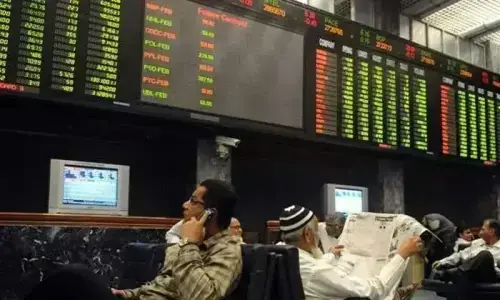
Pakistan will have to bear the burden of the cost of the war in Iraq for many years to come. The most immediate impact will be a sharp increase in the price of oil, a commodity on which Pakistan spends a significant proportion of its total import bill. A hike in the price of oil will also disrupt the global economy, slowing down the rate of growth to a point where the world may be plunged into a deep and prolonged recession. Even before the war started, the oil market tightened, sending the price soaring in February. In the trading week of February 24-28, crude oil price reached the feared level of $40 per barrel.
The oil market is different this time compared to the first Gulf War in 1991. Prices rose to more than $41 a barrel by October 1990 as America began to assemble its troops to attack Iraq. But in January 1991, they fell to $18 a barrel, wiping out the entire war-induced gain. This happened since a number of large oil producers were able to tap their surplus capacity to compensate for the loss of exports from Kuwait and Iraq. The US also released large quantities of oil from its strategic reserves and pumped more oil from the fields in Alaska.
The disruption caused by the new war may last for a long time. This is for several reasons, the most important of which is the tight inventory situation in the world. A dozen years ago, the world was awash with oil. Although the UN imposed an embargo on the export of oil from Kuwait and Iraq, removing more than seven per cent of global oil supplies, large oil producers were able to quickly close the gap. This time most major production centres have been pumping almost all they can produce. This was done to compensate for the fall in production in Venezuela which removed as much as four per cent from total supplies.
It appears, therefore, that the spare capacity that was available in 1990-91 is no longer available if a sudden loss of supply is caused by the present war. In July 1990, before the Iraqis invaded Kuwait, Opec’s spare capacity was 5.2 million barrels a day. According to some estimates, Opec now has only 1.1 million barrels to tap to compensate for any shortfall.
There are other circumstances that might affect the business of oil. An important development in the major consuming areas is the growing strength of the “green movement” — environmentalists who are gaining political clout in many industrial countries. The environmental movement in the United States is strong enough to stop the construction of new nuclear plants. Environmentalists will not allow replacing the consumption of fossil fuels with such sources of energy as nuclear and hydel. There is a strong opposition to the construction of hydroelectric dams in any part of the world.
These disruptions — war, political upheaval, environmentalists’ opposition to other sources of energy — have the capacity to disrupt the business of oil. But what about demand in some of the major areas of consumption such as the United States? What are the prospects that the constraint on demand could relieve some pressure on the oil market so that a disruption in supply would not cause a great deal of harm to the global economy, in particular to the economies of oil-importing developing countries such as Pakistan?
While America, the largest consumer of oil, has done little to use the mechanism of price to curtail the demand for oil, technological advances made by it have helped reduce its dependence on conventional energy. The United States uses only about half as much oil per dollar of inflation-adjusted output as it did in the early 1970s. Ever since the last Gulf war in 1991, the economy’s energy dependence has shrunk significantly. The implication of this is that a significant disruption in supply may not have a severe impact on price such as the one experienced, albeit briefly, in 1991.
While a prolonged conflict in the Middle East could severely affect supply, much of the world’s oil moves in super-tankers sailing in the troubled waters of the Middle East. A disruption in their movement could happen for any number of reasons — war and a terrorist attack being two of them. Fearing that something like that could happen, Saudi Arabia took the precaution of loading its large fleet of tankers with oil in the days before the new war began. These tankers were positioned near the areas of major consumption such as the United States, Japan and Southeast Asia.
While the Saudis have opted for “floating buffers,” there are other strategic reserves available around the world that could be tapped in case of a severe disruption in supplies. The largest of these is in the United States. The US Strategic Petroleum Reserves (SPR) holds about 559 million barrels of oil, equivalent to about thirty days of the combined current output of the five largest oil producers of the Middle East — Saudi Arabia, Iran, Iraq, UAE and Kuwait. Other countries also have reserves. Fairly significant quantities are available in Japan, Korea, Canada and Germany.
Several serious and well informed analysts believe that a surge in energy prices for whatever reason will have a serious impact on the world economy. According to one, “They have the weight of history on their side. Since the first Arab embargo in 1973, nearly every oil [price hike] in the US has been followed by a recession.” According to Stephen S. Roach, Morgan Stanley’s chief economist: “Inasmuch as America has yet to withstand an oil shock without tumbling back into recession, I am hard pressed to believe that this will be the sole exception.”
Pakistan will feel the impact of a sustained price hike in oil in two ways — a much larger import bill and a slower growth in its exports. Both will impact the country’s balance of payments and, consequently, begin to eat into the foreign exchange reserves built with loving care over the last couple of years. Notwithstanding all the other costs Pakistan will have to bear as a result of the 2003 Iraq war, a hike in the price of oil could seriously affect economic growth.
Where are banned weapons?
The fall of Baghdad has been proclaimed, though there is still fighting in various parts of the city. At this point, one can’t tell how long resistance will continue.
Historically there have often been cases of foreign occupiers defeating large scale enemy forces, only to face years of low-level combat. The Israelis were at first welcomed in southern Lebanon for eliminating an overbearing Palestinian presence. But for nearly two decades, until Israel chose to withdraw its troops, resistance and casualties continued.
The relative ease of the US victory military confirms how little threat Saddam Hussein’s regime posed beyond its borders. Where in 1990 Iraq had substantial armed forces, it was clear well before the start of this war that the Iraqi military was no longer a formidable force, even by Middle Eastern standards. The Bush administration’s claim that Saddam in 2003 was a danger to his neighbours was not taken seriously in the region, and has now been shown to have been baseless.
Despite Bush’s constant repetition that there was no doubt that Iraq had massive supplies of chemical and biological weapons, no such weapons, or even prohibited missiles, were used by the Iraqi forces. Indeed, it seems the only time US-UK troops needed to wear their chemical warfare suits was when recovering a body from a friendly fire incident to protect themselves from the radiation given off by US depleted uranium ordnance — which, of course, the Pentagon claims is absolutely harmless.
Nor, despite many media reports, have any hidden stores of Iraqi proscribed weapons come to light. Since Iraq’s alleged possession of banned weapons was Washington’s justification for the war, their absence is rather embarrassing for the Bush administration. But even if such weapons are later found (and confirmed not just by the Pentagon, but by independent experts), this will not vindicate the war. The issue has never been whether Iraq had weapons of mass destruction, but whether any such weapons constituted a significant and undeterrable military threat to other nations, which threat could not be neutralized by the inspections process.
The TV screens are full of celebrations in Baghdad at Saddam’s fall. Saddam was a brutal tyrant and his fall is welcome. But it would be wrong to read too much into the televised cheering. There is no way to know how representative the cheering crowds are of the Iraqi population as a whole. Several thousands of jubilant crowds in a city of millions is hardly decisive, and we can assume that no one is going to organize counter-demonstrations, whatever their views.
Pro-war columnist Thomas Friedman wrote in the New York Times on April 9 that “even here in the anti-Saddam Shia heartland of southern Iraq, no one is giving U.S. troops a standing ovation. Applause? When I asked Lt. Col. Richard Murphy, part of the U.S. relief operation, how Iraqis were greeting his men, he answered bluntly and honestly: ‘I have not detected any overt hostility.’
“Overt hostility? We’ve gone from expecting applause to being relieved that there is no overt hostility. And we’ve been here only 20 days.” Nor does the cheering tell us to what extent people who are glad to see Saddam gone supported the war. Friedman asked Dr. Safaa Khalaf at Umm Qasr Hospital why the reception for U.S. forces had been so muted; Khalaf answered: “Many people here have sons who were soldiers. They were forced to join the army. Many people lost their sons. They are angry from the war. Since the war, no water, no food, no electricity. . . . We have not had water for washing or drinking for five days. . . .”
Compared to the area bombing of World War II or the free drop zones of Vietnam, this war has been extremely sparing of civilians. But it has been far from a humanitarian endeavour. The weapons used in this war that have been condemned by international human rights groups are not Saddam’s, but the cluster bombs used by US and UK forces, which leave unexploded bomblets as potential landmines targeting the civilian population for months to come.
Food shortages, lack of water, under-supplied and under-staffed hospitals are everywhere, with disease spreading in a population already weakened from 12 years of US-UK sanctions. A US sergeant killed a civilian woman near an Iraqi soldier. “I’m sorry,” the sergeant said. “But the chick was in the way.”
Maj. Gen. Stanley McChrystal replied that when troops receive fire, “regardless of how specific they can be of where it came from,” they “have the inherent right of self-defence.”
There is reason to hope that the people of Baghdad have been spared the consequences of door-to-door fighting. With the US military getting pointers on urban combat from the Israeli assault on the Jenin refugee camp, we can only imagine what this would have entailed. Indeed, the fact that the city may have avoided this grim fate is reason enough for jubilation in Baghdad, and reason for us to be glad as well.
At the same time, however, it must be acknowledged that the good fortune of Iraqis has an unfortunate upshot. The relative ease of the US victory will no doubt embolden the fanatics in the Bush administration to commit further acts of aggression around the world.
“Iraq is not just about Iraq,” explained one senior administration official. And Assistant Secretary of State John Bolton has declared on several occasions that the war against Iraq should be an object lesson for other nations with weapons of mass destruction programmes. Bolton is correct, but the lesson that will be learned is likely to be that only weapons of mass destruction offer any prospect of deterring a US “preventive” attack.
One can’t be certain that military deterrence by the target states alone will be able to prevent endless wars initiated by Washington. Some of the responsibility will have to be taken up by the global anti-war movement.
That movement has grown to unprecedented size and strength, though that still wasn’t enough to stop the war on Iraq. But just as the Bush administration sees the Iraq war as simply one battle in its effort to extend US global hegemony, those in the antiwar movement need to see their unsuccessful efforts to prevent the Iraq war as just one battle in a larger struggle to change US foreign policy. Victory will require a movement that is even larger and stronger than it is now. — Courtesy: Z-Net
Instant democracy
IN all fairness, George Bush Jr. was more upfront than Tony Blair about the war in Iraq. Somewhat belatedly and after the event Hans Blix has disclosed that “ the invasion of Iraq was planned well in advance and the United States and Britain are not primarily concerned with finding any banned weapons of mass destruction.”
While a charade was being played out in the United Nations and Colin Powell was giving a magic-lantern show about Iraq’s weapons of mass destruction, pure moonshine, the moment of war had already been decided. Dr. George Freeman, Chief Intelligence Officer of a Geo-Milito-Political Consultancy firm in the US called Stratfor, which is based in Boston, had concluded that this was a war which was definitely going to happen, that it would most likely commence between 27th February and March 2, that it would be over by mid-April.
The purpose of the war was to position the US in the heart of the region, that the current landscape was about to be fundamentally changed and that war would become a permanent feature of the next 5-10 years.
Again, Condoleeza Rice was being candid to the point of being honest that to the victor belongs the spoils. Once again, the role of the United Nations in the reconstruction of Iraq is being discussed, whereas, it has already been decided who will get the contracts (US companies).
George Bush Jr. said at a press conference in Belfast that the United Nations had a “vital role” to play in post-war Iraq and when pressed to define that role, his concentration-span already exhausted, he said that it would be “vital role.” Instead, he talked of the heaven of freedom that waited the Iraqis and of democracy. The gobbledegook of a democratic government freely elected by the Iraqi people. He displayed no awkwardness in talking about democracy, considering his own election is questionable and, in the end, was decided not by the people but by a split verdict of the US Supreme Court. Michael Moore in his book Stupid White Men has called Bush’s election “a coup.” Democracy? It depends on how it is defined.
But Tony Blair has reeked with sincerity. He was privy to intelligence reports that arrived in his office on an hourly basis, reports to which lesser mortals were not privy. Thus he knew something that even his cabinet colleagues did not know. Saddam Hussain possessed weapons of mass destruction, which he was prepared to use, that he presented a clear and present danger and was an imminent threat, not only to his neighbours but to Britain and the United States. He had irrefutable, documentary proof.
So sincere did he sound that he appeared delusional. Bush just kept repeating that “ours is a just cause” and “a noble cause”, the invocation of Biblical righteousness, the collision of “good” and “evil” and the inevitable triumph of “good.” Blair’s advocacy was more secular though he confessed to be acting according to his Christian conscience. Not once did he choose to mention that Saddam Hussain had been propped up by the British and the Americans, that his weapons of mass destruction were provided by them. No apologies, no contrition.
Blair went on and on about the sufferings of the Iraqi people, about malnourished Iraqi children but never mentioned the sanctions, enforced by a no-fly zone, that had been choking the Iraqi people. Saddam Hussain was a tyrant and his regime was brutal. But was he the only tyrant in the world? Not once one heard Tony Blair talk about ‘the prisoners’ of Guantanomo Bay or the concentration camp set up by his friend John Howard for asylum-seekers, Afghan refugees. Tony Blair’s heart bleeds for the Iraqi exiles but not for them.
What has happened is that International law has been re-defined. Force majeure has been legitimized and the United Nations Charter has been subordinated to it. In a way, it has always been so but we have managed to hold on to the fig-leaf of a moral order and there was the illusion that there was such a thing as an international community. To be sure, we will see the United Nations involved in what is called “humanitarian assistance.”
A concept that smacks of charity and the good works of dedicated teams setting up refugee camps and clearing away the rubble of destroyed cities, providing water and token medical assistance. This is the “vital role” of the United Nations envisaged by George Bush Jr, though Tony Blair still insists that the United Nations will have a pivotal role in governing Iraq, until the Iraqis are able to demonstrate the ability to govern themselves. Who will decide when that state is reached? The United States, of course.
What about the millions of anti-war protesters all over the World? Those millions of men, women and children who took to the streets? They were no match for those with a preponderance of military might arrayed against them. They stirred the conscience of the world but what is a conscience against cruise and tomahawk missiles? The United States and Britain are lucky that they did not sustain heavy casualties. Otherwise, there might have been some questions asked. The Iraqi dead do not count. Rather, it should be a salutary lesson to those who do not kneel when ordered to do so. What about the weapons of mass destruction? They have, no doubt, been transferred and hidden away in some other country. It has not yet been decided which country because it has not yet been decided which country will be invaded next. My mind goes to an old family friend from yesteryear, Anis Chacha.
Anis Chacha worked for the Special Branch, his specialty lay in framing opponents of the regime in false cases. How did he do it? “Simple,” he would say. “I manage to find communist literature in their homes.” Anis Chacha was fairly modest about his talent and not triumphant like Colin Powell and Tony Blair providing “proof” of weapons of mass destruction in the hands of Saddam Hussain. Still, one war is over and that should be seen as a small mercy. Until the next war.
Rebuilding Baghdad
THE news from the home front is that as soon as the war is over the United States will rebuild Baghdad. It was greeted with joy by urban planners all over the United States.
A man at the Palm Restaurant said, “If they are going to rebuild Baghdad, they will have to rebuild Harlem.”
Someone else said, “And even parts of the Bronx.”
I said, “That’s exactly what Mayor Bloomberg told the president the other day.”
A diner said, “They can’t just vote money for Baghdad without matching it in our urban areas, such as Gary, Ind., Watts and Washington, D.C.”
Another person said, “It’s not a big deal. Bush has allotted that much for his tax cut, but if they’re going to give Harlem $100 billion, we’re going to have to occupy it for several years.”
Another man at the table became the devil’s advocate and said, “But how can we rebuild Harlem when we never bombed it?”
A lady said, “It looks as if we bombed it.”
I said, “Does it have any weapons of mass destruction?”
The diner said, “We haven’t found any so far. Maybe if we could get the Air Force to bomb the crack houses and then send in the 101st Airborne to occupy it, that would do the trick.”
Another lady said, “If Bush is going to give money to Iraq for schools, why can’t he give us money for our schools?”
The first man replied, “He has only so much money in his budget and he has to put it where it does the most good. If he can buy democracy in the Middle East for $100 billion, I think it’s a bargain.”
Meanwhile, up on the Hill, French bashing is increasing by the day.
A boycott is now going on in earnest. Allegra is on the list because it is made by a French company. Chanel, Bollinger champagne, Christian Dior, Dannon yogurt, Evian, Hennessey Cognac, and Roquefort cheese are just a few of the products we must throw in the Frenchman’s face because France voted against us in the UN.
When Congress ordered french fries to be taken off their menus and freedom fries put in their place, all America rejoiced, even after they found out french fries come from Belgium. But their big move will come when Congress passes a law to substitute all French surnames with American ones.
For example, if your first name was Henri, you will have to change it to Henry. Jeanne will become Jean. Pierre will be Peter, Maurice would be Morris, and Alain would be Al.
The person on the Hill who was working on the bill was very proud of it.
“This is the only way for the French to realize that we mean business.”
“Is Congress for it?”
“They wouldn’t dare not be.”
“Do you think Americans will mind changing their first names?”
“Why should they mind? It’s the patriotic thing to do.”
“I know a woman whose name is Paris. What can she change it to?”
“Sofia — as in Bulgaria.”
—Dawn/Tribune Media Services
Post-war prospects for the Middle East
IN the US Senate Foreign Relations Committee, the American Secretary of State, Colin Powell, stated in the context of Iraq that Washington would reshape the political map of the region. It means that America would not be content with the mere overthrow of the Baathist government in Iraq but would make territorial arrangements not just in Iraq but in the entire Middle East region. This is why George Bush went on escalating his demand on Iraq from disarmament to removal of the Baathist government.
Bush made his intention very clear when he had warned the Iraqi president that the US forces would enter Iraq even if Saddam Hussein went into exile. In other words, the occupation of Iraq rather than its disarmament was his principal aim. The American president linked the Palestinian question with that of Iraq in a bid to neutralize the people of the occupied West Bank and Gaza.
At the same time, the Bush administration stoked the fire of Kurdish rebellion in northern Iraq by increasing the financial and military assistance to a ragtag coalition of anti-state elements in the northern and southern Iraq. The moribund Iraqi National Congress received fresh impetus as a force of five thousand mercenaries was raised to start insurrection against the central government in Baghdad.
For about a decade Kurds in the north and the Shias in the south enjoyed protection under the arbitrarily imposed so-called no-fly zones since 1991. The idea was that when the US-led expeditionary force would attack
Iraq, their fifth column the Iraqi National Congress — would rise in rebellion against the Baath government.
In the initial years following the 1991 American invasion of Iraq, a Shiite faction in the south launched an abortive rebellion only to be quelled by Baghdad. Since then there has not occurred any revolt in the south. The Kurds in the north are split into two rival factions — one, the Kurdish Democratic Party, led by Masud Barzani and the other, the Patriotic Union of Kurdistan, led by Jalal Talbani. Saddam Hussein had played off one against the other in a bid to keep the territory under control. There is yet another force, the Kurdish Workers Party — PKK — a Marxist movement primarily based in the pre-dominantly Kurdish south-eastern province of Turkey adjacent to northern Iraq.
Led by Oscalan, the imprisoned guerilla leader, the PKK stands for an independent Kurdish state and has been up in arms against Ankara. To the east the Kurds form a majority in the Iranian territory adjacent to northern Iraq. It may be recalled that in 1945 a Kurdish republic was formed at Mahabad during the Soviet occupation of northern Iran.
Together the ethnic Kurds of three states — Turkey, Iraq and Iran — numbering 30 million, inhabit a compact territory which they call Kurdistan. Until 1919, the ethnic Kurds of Turkey and Iraq were part of the Ottoman Empire. After the defeat of the Ottomans the entente powers — Britain and France — made the Sultan sign the Treaty of Sevres on August 10, 1920. This treaty stripped the Ottoman Empire of its non-Turkish provinces. The important provision of the treaty was that the Kurdish territory east of the Euphrates was to be made a state and President Woodrow Wilson was to demarcate its borders.
If implemented, this would have sliced away the south-eastern province of Turkey and the northern province of Iraq. But that was not to be. The nationalists let by Kemal Ataturk rejected the treaty and expelled
the Italian, French and
Greek troops from what is now Turkey proper. So the proposed Kurd state died before it was born.
If the US-led coalition grants autonomy to the Kurds in northern Iraq, the development is likely to fuel the struggle for Greater Kurdistan stretching across Turkey, Iraq and Iran. It was to pre-empt such an eventuality that Turkey, Iraq, Iran and Afghanistan signed the Sadabad Pact in 1937. Essentially a mutual assistance pact, it also enjoined upon the parties to concert measures to combat any internal subversion that might threaten the integrity of any of the member states. The threat perception of Turkey, Iraq and Iran was the Kurd irredentism. It still keeps looming over the political horizon.
Turkey has already expressed concern to the US that any attempt carving up a Kurdish state in Iraq would be fraught with grave danger for it. Though Colin Powell has allayed Ankra’s misgivings regarding America’s post-war agenda in the region, Turkey is far from satisfied, given the implications of Kurdish autonomy on the Iraqi side. It Turkey is as averse to Kurdish self-rule as is Serbia to Kosovo’s autonomy. Certainly, Turkey will never like to see the dismemberment of Iraq or even its cantonization
The ethnic Kurds have reportedly seized Kirkuk with the US assistance. This may prove to be the last straw on the camel’s back since Turkish army had already warned Washing-ton that in that case it might intervene to foil any independent Kurdish entity in northern Iraq.
So when it comes to territorial settlement in Iraq, the post-World War I status quo will be disturbed and the Bush administration will have to face intense opposition from its regional allies.
The United States has promised to replace the Baathist regime with a representative system in Iraq. Leaving the question whether democracy can be brought into being at gunpoint, Iraq with its predominantly Shia population will end up with a pro-Iranian government which will be more unpalatable to Washington and puritan Riyadh than the ousted Baathist government was.
Ayatollah Mohammad Baqar al Hakim of Basra has spent 20 years in exile in Iran and is known for his pro-Tehran proclivities. He had advised his followers to stay out of the war and resist American domination of Iraq. The Shia majority of Bahrain, already opposed to the dynastic monarchy, may overthrow the ruler. The significant concentration of Shia population in Hofaral Batin, the eastern province of Saudi Arabia, will clamour for autonomy within a federal set-up in that country.
In the ensuing conflict will America then stand by the monarchy in opposition to democratic forces? Has the Pentagon think tank thought of this scenario? Once the genie of democracy is uncorked, it will not remain confined to Iraq but will overwhelm the Gulf kingdoms, sultanates, emirates and sheikhdoms. So the shape of things to come in the region is not likely to fit into the US design.
Furthermore, the United States, European powers and China have differing perceptions about the post-war strategy in Iraq. Washington wants to arrogate to itself the task of forming a broad-based government in Iraq, leaving the humanitarian work to the UN. While Colin Powell has conceded a partnership role to the UN, its exact status has not been defined. These blanks have been filled out by the National Security Adviser, Condoleezza Rice. She has dwelt at some length on the subject, leaving no doubt that the invading forces will play the leading role because they have made “sacrifices” for the “liberation” of Iraq.
In the initial period, Iraq’s administration will be in the hands of a retired American general who will be responsible to the Pentagon. That general happens to be pro-Zionist Jay Garner. Together with Gen. Tommy Franks, the chief of the US Central Command, Gen. Garner will undertake the reconstruction of Iraq with the cooperation of NGOs. The UN’s role will be limited to humanitarian service and the management of oil-for-food programme.
The broad-based government will consist of representatives of all religious and ethnic groups and of the occupying forces. The interim government will be responsible for the maintenance of law and order and the provision of basic necessities of life for the people.
That the proposed representative government will include, among others, the representatives of the occupying army is anomalous. This plan conflicts with that of Russia, France, Germany and China in that the latter insist on the immediate cessation of hostilities and a central role for the UN in the establishment of an administrative authority in that country while the US plan restricts the responsibility of the world body to relief work only and retains absolute powers for itself.
The US Congress has denied any role to Russia, France, Germany and Syria in the post-war reconstruction of Iraq on the ground that they had opposed the American invasion of Iraq.
Equally vehemently the French foreign minister has questioned the right of the United States to carve up Iraq as if it were a “piece of cake”.
The question is: can the US and its handful of camp followers carry out the task of reconstruction without the financial assistance of other world powers? Unlike the 1991 Gulf war, this time the United States will have to bear the total cost of the war alone; it will also have to bear the cost of the post — war reconstruction of that beleaguered country should it choose to go it alone.