0
0

LAHORE, April 13: Corporate farming is aimed at modernizing the sector and attracting capital rather than allowing the profit-driven corporations to take it over.
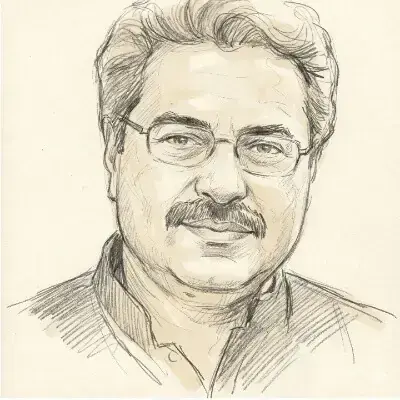
Afaq Tiwana, the brain behind the idea and an adviser to the ministry of agriculture, made this statement while talking to Dawn here on Sunday.
The corporate agriculture farming (CAF) must be understood as a gradual process, he said, adding that the corporations would not take over the whole country in a month or so. They will rather come in slowly and modernize the archaic system of farming in the country.
Small farming units still existed in countries where CAF was started at the beginning of the last century. Small and large mechanised farming had always existed side by side, he said.
According to Mr Tiwana, the whole idea of CAF has its roots in a wish to modernize local farming and enable the country to compete in the world market in this sector. At present, the agriculture sector is losing its economic viability because it is not attracting the required amount of capital. In fact, it is not structured to attract capital. Capital lies in commercial banks and stock markets, not in government institutions like the Agriculture Development Bank of Pakistan or small players like the cooperative banks, which hardly cover 10 per cent of the total loan requirement of the sector.
The ADBP has an outlay of just Rs40 billion, half of which is stuck in bad loans. The total requirement of the agriculture sector is Rs180 billion. The figure would shoot up dramatically if any attempt was made to modernize the sector. Where would the money come from? It has to be either from commercial banks or private investors in the shape of stock investment. However, present condition of the sector hardly leaves any room for optimism. No one from the sector is used to keeping financial records, which is the first requirement of a loan transaction. Only big corporations with strict financial discipline could set the precedent for proving financial viability through maintenance of record, he insisted.
One must not forget that agriculture is a commercial activity. This is not to argue that one should lose sight of social issues like food security. But only an attempt to redefine them and link them to a more tangible financial discipline and commercial activity. It is not an attempt to deprive the country of its security but ensure it by modernizing the sector on mechanical and commercial lines, Mr Tiwana maintained.
The second major crisis that has affected the sector is the lack of qualified managers, he observed. Interestingly, no farms in the country, even those being run on modern lines, have employed say a chartered accountant or an agriculture analyst. These farms are being run on hereditary lines that do not leave any room for modernization. If big modern farms are being run on these lines, one can imagine the condition of small farmers, who do not have access to capital or management experts. Their farming patterns date back to mediaeval times, and the country lacks the necessary funds to modernize them even if it wishes so. Unless big corporations with a lot of money are allowed into the sector, there is no hope of lifting the sector out of the present mess. The CAF should be seen as an effort in that direction and not be left to conspiracy theorists, he emphasized.
The third problem is the technology crisis. Farmers in Pakistan are getting abysmally low yields due to poor technology. They hardly manage to get 40 to 50 per cent of what growers in other countries are getting per acre. Because of this, the farming sector is stuck in a vicious cycle of low yield, less investment, poor use of pesticides and low yield. This cycle has to be broken through massive investment in the sector. Only the CAF can do that.
The World Trade Organization (WTO) regime is just around the corner, and no one should have any doubts about its effects on the sector. The CAF must be understood in the backdrop of such pressing needs. Emotive arguments should be replaced by a rationalistic understanding of the dynamics of world economics, he claimed.
There are many types of CAF. However, only one of its forms — multinationals purchasing land or getting government land on lease — is being debated in the country. Cooperative farming and contract farming are other forms of CAF missing in the arguments being put forward for or against the idea.
Against the popular belief that CAF would render people jobless in rural areas, Mr Tiwana insisted on the contrary. The CAF would promote rural industrialization and create jobs. Rural industrialisation has followed the CAF in other countries of the world. Such baseless accusations are designed to kill the idea rather than prove its inefficiency, he maintained.