



 0
0

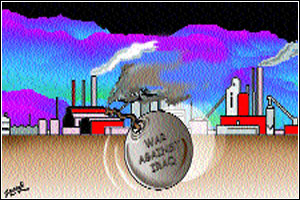 The consequences of war on Iraq are being debated the world over. Pro-war analysts believe that a short battle would remove uncertainty which is holding back the consumer and corporate spending for nearly one year, eliminate uncertainty, boost government spending, and push oil prices lower in the medium term as new Iraqi production comes on stream.
How badly the business and consumer confidence will hit, is hard to estimate. However, oil importing developing world, including Pakistan will possibly see the price touching $40 a barrel. War could affect the economies through oil, stocks, dollar, and business and consumer confidence.
The risk is now greater than was in 1973-74 oil crises. The four previous oil shocks took place when the economies were overheating and inflation rising thus forcing the central banks to raise the interest rates. Today, the environment is of excess capacity and falling inflation. The rich world uses half as much oil per dollar of the GDP as it did in 1970s.
The higher oil prices still have power to hurt the economy. A $10 increase in oil prices, if sustained for a year, reduces the global GDP by 0.6 per cent and changes monetary and fiscal policy. It also transfers income from oil importing to producing countries. Output fall in response to the impact of underlying inflation, and hence an appropriate policy response from the central banks is unlikely to mitigate the uncertainty. Whether, central banks raise interest rates to curb inflation, or cut the same to cushion the output, economies of the affected countries are likely to suffer.
In the event of Iraq war, Pakistani economy faces many threats. In 1991 the position was comfortable, the economy was growing more than 5 per cent, fiscal deficit was though larger than today but manageable, inflation was higher but compatible with healthy growth, debt servicing liability was almost half of the current level, institutional decay was in the initial stages, and more importantly Pakistan received assurances of help from friendly countries.
Today, the position is different. Economy has started coming out of the decade-long sluggish growth, the effects of four-year drought have begun withdrawing, one third of the population is below the poverty line, hostile international environment has infected the prospects of reasonable trade volume, institutional mess and consumer and business confidence are at the lowest ebb. The gloom appears dispelling, but with another crisis looming to thwart the stability.
The likely slowdown will result in revenue shortfall and will also hurt in other ways. Today, when the fiscal deficit is at more than 5 per cent of the GDP, any revenue shortfall will deepen the fiscal crisis. The government needs to gauge war’s effects. Pakistan relies heavily on the US, the UK, Germany and Japan for foreign investment, trade and inflow of official and unofficial transfers. Germany, Japan (due to already hefty public debts), America (on account of heavy consumer indebtness) and the euro area (because of its stability pact) have little room to ease the policy, even in the event a further downturn. Record consumer debt leaves the American economy vulnerable to shocks, while consumer confidence is at nine-year low. America’s over-indebted households, Japan’s deflation and its crippled banks, Europe’s structural rigidities and its overly tight fiscal and monetary policies mean that the world economy is vulnerable to shocks. Though the Pakistani economy has shown resilience to external shocks during the past three years, but the adverse developments in major trading partners are likely to affect it. Apart from the macroeconomic fallout, a major concern is the diplomatic tension between America and Europe, which could spread to trade. Pakistan has to re-arrange these preferences to keep a balance between Europe and America.
The spat between industrialized countries will not help in speeding up trade negotiations over Doha round, which is heading for gridlock. Failure to liberalize farm trade would be a big blow to the developing states. Pakistan too, was expecting to benefit from the liberalization of trade barriers in agricultural products. The country is caught between the devil and the deep sea as it is being asked by Arab countries to refrain from voting for an American resolution seeking the right to attack Iraq, while America insists to vote for.
This could deprive Pakistan of financial aid and concessions from one side, while concessional oil and humanitarian assistance from the other. Expatriates in the Middle East too, would face difficulties. The country gets more than half of the remittances from there. Foreign exchange reserves have reached $10 billion, with the contribution of the remittances. The likely influx of manpower will flex the already tight employment market.
The stock market, for the last one and half years, is growing when the world bourses have fallen. Many think that the war deterrence will stop the rot. They argue that during the Korean War, the American share prices rose by 28 per cent, while in 1991, the S&P 500 index rose by more than 20 per cent, admitting that a prolonged war could drive down the property and share prices. Pakistan’s economy had witnessed an outflow of the portfolio investment for two years, and only this year it recorded an inflow during the first half of the fiscal. In the event of war it will be hard to secure this inflow, which will hit the consumer and investor-confidence.
The US and the UK firms might shift their future investment from Pakistan to other areas, such as India. In the post 9/11, the Union Bank of America had closed its operations in Pakistan, negatively impacting the FDI inflow during 2001-02. The economy needs the FDI to boost its growth performance. Though, oil and gas sector holds attraction for foreign investors, but they are reluctant to extend cooperation in the wake of anti-west sentiments. They are suspicious of the growing confrontation between the religious parties and the government. The uncertainty is delaying many investment decisions.
Pakistan’s industrial and external sectors too, bore the brunt and once again these are facing the consequences, in case of war. Our industrial sector relies on imported raw material, and a war may spur its cost with disruptions in supplies. The oil-price hike would increase the cost of production. The slippage in production of exportable surplus and its competitiveness is another area of concern. In the aftermath of 9/11, war risk surcharges were imposed on exports to and from Pakistan eroding the competitiveness. Our trade is dollar-denominated and the pressure on dollar is likely to persist creating problems for exporters. Cancellation of agreements and export orders will also hurt the economy.
This is a brief review but in real terms the consequences are terrifying. One cannot comprehend the tangible and intangible consequences on a piece of paper. The structure of global integration is such that major disruptions, like a war, has implications for every country in the region, whether they participate actively or passively. The East Asian crisis has established the fact that no country could remain immune against the developments in the region. Pakistan should be cautious, while dealing with the stand-off on Iraq. The intricate game of diplomacy has great repercussions on the economy of Pakistan.




























