KARACHI, Nov 13: The need for making foreign policy reflective of the mandate of Pakistanis was the dominant view at a seminar during which former career diplomats identified the possible impediments if an MMA-led government is installed in the country.
The seminar on ‘International Dimension of General Election in Pakistan’ was organised by the Pakistan Institute of International Affairs (PIIA) on Wednesday.
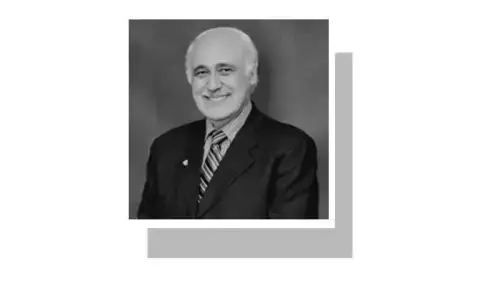
The London-based lawyer, Sibghatullah Kadri, did not agree with the view which was apprehensive about a government led by the Muttahida Majlis-i-Amal (MMA) because of the concerns of the Western world and other international bodies.
Mr Kadri, who is also Queen’s counsel in the UK, said that “in elections sovereign people are asked to give their verdict on certain issues. If the MMA has been given a mandate, give it a chance. We should not be apologetic for it.”
He said that if the MMA was not allowed to have its share in the governance, what its opponent would do if in the next elections it returned with a much bigger mandate.
He said stability in Pakistan would only be ensured if the people had a sense of belonging and a share in governance.
At the very outset, Mr Kadri said the recent elections in Pakistan were “not people’s elections; they were general’s elections.”
He equated the prevailing situation with that of 1971 when the assembly session was not convened. He also pointed out the pre-election and post-election contradictions of the political parties.
Referring to the geo-political situation around Pakistan, he was very resentful of the role of the US ambassador in the domestic matters of Pakistan. He asked: “Why was the official being treated as a viceroy? Why are we providing them bases and against whom they will be used? Will Pakistan be ready to fight alongside the Americans against a Muslim country?”
He was also critical of the viewpoint that Pakistan should not take a certain initiative because the US or other countries would not like it. “How long we are going to follow that?”, he asked and cited the example of some Middle eastern countries.
He also criticized the argument that 58(2) (b) was to preempt the martial law. It was a threat by the military to have its share in power and not to save Pakistan from another martial law, he commented.
He said that in Pakistan power did not belong to the people, but a selected group.
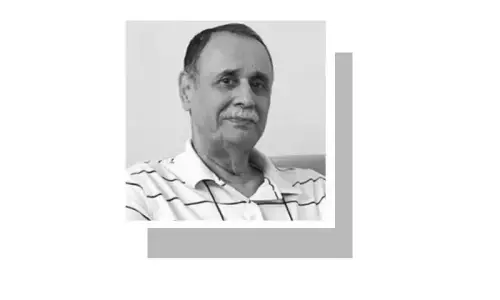
Prof Sikandar Mehdi of the Karachi University was of the view that elections were not held for continuity, but for a change. He urged a need for a dignified change in ties with the United States rather than talking of continuity, and called for a change in the style of governance.
He noted that the MMA leadership had shown flexibility on 58 (2)(b) and other matters. He was also not agreeable to the traditionalist argument regarding the national interest.
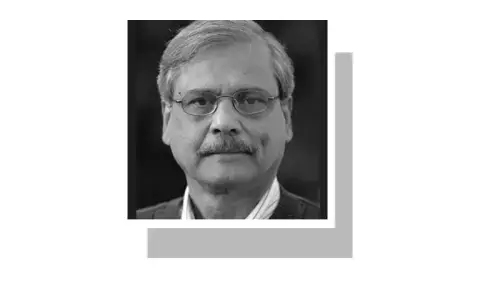
Ex-ambassador Mehdi Masood focused on the implications of the significant gains made by the religio-political parties in the recent elections and their ability to handle issues in the coming days, certain aspects of relations with the US and about its role in Afghanistan because the anti-US posture was a key element of the MMA’s election campaign.
While the election result, he said, might strengthen the Musharraf regime’s leverage with the US, the electoral swing, especially in Balochistan and the NWFP, might suggest to the US policy makers a need for rectifying the imbalance in Afghanistan’s power structure, weighted presently in favour of the non-Pakhtoon ethnic elements, represented by the Northern Alliance.
He said that once the MMA held or shared power at the Centre and the provinces, there might remain a gulf between the MMA stand and the US interest on issues such as the drive against Taliban or Al-Qaeda elements in Pakistan, and the logistical or other military facilities enjoyed by the US/Allied forces in Pakistan.
The US, he said, was also likely to be apprehensive of any interference in the Afghan affairs by the elements supported by a future MMA dispensation.
He also referred to concerns of the IMF and World bank on the continuity of economic policies of the Musharraf regime and feared that economic investment might slow down owing to concerns in some quarters.
He said that India might exploit the US on the rise of the MMA terming it a cause of concern for the security of Pakistan’s nuclear assets and might also use the strengthened position of the Islamist forces as a ploy to block renewed conventional military support to Pakistan.
The former envoy said India would see in the rise of the MMA a boost to the Jihadi elements in Kashmir. The Northern Alliance-dominated regime in Kabul was also apprehensive, and same was the case with China which was concerned with the rise of militancy in the Sinkiang region, he added.
He expressed the hope that the MMA leaders would give priority to Pakistan’s national interest.
Another ex-ambassador, Shahid Amin, emphasised the need for a pragmatic approach on foreign relations and asked the people to rise above emotionalism. He said that in the current situation the prospects were not encouraging after the elections.
He emphasised more on the concerns of the Western and other external elements and said that if Pakistan was in a chaotic situation, as a result of the elections, it would affect its bargaining position internationally.
He also referred to “considerable concern” in the West if the MMA became a key player.
If Maulana Fazalur Rahman became prime minister, we would be heading for a serious complications, he said, adding that ideological parties had serious difficulty in changing their stand (of supporting Taliban) because it would disappoint their followers.
He was of the view that relations with India would be further strained, that might affect a leverage with the West.
Chairman of the PIIA in his concluding remarks emphasised the need for restoring the 1973 Constitution in its original form.