Slow return to normality
NEARLY three months after the establishment of the Afghan interim government headed by Hamid Karzai, a royalist Pakhtoon from Kandahar, there are no signs that the much-talked-about task of reconstruction has been started. The meeting of potential donors held in January in Tokyo was a great success in terms of the pledges made, adding up to nearly 5 billion dollars.
But the situation on the ground is that there are still no banks in Kabul. The sum of 10 million dollars donated in cash by President Musharraf during Mr Karzai’s visit to Pakistan in February for day-to-day expenses of the Afghan government is still lying with the foreign ministry in Islamabad, since there is no mechanism yet for transferring funds to Afganistan.
A senior foreign ministry official, Aziz Ahmad Khan, who is currently the official spokesman, and served earlier as the Pakistan Ambassador in Afghanistan has returned recently after a visit to Kabul, where he met Mr Karzai and many of his ministers, as well as other top officials. His impressions, and those of high ranking personalities from Pakistan and other countries are that very little is going to happen in terms of restoration of institutions, and of the shattered infrastructure, during the six-month tenure of the interim administration. While most of the ministers would like to be a part of the government that would be formed following the loya Jirga planned in June 2002, they lack the institutional support and funds to launch any major initiatives.
The members of the Karzai cabinet consist mainly of either those who had sought sanctuary in the mountains in the north-west, or had been in exile overseas for long years. Most of them lack any experience of running a government. they have arrived into a capital that is mostly in ruins, and lacks proper facilities even for a rudimentary existence.
In the absence of a police force, or a machinery of law and order including courts, maintenance of civic order is being looked after by a multi-national outfit, the International Security Assistance Force (ISAF), headed by a British officer, but with contingents from half a dozen countries. Mr Karzai has repeatedly urged the international community for a larger force, which could maintain law and order in other major cities outside the capital.
The reality on the ground in Afghanistan is that there exists deep division among the constituents of the interim government. The Shura-i-Nazar, that had been constituted within the Northern Alliance by the late Ahmed Shah Masoud, and which consists mainly of the Panjshiri Tajiks, has managed to fill most of the official positions vacated by the Taliban. As a result, the sense of deprivation among the Pakhtuns, the largest ethnic grouping, has grown.
Even the Northern Alliance factions have rivalries and differences, with the Uzbek General Rashid Dostum in contention with the Tajik commanders. In the fighting around Gardez, the local Pakhtoon warlords resent the role given to Northern Alliance forces, who are mainly from Panjshir. Therefore local sources say that the fighting is among the Afghan factions themselves, rather than between the remnants of the al Qaeda and Taliban forces and the government troops.
No incident proves the shakiness of the existing Afghan coalition better than the murder of the Royalist Transport Minister, abdul Rahman, a close associate of Karzai. He was dragged off an Aryana flight in mid-February, and ostensibly killed by Afghan Haj pilgrims, who had been waiting at the Kabul airport for days to proceed to Saudi Arabia. On the basis of subsequent investigations, the murder has been traced to Panjshiri generals. The Karzai Government has requested the Saudi authorities to arrest two Northern Alliance generals, who had gone with the group of Afghan pilgrims that was transported under special arrangements just before the Haj.
The position of Karzai is still not secure, though the US and the EU want him to succeed, as they cannot base the new structures entirely on elements belonging to the Northern Alliance, who, incidentally, have close links with the Russians. The administrative framework that had been established by the Taliban, has broken down, but the replacement structures are not in place, and warlordism has taken over.
Furthermore, the complete reliance by the US and its allies in the Coalition against terror on overwhelming force has resulted in seething resentment among the majority Pakhtuns, who have not historically yielded to external interventions. The regrouping the Taliban and the Al Qaeda elements is not a temporary phenomenon, but is likely to keep Afghanistan destabilized for a considerable time to come.
In the meantime, there is a plethora of problems that need to be addressed. The air links available are restricted, and the Aryana Afghan Airlines does not have the equipment, or the personnel, to start services to all destinations. From Islamabad, the only regular link is provided by the weekly UN flights, which are costly and subject to cancellations owing to weather or technical reasons. The road links are in a shambles, and have to be improved on a priority basis, to enable transport of relief goods and essential supplies needed for the reconstruction of buildings that has started to provide accommodation for embassies, the UN and NGO offices. The Pakistan Embassy has started operating, but it would be three months before it is fully functional, as much of its furniture and equipment was looted.
The day-to-day life of the Afghans remains pathetic. Most government employees are not being paid, a major reason being the lack of banking facilities. Pakistan has offered to open branches of its banks in Kabul, that could resolve this problem, and enable the 10 million dollars provided by President Musharraf to be disbursed for the running of the Karzai government. But the decision-makers want that the process of opening of foreign banks should start with multinationals, which are in no hurry, given the law and order situation, and the lack of accommodation and rudimentary services. The security situation is highly discouraging, with attacks on ISAF personnel. There was an explosion close to the US Embassy, though the event remains shrouded in secrecy.
There exist formidable obstacles to the utilization of the funds committed for Afghan reconstruction. Pakistan decided to utilize half the amount it pledged, that comes to $50 million, to finance reconstruction projects, using its own manpower and materials. However, the delegation that visited Kabul recently learnt that no projects or priorities had been identified by the government for lack of proper experts or institutions. Though the amounts pledged for the reconstruction of Afghanistan are impressive, there is no early prospect for their being utilized.
The majority of the donors want to manage the expenditure directly, as they want to ensure that the benefits go to the ordinary people, rather than funds being wasted through corruption and mismanagement. So the only assistance going at present is humanitarian aid in the form of food and medical supplies, being distributed by UN agencies and NGOs.
While the comprehensive programme of reconstruction envisaged for the war-ravaged country cannot take off immediately, work relating to repair of buildings, and highways cannot be delayed. The Afghan government, as well as the foreign governments will take at least until June to work out plans, and create institutions. It has been made known that open tenders will be floated for all major reconstruction projects. Therefore Pakistani businesses would have to compete in the open market, though they enjoy some advantages owing to geographical proximity and ethnic links.
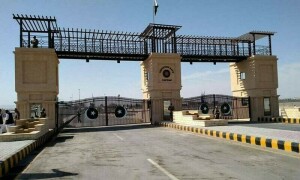
Given the urgency of many requirements, some movement of food and other items has already started. This involves private businessmen, notably those in NWFP and Balochistan. Pakistani contractors and other businessmen have started forming groups, under the auspices of chambers of commerce. Government agencies are alive to the challenge and opportunities. An industrial area has been created at Chaman on the Afghan border, to enable the production of goods that will be needed for the rehabilitation of Afghanistan.
The more grandiose aspects of the economic development of Afghanistan will have to await the establishment of a proper government, and the stabilization of the country. Such projects as oil and gas pipelines from Central Asia will have to fit into the pattern of global energy supplies that emerges over the coming years. There is no doubt that the transit route provided through Afghanistan and Pakistan is the shortest geographically and therefore the most economical. The US and other western and Japanese business houses have shown interest in gaining access to the oil supplies and markets of the vast Central Asian region, that would be opened up once peace and stability comes to Afghanistan.
Apart from the opportunity to participate in the reconstruction of Afghanistan, Pakistan has a close interest in the creation of conditions in which the three million Afghan refugees on its soil could return to their homes. A trickle of people who have been away from their homes for over two decades has started to move towards Afghanistan, but the continuing insecurity and conflicts inside the country are discouraging a major exodus. This underlines the need for the early establishment of a proper administrative structure headed by a unified political government.
The major powers, as well as the UN have to play a role, and continued operations against the terrorists would certainly be a factor in how soon peace will return to Afghanistan. Neighbours such as Pakistan and Iran, need to consult and cooperate to make their contribution towards stability and peace in the region.
The Saudi way
SOME years ago, a Pakistani doctor told me a story form his days in the Kingdom of Saudi Arabia where he was working in one of the state-run hospitals.
One day, he stepped out of his apartment, wearing jeans and sneakers, walked across the road to buy a pack of cigarettes (yes, he was one of those doctors who smoke, so there is hope for the rest of Fraulein Nicotine’s suitors yet). He never got to the store because he was accosted by a plainclothesman who wanted to see his papers.
All foreigners residing in the Kingdom need to carry their identification or work permit or whatever on their person all the time. He said he did not have any on him, but he only lived across the road and it would take him five minutes to come back with his papers. Wrong number.
He was carted off to police lockup, kept there for several days and allowed neither to phone his wife nor his employers. Once freed, he resigned and left to find himself some easier place to live.
A taxi driver, with whom I was having a nice chat in Karachi once, while his rickety contraption that only needed two things, an engine and a body, bounced along Nazimabad’s back roads, said to me, “I will go without a fare for hours but I won’t offer a ride to an Arab, even if he was a prince.”
When I said that did not sound a nice or reasonable thing to do, he turned around — without slowing down of course — and asked, “Where do you work?” I told him I worked in Europe. “Well, if like me you had worked in one of those countries, you would have understood what I meant.”
He then told me of the humiliation he, an honest, upright, hard-working and devout Muslim had suffered in more than one of the Gulf states. “I do not make much here,” he added, “but nobody looks down on me. Nobody calls me a ‘miskeen’. I walk as tall as the next man.” He also told me that the worst thing that you could do there was to get into an accident because no matter whose fault it was, it would be the foreigner who would be blamed, unless he was a ‘gora sahib’.
Every other week, buried somewhere in the middle of column six or seven on an inside page of most of our newspapers is a brief news report that informs those who would notice it that three or four or more of their countrymen have been beheaded in Saudi Arabia. No one misses any sleep over it, nor do I recall ever having seen an editorial comment deploring the savagery of the punishment. Add this to what is already a long list of Pakistani dichotomy and double standards.
The recently released report on human rights by the US State Department contains a 36-page section on the Kingdom that I would not advise anyone to read before lunch unless wishes no lunch that day. The ‘Mubahith’ or internal security force and the ‘Mutawwa’in’ or the religious police representing the Committee to Prevent Vice and Promote Virtue (now you know where the Taliban got theirs) are a law unto themselves.
Although the Shar’ia strictly prohibits any judge from accepting a confession obtained under duress, the Interior ministry officials are said to be responsible for most incidents of abuse of prisoners, including beatings, whippings, sleep deprivation and even drugging. It is not uncommon to suspend prisoners from bars by their handcuffs or obtain confessions through torture and abuse. The Saudi government refuses to recognize the mandate of the UN Committee Against Torture.
The much-feared religious police are known for intimidating, harassing, abusing and detaining citizens and foreigners, both men and women. The punishments meted out to wrongdoers include stoning, decapitation and death by firing squad. Repeated thievery can be, and often is, punished with the amputation of the right hand and the left foot.
Flogging of those convicted of a political or religious crime is with a leather strap; but those caught drinking get off lightly, in comparison, as they are not flogged but caned. While the Saudi law prohibits arbitrary arrest, the religious police are generally free to intimidate and bring to police stations persons whom they accuse of committing “crimes of vice”, a charge framed entirely in accordance with the judgment of the security agent.
Musarrat Nazir, who till last reports came was still looking under the trees for that famous nose ornament of hers, once told me that on a visit to the Kingdom, as she arrived with her ten-year old son, tired and jetlagged, at the Riyadh airport, and as they waited their turn at the immigration and passport control window, the boy being exhausted put her head on her shoulder. Suddenly, all hell broke loose. Two or three Mutawwa’in rushed upon her screaming, pulled the terrified boy away from her and made it clear by gestures that they had to stand apart.
No physical contact in public between sexes should occur, even between mother and son. She said it was a terrifying and humiliating experience. A friend once said if you go to the Kingdom, be sure that your faith is strong because it will be tested on more than one occasion.
I hope Nawaz Sharif, currently a guest of the Kingdom, remembers to criticise only his own government because were he to criticise the Saudi government, that being an offence, he could be picked up by the ‘Mubahith’, the ministry of interior’s internal security service which keeps those it picks up incommunicado in special prisons while investigations continue. The authorities also open mail and use informants and wiretaps. Security forces have been known to use wiretaps against foreigners suspected of alcohol-related offences. Informants and ward bosses report “seditious ideas” or anti-government activity in their neighbourhoods to the ministry of the interior.
Women have a rough deal. They may not marry non-citizens without government permission (even men need permission if the intended is outside the six Gulf states).
Women cannot marry non-Muslims, while men can choose a Jew or a Christian. Although the Shar’ia prohibits violence against women, it is said to be common. Hospitals admit women who have apparently been beaten up at home. They have since been instructed to report any suspicious case to the authorities.
A woman may not travel abroad without the permission of her husband or parent. There are thousands of foreign women domestics in Saudi homes. Some countries maintain “safehouses” for those who have been mistreated so that they can find shelter. There are no active women’s rights groups. Women are not allowed to drive and they must occupy the back seat. They can enter city buses but through rear entrances. A woman found in a car not being driven by a relative can be arrested.
Women can now obtain identity cards but only with the permission of a male relative. In public, women must wear an ‘abaya’, a head to toe black garment.
The head and hair must also remain covered. Women have to show legally specified grounds for divorce, but men are under no such obligation. Women make up 58 per cent of university students but are excluded from the study of such subjects as engineering, journalism and architecture. A woman can only go abroad to study if she is accompanied by her husband or a close male relative.
After September 11 and given the nationality of the majority of the hijackers, pressure on Saudi Arabia has mounted to open up and introduce reform. How long it takes and what its political implications will be on the House of Saud is one of the great unanswered questions of our times.
What kind of election?
PAKISTAN is sometimes described as a failed state. A more appropriate diagnosis would be that of a traumatized one as it explains the mass numb indifference in the face of a sea change.
This extended process of uncontrollable change first inflicted and now largely comprises the national trauma, with its characteristics of popular dissociation. We should try to know as to what has happened to Pakistan in terms of political fabric in the last two or three years.
The first watershed was the October 1999 counter-coup. A merely internal matter, but it discarded the existing matrix of constitutional democracy for fluid, amorphous emergency powers. Uncertainty, and an even essentially unconfirmed direction for amelioration, became and remain the order of the day.
The second impact was of an event whose repercussions the whole world has felt. The destruction of the twin towers in New York with a loss of life in thousands. Where it happened and to whom it happened, as well as how, gave that outrage its import. Other heinous crimes against humanity and civilization have not resonated globally and unremittingly or met with such swift uninhibited punishment.
For Pakistan the repercussions included a crackdown on fundamentalist elements that had outlived their purpose as subsidiaries of American policy in Afghanistan and now functioned contrary to it with unpredictable independence. But the change determined in the context of external policy demands was problematic for Pakistan as the emotive religious rhetoric had been widely inducted into domestic political power-play.
Thus, it came about that, however well advised and indeed overdue, the change which was both suitable and inevitable in the context of external policy was less easy to assimilate internally. Moreover, the adjustment had to be effected within a society that lacked the normalizing outlets of grassroots democratic political activity and expression. Consequently, the reformatory process has perforce been inhibitive and repressive rather than natural and voluntary.
A military dictatorship is always unhealthy. Pakistan‘s coyly designated counter-coup of 1999 had an additional surreality in that it never acknowledged the actuality of its power-base: military office and strength. The regime has consistently retained the rhetoric of civil, democratic politics and studiously circumvented the Pakistani general‘s traditional proclamation of martial law. Avoiding this categorization and its nomenclature signifies tacit recognition of pressure to observe democratic forms and keep the prospect of a return to ‘true‘ democracy in circulation. But this seeming respect for democratic goals has meant the lapse into arbitrary dictatorial functioning is well camouflaged and gains momentum unresisted.
Martial law by any other name is as undemocratic. The present reality is that there are no functional grassroots channels for expression and absorption of the popular will. This holds good for the sentiment that wishes to endorse the regime too, as officially permitted channels and political activity are devoid of credibility in such a narrowly selective context.
What happens to a people overwhelmed by actuality but lacking the tools and levers the civil society provides for participatory government? They are overcome by their own helplessness, become ineffective and are traumatized. They also constitute the kind of wounded electorate that does not register any discrepancies in what it is offered, because subconsciously it recognizes it has no choice. This is the kind of traumatized electorate that does not dismiss as ludicrous the ‘opportunity‘ to be casting votes or offering candidature in an election whose parameters and criteria are undefined.
It is true that even though the regime enjoys the complete autonomy of any unconstitutional dictatorship, it has always sought the cover of constitutionalism with a Supreme Court judgment providing a judicial modus vivendi. True, the 1973 Constitution is still up there somewhere. But it is also true that the electorate does not know whether a parliamentary or a presidential system is to be emplaced. What the powers and composition of the Upper House will be in a legislature that may remain bicameral? Whether representation will be proportional or first-past-the-post as before? If it is proportional, what the rationale of the principle behind, and actual structuring of proportional representation may be? Whether constituencies will be re-demarcated? What the voting age and qualification may be? What the number of seats may be and whether election is to be direct or indirect? What circumscribes candidacy? What the checks and balances on power will be and even, precisely what the seat of executive power is?
True, President Musharraf has guaranteed himself—-but even then as President, Chief Executive or Chief of Army Staff or all three? The military veto over civil politics and government policy, routed possibly through a redefined National Security Council; the distribution and separation of powers between the legislature, executive and judiciary is not assuredly what the electorate has known it to be and is deemed to be under review.
Whether it is fundamental principle, or the nitty-gritty and minutiae of concrete particulars, all is open to reassessment under present presidential power. When the gel of the constitutional matrix itself remains unset, casting a vote seems comparable to candy offered to gullible children to keep them quiet.
The way it is
GERALD SKILLET, formerly the CEO of the Hidden Valley Gas and Energy Co., told his lawyer, Arnold Deep Pockets, that he wanted to testify in front of a congressional committee instead of taking the Fifth.
Deep Pockets was against the idea. He said, “If you testify, they could use what you say in a criminal indictment.”
“It doesn’t matter. I want to tell the truth, the whole truth, and nothing but the truth. I want to tell the American people that Hidden Valley did nothing wrong when it went bankrupt and lost everybody’s money.”
“You’re taking a chance, Gerry boy.”
“Don’t worry about me. I can handle those bozos in Congress.”
Here is a transcript of the Skillet testimony:
Senator: Mr. Skillet, when were you the CEO of Hidden Valley?
Skillet: I’m not sure.
Senator: All right, when did you go bankrupt?
Skillet: I don’t remember.
Senator: It says here that the company lost $3 billion on your watch. How do you explain this?
Skillet: I’m not an accountant.
Senator: It also says you unloaded your own stock for $150 million before your company tanked.
Skillet: That much? I wouldn’t know. My wife takes care of our household books.
Senator: Are you trying to tell us you don’t know what your wife does with your money?
Skillet: (Laughing) Does any husband?
Senator: I would like to discuss with you a whistleblower in Hidden Valley who warned that all the companies you invested in were duds. Do you remember her?
Skillet: I remember her because she always had a run in her stocking, so I never took her seriously.
Senator: But wasn’t she right about the whistle-blowing information she gave you?
Skillet: I don’t remember, but I fired her because she took an hour for lunch.
Senator: Your accountants were in on the scams. You couldn’t have done it without them.
Skillet: I didn’t see anything because my office was in the front of the skyscraper and they worked in the back. I met them occasionally on the elevator, but we never talked business.
Senator: You were in the power business. Did you ever cheat the consumer?
Skillet: You mean did we overcharge them more than 50 percent and black out their homes if they couldn’t pay?
Senator: That’s the idea.
Skillet: Why would I want to do that?
Senator: What was your relationship with Vice President Cheney?
Skillet: Our company only had social and political relations with him. We gave his party money and in exchange he gave us favours. It made us feel we were giving something back to the country. Several people from Hidden Valley were hired by the Administration, but only after they personally made a killing in the stock market.
Senator: Is it wrong of me to say you stole millions of dollars in pension funds, and there are thousands of people who lost their life savings?
Skillet: I told you before, I’m not an accountant.
Senator: Thank you, Mr. Skillet, for coming before our committee and spilling your guts out.
Skillet: I think I owe it to the American people to appear in front of you and tell it like it is.—Dawn/Tribune Media Services
Return journey to democracy
WHATEVER the imperatives of derailment of democracy on October 12, 1999, it is encouraging that Pakistan’s return journey to democracy is no longer conjectural. It is now patently clear that the country would be back on the democratic track and that the road-map is systematically unfolding itself.
Supreme Court’s verdict will not be flouted and that the collective pressure of the US, European Union and wealth countries, has contributed to smoothen the course for Pakistan’s re-emergence as a democratic polity. Doubts and apprehensions with respect to the postponement of elections are withering away, and the political parties are becoming active to seize the opportunity.
Any predilection to create frictions, may compound the perils, the country is facing. History would never forgive the political parties — be it religious or otherwise — if they opt to boycott the elections to seek a tactical advantage. What is at stake is the democratic future of Pakistan. It is this insight and sagacity which should fortify the commitment to seek the verdict of the people and prepare for the campaigns. A pluralistic society must have diversities of demands and expectations and political parties must vociferously express them, but with abiding consensus that participation in the elections must be their unequivocal resolve.
Despite firm assurances and promises with respect to holding of elections some sceptics still nourish doubts and apprehensions, but it augurs well for the country that the people, by and large, are uncompromisingly glued to the virtues of democracy rather than a governance, which is impositional and authoritarian in nature, no matter how well it may perform. This is borne out by the fact that they continue to repose their confidence, mainly on the two major political parties of the country — the PPP and the PML(N).
The political parties, which have aligned themselves with the present establishment, are also no favourites of the masses. Despite political upheavals and turmoils, the common people of Pakistan continue to have unflinching faith in the ultimate triumph of democracy. It reflects their democratic vision, confidence and political sagacity, which have remained unchanged since they voted for Pakistan in 1947.
The achievements of the military government are positive in many respects. The sinking economy has been adroitly salvaged. Law and order situation has improved, and pragmatic decisions have been taken to avert impending crises and grave threats to the very integrity of the country. People are not oblivious of the virtues of the decisions taken, but despite this, there exists a sharp dichotomy between the military government and people’s thinking.
Field Marshal Ayub Khan’s case is pertinent. He had substantial attainments to his credit, but then came a time when he lost favour with the people and the US and had to relinquish power because the differences between the ‘Masters’ and the Friends could not be bridged.
The reality cannot be brushed aside that the US’s policy of intervention in Afghanistan is not viewed with favour in Pakistan. The recent CNN poll reveals that over 56% of the people are not supportive of the US policies, and combined with their antipathy for the government, for being too compliant to the US, may become the major theme of electoral campaigns, impacting the results of the elections. The political parties exploiting this theme, therefore, have to be mindful of the consequences, if they carry it too far.
In the backdrop of this scenario what should be the moves and counter-moves on the political chess board of the country, requires deliberation and analysis. The following appear to be the probable trends and possibilities:
* The emerging political contours and configurations are indicative of the fact that a distinct political hybrid group is revolving round the establishment, comprising politicians, bureaucrats and technocrats, who nourish the idea that through the support of the government, they would be saddled into power.
This group feels that the governmental support would be a logical consequence of the fact that it would not favour candidates of the major parties to win the elections, rather, it would favour candidates from smaller parties and independents, who could be brought together to form a government, and instal a prime minister, who after assuming power would readily endorse all actions taken by the government.
But it appears that the government is in no mood to favour or support such a group. Rather one sees that the major political forces, not aligned with the government, are busy determining their independent political strategies to win the elections.
* The second centre of gravity is around the PPP, which manifests itself as the upholder of relatively liberal and secular values, following a middle-of-the-road policy. Parties like the MQM and the ANP, having attitudinal commonalties, may align themselves into a collective force, powerful enough to fare well in all the provinces.
The only snag is that of leadership, as the party may have to contest elections without Benazir Bhutto. It would be a fair assessment to say that when election campaign gains momentum, BB may return to the country in the interest of the party. Whether she is arrested on return, or left free, in either case, the party will benefit.
* Pakistan Muslim League (N) constitutes the third political force, despite encountering immense disruptive pressures. By and large, its vote bank is intact. It may however, need the support of the Jamaat-i-Islami — a well organized party. An alliance between them appears a functional necessity. On the other hand Jamaat-i-Islami may reap political dividends by associating itself with a moderate party like the PML(N). Some religious parties may also join this group.
The PML(N) also faces the leadership crisis as in the case of the PPP. It will have to do without Nawaz Sharif. In the event he decides to return during election times, the government may arrest him, or leave him free. In either case, his party stands to gain.
During the election campaigns the confrontation between the two traditional rival groups the PPP and the PML(N) must be avoided. What is paramount is an implicit realization, that the two major political parties — the PPP and the PML(N) — may agree to disagree on political issues, but display a symbiotic spirit that ensures the holding of elections, shunning confrontational and vituperative politics. It is a grave national tragedy that owing to their confrontational approach, democratic norms were ruthlessly violated during 1988-1999. It is an irony that on that account two of their leaders are now in exile and the army stepped in, to take over the reins of power.
In their own interest the political parties must not accentuate their rhetoric against the US, and the present government, which may prove ominous for democracy and may even cause postponement of elections. The leaders, therefore, irrespective of their differences must act with prudence and a sense of realism.
Neither the government can be removed through agitational politics nor will the US be forced to change its policy and agenda in Pakistan or in the region. Political sagacity, therefore, demands accommodation of the US interests, without compromising our own national interests. Unless the political parties reconcile to the imperatives of the situation, and peacefully contest elections, the danger cannot be averted.
After the elections, the formation of government becomes problematic. If the PPP and the PML(N) jointly resolve to form a government, it would be a big step forward to stabilize democracy. On the contrary, if it is decided to align with smaller parties or independent candidates, it would result in a worst kind of horse trading and blackmailing and thus degrade the political culture.
The results of the coming elections would be no different from the pattern, one has seen in all the preceding ones. The propaganda that Islamists or the so-called fundamentalists would capture political power is a gross distortion of reality. They have never been voted to power, because the people know that the religious groups stand divided among themselves and are not capable of providing political unity for a stable democratic order.
In fact, it is the so-called liberals or elite, who, through unholy alliances with the bureaucracy, have remained in power. It is this breed which has done maximum damage to Pakistan and ironically has tried to pass on the blame to the religious parties, creating the fear of Talibanization of Pakistan. The western media has also joined the chorus, thus creating a perception, which has led to wrong policies and priorities.
During the elections, there is a very interesting and perceptible phenomenon which must not go un-noticed: The elite enjoy the thrill of elections from their cozy drawing rooms, watching the fun on the TV. They hardly come out to cast their votes. It is only the impoverished and illiterate who realize how important it is for them to vote.
Indeed, they are the real custodians of political destiny of Pakistan. Their vision of Pakistan is that of a liberal democratic order based on the Quran and Sunnat, which is enshrined in our Constitution. We must, therefore, repose our trust in the broad masses, who have never made a wrong decision in the last fifty-four years, whenever given the opportunity to vote. They are the real bastion of political viability and strength as they have the gift of inherent wisdom.
The writer is a former chief of the army staff.