0
0

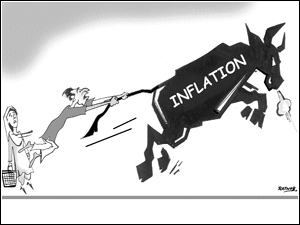 The year 2001 has passed by putting more burden on consumers in the shape of price increase of pulses, ghee, cooking oil, egg, black, white gram, soft drinks, squashes, spices, some vegetables and milk powder.
Though consumers experienced relief on few items as it taxed them little on sugar, loose milk, rice and wheat flour on account of improved availability coupled with the higher imports, especially of sugar.
The escalated petrol prices prior to October 1, 2001 in proportion to the surge in global oil prices were transmitted through upward adjustments in retail POL prices, power tariff and gas charges, adversely affecting the domestic cost of transportation, production and distribution of goods and services.
The upward revision of sales tax from 15 per cent to 20 per cent on 200 raw material items in the Federal Budget 2001-2002 in combination with 1.5 to 3 per cent rise in the ST on the sale of goods by retailers and wholesalers to non-registered customers, in fact, created problems for trade and industry, besides resulting in an increase in the cost of production of various goods. The government tried to offset the increase in sales tax by reducing the import duties to 30 per cent from 35 per cent as per IMF’s restrictions.
The government’s endeavour to put a cap on the value of essential items has always proven to be a failure as the retailers, wholesalers and the importers are intelligent enough to coin new devices for fleecing the consumers to the extent that even a locally-produced item — which rolls out from the factory at lower cost — becomes highly expensive by the time it reaches into the hands of an end-user. Few local producers do not fail to make high profit on items which are in great demand on certain religious and cultural festivals. These producers create artificial shortages of the required items which further accentuates the situation.
The that the inflation rate is in single digit, while the trade and industry people contend the inflation has touched the double-digit figure. Markets are experiencing the paucity of buyers due to an ever-shrinking purchasing power mainly on account of lay-offs in many government, semi-government and private organizations. Ghee and cooking oil packers had raised the prices, in August, by Rs 20-30 on 2.5 to five litres tins in sequence to the rising trend of palm oil in Malaysia forcing the consumers to pay additional Rs25 on 5kg Tullo ghee tin at Rs330 as compared to Rs305, and Rs172 against Rs158 on its 2.5kg tin. Its 5 and 2.5 litres cooking oil tins are now tagged at Rs310 and Rs172 as compared to last year’s Rs305 and Rs160.
Whereas, Habib cooking oil tins of 5 and 2.5 litre are now sold at Rs318 and Rs166 as against Rs303 and Rs158 a year ago. Dalda 5 and 2.5 litre cooking oil tins are available at Rs325 and Rs170 as compared to Rs305 and Rs160. Loose ghee too, is being sold higher by Rs2 per kg to Rs44.
In the year 2001, an increase of Rs5 and Rs4 per kg has been registered in gram pulse (dal channa) no.1 and no.2 quality at Rs35 and Rs33 per kg. Mung washed is priced at Rs30 per kg as compared to Rs25 per kg last year, while mung (whole) at Rs26 per kg as against Rs23. Gram (channa), no.1 and no.2 qualities are priced at Rs35 and Rs33 per kg as compared to Rs30 and Rs29. Masur is tagged at Rs31 per kg as compared to Rs32, while mash is also cheaper at Rs37 as against Rs44 per kg. Arhar stabilized at Rs35 as against Rs44 per kg. Consumers had to pay more to procure basin no.1 and no.2 quality at Rs35 and Rs28 per kg as compared to Rs29 and Rs26 in 2000. Black gram (kaala channa) no.1 and no.2 quality prices are quoted at Rs35 and Rs33 per kg, up by Rs7 and Rs5 per kg last year. Consumers saw some relief in purchasing kabuli channa (white gram) no.1 quality at Rs40 as compared to Rs48 per kg.
The year 2001 saw notable increase in ginger and garlic, which rose to Rs60 and Rs46 as compared to Rs48 and Rs40 per kg in the preceding year. However, onion ranged between Rs7-8 per kg as against Rs16 2000 due to the start of the new crop, while tomato and potato also priced lower in to Rs6-8 per kg as against Rs10 per kg due to the better supply from the Sindh crop and the start of the Punjab’s new crop. Egg is retailed at Rs35 as against Rs32 per dozen. However, live poultry bird is lower at Rs62 per kg as compared to Rs64 per kg. Chicken meat sells at Rs105-110 per kg as against Rs112 per kg. Milk powder went up as Nido 1,000 gram pack costs Rs195 as compared to Rs183, while the retailers charge Rs190 for Everyday of the same weight as compared to Rs178. Millac is available at Rs244 as compared to Rs234.
Various varieties of flour have been pegged to previous year’s level. The wholesale value of clove is tagged at Rs680-700 per kg as compared to Rs380 a year back. Green cardamom is tagged at Rs1,200 per kg, up by Rs 100 if compared with 2,000. Turmeric whole and powder are available at Rs40 and Rs50 per kg as against Rs35 and Rs46. Coriander (whole and powder) is being selling at Rs42 and Rs45 as against Rs27 and Rs36 per kg. Inflation in 5 years: Consumers’ monthly expenditure to buy regular items have almost gone up by over 100 per cent in the last five years due to soaring prices of kitchen items on account of increase in sales tax, change in duties and rising petrol prices.
A normal family of five persons now has to manage at least Rs3000-4000 per month to buy regular items like ghee, pulses, sugar, rice, flour, soaps, detergents, tea and toothpaste.
At least five years back, a consumer used to buy these commodities by spending Rs1,500-2,000.
The buying power of common man has shrunk considerably in the last five years due to the galloping inflation. Buyers are now cautious in selecting items as they hesitate to purchase extra items in their monthly buying due to low salaries. Even in the first seven days of a month, people belonging to salaried class, are not seen in the market due to liquidity problems.
In 1995, diesel was selling at Rs9 per litre as compared to the current price of Rs12.82. Motor gasoline is available at Rs28.74 per litre as compared to Rs15. Bus owners now charge at least Rs3 as compared to Rs2 per person, while coaches now demand Rs8-9 as compared to Rs5-6 per person.
The prices of all essential items like ghee, atta pulses, rice, powder milk, tea, meat and poultry products depicted a relative rising trend in sequence to other things during the last five years.