0
0

ISLAMABAD, Oct 11: The United Nations has decided to resume its activities in the tribal areas under government escort in clearly marked UN vehicles.
Speaking at a joint news conference of UN agencies, United Nations Information Centre (UNIC) Director Eric Falt said that under a new set of security codes issued on Thursday morning by the UN security officials, way had been paved for preparatory UN humanitarian operations in tribal areas of Pakistan.
Earlier, citing security concerns, the UN Resident Coordinator had directed the staff in high-risk security zones to stay home.
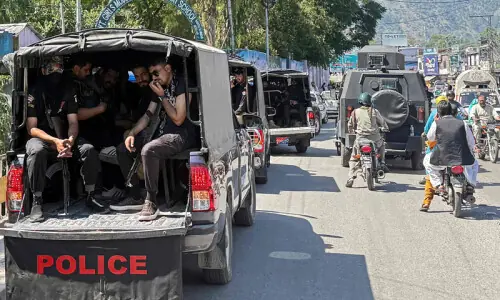
Mr Falt said that the new security guidelines allowed the UN officials to go into the tribal areas under government escort in clearly marked UN vehicles.
He said that a meeting of the UN Resident Coordinator, Onder Yucer, and the Federal Minister for Kashmir and Northern Areas, Abbas Sarfaraz, deliberated the security concerns of the UN officials in the conduct of their duties. The government had assured the UN that it would take appropriate steps to address the concerns of UN, he said.
Mr Falt said that the UN activities remained stalled for the fourth day on Thursday.
About discussions between the government and the UN, he said that an understanding was reached for full technical cooperation among the provincial departments, NGOs and various UN bodies in implementation of developmental plans.
About preparations of refugee sites, UNHCR spokesperson Yousaf Hassan said that the local authorities had informed UNHCR that they were withdrawing seven sites in Bajaur and Lower Dir from the list of places that had already been selected for development. This brings down the number of sites available for the use of new arrivals from 32 to 25 and discussions are continuing with the local authorities to identify more sites.
He said that work had resumed at Malkano Village, Shalman site, in the Khyber Agency. Subject to improvement in the security situation, UNHCR hoped to begin work preparations at Old Bagzai, Ashra in Kurram Agency and Alingur in Bajaur in the tribal areas along the border with Afghanistan.
To meet the needs of new Afghan refugees, he said, UNHCR had ferried more relief items by road and air. Some 4000 tents from Lahore had been sent to Peshawar bringing UNHCR’s stocks in Peshawar to 19000 tents considered sufficient to shelter up to 95,000 refugees. The UNHCR has also propositioned 3500 tents in the tribal areas. In Quetta, UNHCR has stocks of more than 7500 tents which can accommodate some 40,000 people.
Apprising the journalists about impediments faced by the WFP, the world food body’s spokesperson said that the situation was more difficult in the city of Spinboldak in Afghanistan. He said that on the route from Quetta to Herat, the local authorities on Thursday imposed unacceptable taxes on the food convoys. The local authorities were charging the newly imposed taxes at the rate of $32 per metric ton. The convoy was carrying 400 metric tons of food items, he said, adding, negotiations were under way with the local authorities to resolve the matter.
The WFP spokesperson said that 40 trucks were on the route from Peshawar to Kabul taking 1000 metric tons of food. They crossed the border early Thursday morning and were expected to reach Kabul tomorrow (Friday).