KARACHI, Oct 25 Special citizens are not only challenged by their physical disabilities but also by government indifference towards their plight.
A case in point is the National Council for Rehabilitation of Disabled Persons (NCRDP) which has not met for once in the past six years, according to its members.
As the council remains dormant, there has hardly been any significance progress on the issues being faced by the physically challenged for decades.
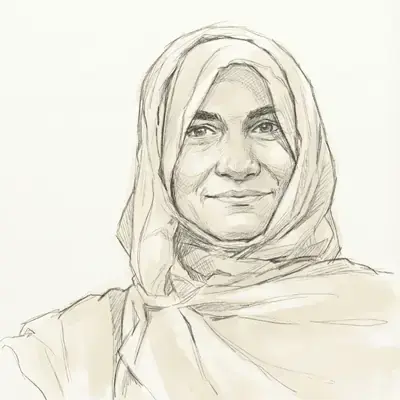
“The NCRDP is a dead institution. It has failed to provide any support, material or otherwise, for the rehabilitation of the physically challenged which is the prime objective for its establishment. I have not heard of a council's meeting for many years nor have I been invited to one,” said Surriya Allahdina, a member of the Provincial Council for Rehabilitation of Disabled Persons (PCRDP) and the NCRDP, who also heads an NGO working for the welfare of hearing-impaired people in Balochistan.
The idea to set up a council for the rehabilitation of disabled persons evolved with the promulgation of the Disabled Persons (Employment & Rehabilitation) Ordinance in 1981, which was declared the “Year of the Disabled” in the world.
In the following year, the 20-member NCRDP was established with four provincial councils to function under its control. The provincial councils were to operate within the social welfare departments of their respective provinces. The matters pertaining to the northern and tribal areas were to be processed directly by the NCRDP.
Objectives unfulfilled
The basic objective for establishing the NCRDP was to formulate policies and make efforts towards the rehabilitation of disabled persons. This included the implementation of the employment quota reserved for the disabled (which was fixed at one per cent by Gen Ziaul Haq and raised later to two per cent by Benazir Bhutto), collection of remittances from organisations which do not employ disabled persons and provision of supportive aids.
The council remained operative periodically in the sense that its meetings were held regularly to sort out issues though they failed to make any meaningful contribution. However, since 2003, it has even stopped meeting.
“I met the federal secretary for social welfare who heads the council a few months ago and he told me that the council's meeting couldn't be called due to the indifferent attitude of the NCRDP deputy director,” Shahid Ahmed Memon, chairman of the Pakistan Disabled Foundation, told Dawn.
“When the council was set up, we had objected to the clause regarding the collection of remittances and insisted that if companies can not employ a disabled person, they should be asked to provide a monthly stipend to at least one handicapped person who is unable to travel and work. But our objection was overruled,” Mr Memon said.
A former president of the Asian Blind Union and a former officer of the World Blind Union, Mr Memon has been a member of the NCRDP since its inception.
Another NCRDP member, retired justice Amir Raza, who is a founder trustee of the Layton Rahmatulla Benevolent Trust (LRBT) and a member of the board governing an institute for the mentally challenged in Lahore, said “There was simply no purpose of the meetings and I stopped attending them. I don't remember exactly when the last meeting was held. We had recommended a number of amendments to the ordinance 20 years ago. Unfortunately, the matter is still pending. The federal secretary for social welfare has the authority to call a meeting, but he hasn't called any for years.”
Faulty composition
Along with other issues, the council's composition itself is a big hurdle in the way of understanding and resolving the issues being faced by the disabled as it lacks proper representation of the special citizens, many social workers believe.
Currently, there is only one physically challenged person on the council. Three others representing special citizens are those who work for the welfare of the disabled. All of them are nominated by the government. Other members include representatives from the ministries of social welfare and special education, women development, labour, education, health, besides representatives from each of the three armed forces.
“Every disability needs to be attended to with some special requirements. The challenges a blind person faces are altogether different from what a person with hearing problems encounters. So, we need to have a representation of every disability at the policymaking level,” says Shakeela Yasmeen who works with the PDF.
Seconding her views, Surriya Allahdina says that if a disability cannot be represented, for instance in the case of the mentally challenged, their parents can do the job well. “This is important if we want to have realistic policies.”
Handicaps
Criticising the NCRDP's performance, Surriya Allahdina said that it had not achieved its objectives. “We are its members on paper. And, perhaps, they have thrown us out of the council because we used to criticise the council severely for its continuous failure in taking an initiative towards resolving the issues confronting the disabled community. Over the years, irrelevant individuals had been inducted into the council on political grounds despite our protests,” she said.
Referring to the problems being faced by the physically challenged in getting jobs, she said about a month ago she had asked the social welfare department for a copy of the notification that enhanced the job quota for the disabled to two per cent but it couldn't.
“I need the notification to show it to the Frontier Corps officials so that the hearing-impaired persons being trained at our organisation can apply and be accommodated for specific jobs. But the provincial department didn't even have the notification,” she complained.
She said she, however, succeeded in getting a number of hearing-impaired people jobs in the local government and the FC which, for the first time, offered jobs to the disabled as gardeners.
According to Mr Memon, the two per cent quota, despite being meagre, was not being implemented by most departments and companies.
“Private companies are neither giving jobs to the disabled nor are they depositing money as envisioned in the ordinance. Only Rs5.6 million was deposited in Punjab initially. Also, there is no progress on the national policy for the disabled which was announced in 2002 and needed to be implemented in 2006.”
The first step towards their rehabilitation is to provide the physically challenged with supportive aids, either free-of-cost or at a subsidised rates, says Mr Memon, adding that they must get support in getting education as well.
“This should be done through simplified procedures. Currently, the procedures are too lengthy and complicated and that's why government schemes usually fail to benefit the majority,” he observed.
Dawn contacted relevant departments at the federal and provincial level but no official, including Mr Imtiaz Qazi, who heads the NCRDP, was available for comments.