• RSS leader, ex-army chief’s remarks termed ‘positive’; spokesperson parries queries about ‘backchannel talks’
• Says Somali pirates negotiating with ship’s owners, reiterates ‘our citizens are safe’
ISLAMABAD: The Foreign Office on Thursday reacted cautiously to an emerging debate within India over keeping open channels of dialogue with Islamabad, saying it would matter only if such views were reflected by official Indian policy.
“We, of course, will see if there is an official reaction to those voices in India,” Foreign Office spokesperson Tahir Andrabi said at the weekly media briefing while commenting on recent remarks by Indian political and strategic figures advocating engagement with Pakistan.
The spokesperson described the calls for dialogue as a “positive development in India” amidst heightened rhetoric and hostility between the two nuclear armed neighbours.
“The voices within India calling for dialogue are obviously a positive development, we hope that sanity will prevail in India, and warmongering, the belligerence that has been emanating for the past several months and even beyond, for past years will fade away and pave the way for more such voices,” Mr Andrabi said.
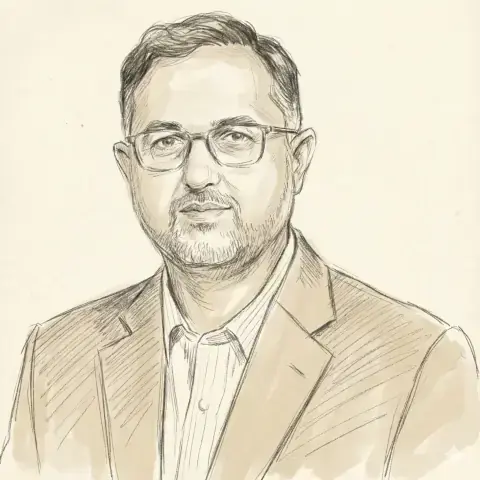
The debate in India was triggered earlier this week by remarks from Dattatreya Hosabale, the second senior-most leader of the Rashtriya Swayamsevak Sangh (RSS), the ideological parent of the ruling Bharatiya Janata Party (BJP).
In interviews with Indian media, Hosabale argued that while India must respond firmly to “terrorism” and security threats, it should not “close the doors” to Pakistan. He advocated maintaining diplomatic ties, trade, visas and people to people contacts, including sports exchanges, while acknowledging that trust between the two governments remained low.
Hosabale also referred to former Indian prime minister Atal Bihari Vajpayee’s outreach efforts toward Pakistan as a possible model for engagement.
The remarks reopened a public discussion within India on whether sustained hostility and the absence of communication channels serve the country’s long term strategic interests.
The debate later drew support from former Indian Army chief Manoj Naravane, who backed keeping limited avenues of dialogue open and emphasized the importance of Track-II contacts and people to people engagement alongside a strong security posture.
Former India-held Jammu and Kashmir chief minister Mehbooba Mufti also called for renewed engagement and suggested that quiet backchannel contacts were already taking place.
The opposition Indian National Congress reacted cautiously, questioning the timing of the remarks while broadly supporting dialogue in principle.
However, India’s top government leadership, including Prime Minister Narendra Modi, have so far maintained public silence on the issue, with no indication of any formal policy shift toward bilateral talks.
The discussion comes at a time when relations between the two countries remain tense following last year’s four-day military confrontation. The first anniversary of the conflict this month has revived debate in both countries about the risks of prolonged hostility and the absence of political engagement.
Over the past more than a decade, official rhetoric in India had steadily hardened public perceptions against Pakistan, with New Delhi repeatedly insisting that “terror and talks cannot go together.” Pakistani officials, meanwhile, have accused India of pursuing a confrontational posture and closing diplomatic space for engagement.
Despite the public freeze, reports in recent months have suggested limited Track 1.5 and Track-II interactions involving retired diplomats, former officials and policy experts in third countries, including Qatar and Britain, indicating that some channels of communication have remained open informally. When asked about reports about backchannel between New Delhi and Islamabad, the FO spokesperson replied on Thursday: “About track two or backchannel — well I am not aware of that and do not wish to comment on those. If I were to comment, there would be no backchannel. Backchannel or track two, the name is self-explanatory.”
Seamen in pirates’ captivity
The FO spokesperson was also asked about the captivity of Pakistanis aboard an oil tanker seized by Somali pirate.
Mr Andrabi said the “individuals are still with the Somali pirates. Unfortunately, their release has not been secured as yet”. However, he added that a two-member team from the Pakistani embassy in Djibouti had gone to Somalian capital Mogadishu.
“We were told [our] nationals are safe and are being provided food,” he said. “They are in harsh living conditions, but at least we were assured of their safety.”
The spokesperson further stated that they had been informed that the pirates were negotiating directly with the ship owner, who had been constantly communicating the details to Somali government officials. “We feel for the safety of our people. We are very keen for their quick repatriation. We are in touch with the Somali authorities and we will continue to do so. I can assure you that this matter is high on our radar and agenda and is a pressing, emergent humanitarian imperative,” he added.
Published in Dawn, May 15th, 2026