• Those expecting Trump to bring peace living in ‘fool’s paradise’, Fazl tells NA
• PTI leaders rue parliament not being taken into confidence on critical issue
• Point out board ‘not a UN body’, has no Palestinian representation
ISLAMABAD: Amid an outcry from the opposition over Pakistan’s decision to join US President Donald Trump’s ‘Board of Peace’, the government defended the move in the National Assembly, saying the country joined the body meant to oversee Gaza’s rebuilding in the interest of the Palestinian people.
Parliamentary Affairs Minister Dr Tariq Fazal Chaudhry told the House on Thursday that Pakistan had a principled position on the Palestine issue and always raised it at international forums.
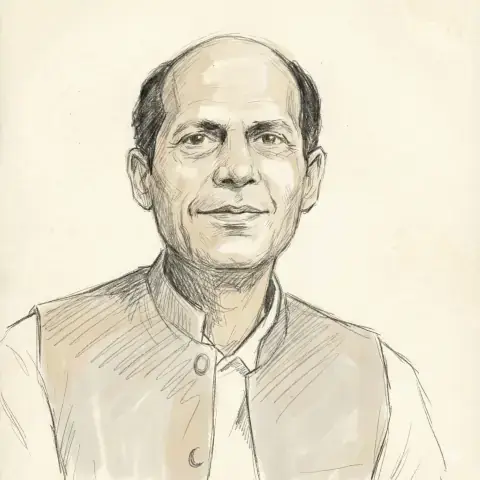
But in a hard-hitting speech, JUI-F chief Maulana Fazlur Rehman warned against becoming part of any campaign to disarm Hamas.
He said those responsible for the Palestine crisis were now forming a so-called peace board and that expecting peace from Trump was tantamount to “living in a fool’s paradise”.
He noted that Trump himself chaired the board and appointed its members at his own discretion.
He said Trump abducted the president of Venezuela and his spouse, while Israeli Prime Minister Benjamin Netanyahu — the butcher of Palestine responsible for the killing of thousands — should have refused to sit on such a controversial board.
“We must not accept this board of peace under any circumstances,” he said, adding that even as bombings were still continuing in Gaza, Netanyahu and PM Shehbaz Sharif would be sitting shoulder to shoulder.
‘Global pressure’
He regretted that Pakistan’s policies were shaped under international pressure. “We have never formulated our foreign policy purely in our national interest,” he remarked. He pointed out that Pakistan’s founder Quaid-i-Azam Mohammad Ali Jinnah had declared Israel illegitimate in 1948. He asked whether the nation had ever paused to think about, let alone act upon, the founder’s words.
“It is the government’s duty to inform what decisions it is making. If not the House, did you at least take the cabinet into confidence?” he asked.
The Maulana recalled that before signing the Simla Agreement, former prime minister Zulfikar Ali Bhutto took the entire House into confidence, and both treasury and opposition supported him because 90,000 Pakistani prisoners were in captivity.
“On an issue as sensitive as Al-Aqsa, there was no need felt to take the nation into confidence,” he lamented.
He questioned the formation of a Board of Peace when the United Nations and Security Council already existed. “Does this not amount to a parallel authority?”
The JUI-F chief blamed the Western countries for turning Afghanistan, Iraq, and Libya into ruins.
He noted that bloodshed had continued in Pakistan itself for 25 years.
The Maulana further said there might be peace in Lahore, Faisalabad, and Sahiwal, but his own districts were in a constant state of unrest.
“My districts are under the control of armed groups, they collect taxes. Security institutions are handing over their posts to them — look at Lakki Marwat and Tank. Where I live, there are mountains on both sides, and those areas are under their [militants’] control. No construction work can take place unless extortion money is paid to them,” he added.
“This is the condition of our own country, and you are going to Gaza and becoming part of their oppression,” he said, adding that while Palestinians were helpless, policies still needed to be kept right.
PTI rejects move
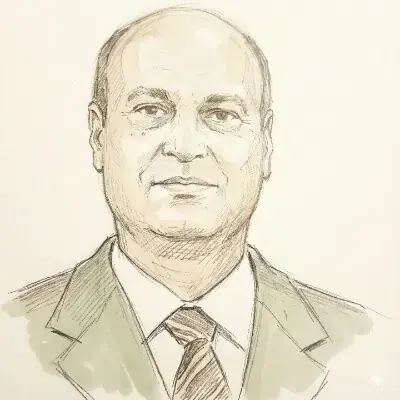
PTI Chairman Barrister Gohar Ali Khan also regretted that PM Shehbaz had welcomed the ‘Board of Peace’ without any consultation at home. Speaking in the House, he said the Foreign Office announced Pakistan’s joining of the board while ignoring parliament, and questioned whether Pakistan would play any role in disarming Hamas.
“If it were a UN body, the government could have acted on its own. The board is not a UN body,” he observed.
Talking to Dawn, PTI stalwart Asad Qaiser said that it was unfortunate that the government did not bother to
take such a sensitive decision with consensus.
“At least they should have discussed it in parliament to give a false impression to the global community that we have democracy in Pakistan,” the former speaker of the National Assembly added.
To a question, Mr Qaiser said that there could be severe repercussions of the decision, as it could compromise the relationship of Pakistan and its people with other Muslim countries, as well as with the Palestinian people.
PTI Central Information Secretary Sheikh Waqas Akram, while talking to Dawn, regretted that there was not a single Palestinian representative on the ‘Board of Peace’. “Any decision that will not be acceptable to Palestinians will not be acceptable to PTI,” he added.
PTI’s parliamentary leader in the Senate Barrister Ali Zafar told Dawn he believed that such an important step, with far-reaching consequences for the nation, could not be decided “unilaterally by the executive or the federal government alone”.
“A decision that affects the future direction of Pakistan, its foreign policy, and its moral standing must be taken by parliament, representing the collective will of the people,” he added.
Two viewpoints
Mr Zafar elaborated that there were two competing viewpoints on this issue.
“One view holds that by joining this force, Pakistan may be indirectly facilitating the broader strategic objectives of Greater Israel and thereby becoming complicit in the subjugation of the Palestinian people. According to this perspective, Pakistan should not become part of such a force,” he said.
“The other view is that the Palestinians themselves are calling for assistance, and that this is a moment when Muslim countries must stand together. Proponents of this view argue that since countries such as Saudi Arabia and Turkiye are reportedly part of the force, Pakistan should also participate in solidarity with the Palestinian cause,” he added.
“Before deciding which view is correct, all relevant facts must be placed before parliament, so that the nation may reach a collective, informed decision.”
Published in Dawn, January 23rd, 2026