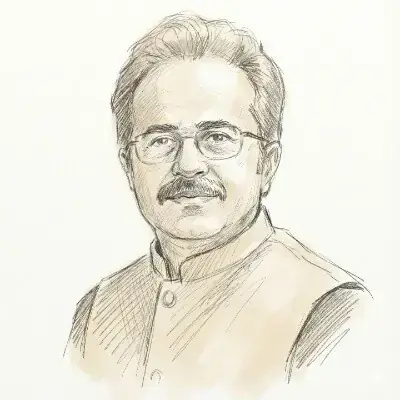
• Court rules Justice Jahangiri ‘ceases to hold office’ with immediate effect
• President approves removal ‘in compliance with’ IHC decision
• KU syndicate cancelled degree ‘obtained thru unfair means’, registrar tells court
• Verdict comes a day after judge approached FCC, SJC accusing CJ Dogar of ‘bias’
ISLAMABAD: Justice Tariq Mehmood Jahangiri was removed from his post by President Asif Ali Zardari in compliance with the Islamabad High Court order, which ruled that Justice Jahangiri’s elevation to the court was “without lawful authority”.
A division bench comprising IHC Chief Justice Sardar Muhammad Sarfraz Dogar and Justice Muhammad Azam Khan announced the verdict, which had been reserved earlier in the day, on a petition challenging the validity of Justice Jahangiri’s law degree and, by extension, his appointment as a high court judge.
The short written order, seen by Dawn, directed the law ministry to de-notify him as a judge of the IHC. The ministry wrote to the PM Office, who forwarded a summary to the president. Later, a statement issued by the presidency after midnight said that President Zardari had approved the de-notification of Justice Jahangiri on the advice of the prime minister. “The de-notification has been issued in compliance with the decision of the Islamabad High Court, which declared his appointment as a judge to be illegal and ordered him to vacate office,” it added.
Before the de-notification, the IHC had removed Justice Jahangiri’s name from its website.
The bench said that at the time of Justice Jahangiri’s appointment as an additional judge of the IHC — and later, at the time of his confirmation — he was not holding a valid LLB degree, “which is a prerequisite for enrolment as an advocate”.
“When he could not be considered as an advocate, then consequently he was not eligible for elevation as a judge of a high court in terms of the requirements of Article 175-A of the Constitution,” the order added.
Based on this observation, the bench held that his elevation to the IHC was “without lawful authority, as he was not eligible to be elevated as a judge of a high court”.
“Thus, he ceased to hold the office of the judge of Islamabad High Court forthwith,” the order said, adding that all pending miscellaneous applications stood disposed of. The bench’s decision came a day after Justice Jahangiri accused CJ Dogar of being “biased” against him and requested the Federal Constitutional Court (FCC) to set aside the recent IHC decision to hear a petition challenging his law degree.
The same day, he also filed a formal complaint before the Supreme Judicial Council (SJC) — the top forum for judicial accountability that probes allegations of misconduct against judges — against the chief justice.
The controversy surrounding Justice Jahangiri’s law degree originated from a letter that began circulating last year on social media, purportedly from the KU controller of examinations.
Subsequently, a complaint pertaining to his allegedly fake degree was submitted to the SJC last year in July and a petition challenging his appointment was also filed in the IHC earlier this year by lawyer Mian Dawood.
Proceedings
Before the judgement was issued, University of Karachi (KU) Registrar Imran Ahmed Siddiqui submitted a record of Justice Jahangiri’s law degree to the court.
He said the KU syndicate had cancelled the judge’s degree for having been “secured through unfair means”.
“Justice Jahangiri was found cheating and creating disturbance in an examination hall in 1988,” following which he was debarred from sitting an exam until 1992, he said. However, instead of complying with the decision, the judge appeared in an exam in 1989 under a changed name, the registrar alleged.
He also submitted a log pertaining to marksheets and results to justify the KU syndicate’s decision.
During his arguments, Advocate Muhammad Akram Sheikh, who was representing Justice Jahangiri, objected to the bench hearing the case.
He contended that a judge who faced legal proceedings could not hear the petition involving a fellow judge, who had challenged his posting.
Procedure of removal
The question of the procedure for the removal of a superior court judge also came up during the proceedings. Counsel for Justice Tariq Mehmood Jahangiri argued that a judge could only be removed in accordance with Article 209 of the Constitution, which requires a reference and recommendation by the Supreme Judicial Council (SJC). He maintained that no other forum or mechanism had the jurisdiction to remove a sitting judge.
However, amicus curiae Barrister Zafarullah Khan took a contrary position, contending that where the issue related to a judge’s eligibility or qualification, the SJC process was not applicable. In support of his argument, he cited the precedent in which the Supreme Court sent home more than 100 judges who had taken oath under the Provisional Constitutional Order (PCO) of former military ruler Gen Pervez Musharraf, without recourse to proceedings before the SJC.
In July, Justice Jahangiri, along with four IHC judges, filed an intra-court appeal against the Supreme Court’s constitutional bench decision of upholding the seniority of the IHC that elevated Justice Dogar to the top post.
The five judges requested the SC not to consider Justices Sardar Mohammad Sarfraz Dogar, Khadim Hussain Soomro and Mohammad Asif as judges of IHC until they took fresh oaths in accordance with Article 194. The intra-court appeal was fixed before the FCC following its establishment under the 27th Constitutional Amendment and eventually dismissed for non-prosecution.
Advocate Sheikh’s argument on Thursday seemed to be referring to this matter.
He also highlighted that the Sindh High Court (SHC) had issued a stay order in connection with the matter, arguing that the IHC bench should not hear the case.
This, seemingly, was a reference to the SHC order suspending the cancellation of Justice Jahangiri’s law degree by the KU syndicate.
Barrister Salahuddin Ahmad, who was also representing Justice Jahangiri, requested more time from the court to submit a reply.
For his part, the petitioner in the case, Mr Dawood, alleged that Justice Jahangiri had “misused” the SHC stay order. “Instead of clearing his name […] the judge has been filing petitions and scandalising his chief justice,” he commented.
According to the court’s order, the bench observed that it had given “ample opportunity” to Justice Jahangiri to submit his reply along with disputed education credentials, “but he failed to do so for the reasons best known to him”.
“As such, this court has left with no other option but to proceed further in the matter,” it added.
The court also observed that the qualification to hold the office of a high court judge “is personal to the individual and has no nexus with the performance of duties as a court or as a member of the court”.
“The qualifications for appointment of judges of the superior courts are duly provided in the Constitution. Possession of the qualifications prescribed under the Constitution is sine qua non (requirement) for an individual to hold the office of a judge of a superior court,” it said.
Published in Dawn, December 19th, 2025