Imports of car assembly kits surge 123pc
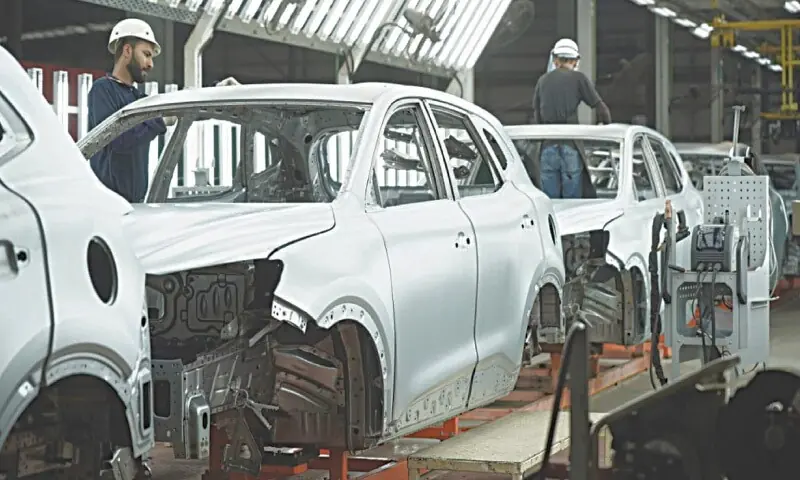
KARACHI: The country’s imports of new and used vehicles, along with auto parts for local assembly, are competing closely as consumers show enthusiasm for both used cars and locally manufactured vehicles.
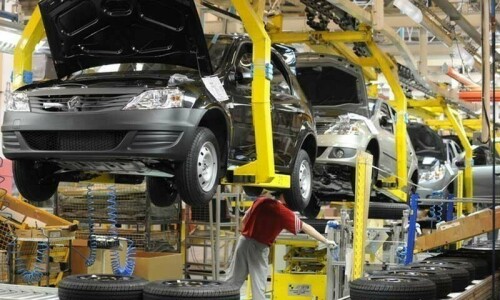
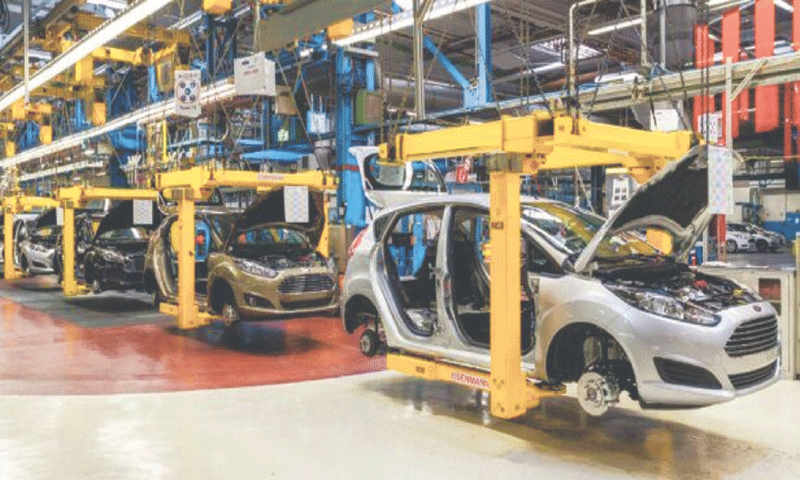
As per data of the Pakistan Bureau of Statistics (PBS), import of semi and completely knocked down kits (SKD/SKD) by the local assemblers jumped by 123 per cent year-on-year (YoY) to $628 million in 4MFY26.
Similarly, the import of completely built-up (CBU) new and used cars also rose by 31pc to $113m in 4MFY26 from $86m in the same period last year.
The Pakistan Association of Automotive Parts and Accessories Manufacturers (PAAPAM) ran a costly media campaign during Pakistan’s Auto Parts Show (PAPS) 2025, held at the Expo Centre early this month, by alarming that $5 billion investment, 1,200 factories and 2.5 million jobs would soon be extinct due to the import of used cars. The association added that used car imports are a crime on wheels, as hawala, hundi, and hidden money are slowly killing Pakistan.
Demand rising for local and imported second-hand vehicles
Local assemblers have also been chanting the same slogan, claiming that the market share of used cars reached 25-30pc, up from less than 10pc a few years back.
This is a strange phenomenon where both used cars and locally assembled vehicles are in high demand. This situation counteracts the claim made by assemblers and vendors that used cars have significantly impacted their sales.
Market leaders offer different views, with some saying that the high SKD/CKD imports by the car assemblers point to low localisation, especially in new models introduced by the old players. Others believe that the ballooning import bill for parts and accessories is due to the Auto Policy 2021-2026, under which new entrants were lured to assemble vehicles with negligible local parts content, thereby pushing up the import bill for parts and accessories.
From FY21 to 4MFY26, the total SKD/CKD import bill has reached $6bn, while CBU imports in the above period are less than $1.5bn. However, the localisation content in Japanese locally assembled vehicles hovers between 35-73pc, while localisation in Korean and Chinese models ranges between 10-35pc.
“It seems that SKD/CKD imports consume more foreign exchange per car than CBU imports,” an assembler commented.
Another assembler pointed out that the auto market is recovering from a prolonged downturn and returning towards normal demand levels.
Additionally, new models launched by both old and new entrants have expanded customers’ choices, thereby boosting sales volumes.
At the same time, many new entrants are offering new electric vehicles as CBU under a much lower EV duty regime, which, along with higher used-vehicle imports, has further lifted overall volumes, he said, adding that all assemblers are pushing harder to secure market share.
Rising auto leasing of small, locally assembled, and used cars, driven by low interest rates, has also boosted consumers’ confidence.
Published in Dawn, November 23rd, 2025