Bill for 27th Constitutional Amendment tabled in Senate after federal cabinet’s approval

Shortly after getting approval from the federal cabinet, the bill for the 27th Constitutional Amendment was tabled before the Senate on Saturday and subsequently referred to the standing committees on law and justice.
A joint session of both the NA and Senate standing committees on law and justice was then summoned to discuss the amendment.
However, during the session of the standing committees, two Jamiat Ulema-i-Islam-Fazl (JUI-F) members, Aliya Kamran and Senator Kamran Murtaza, boycotted the meeting and said the proposed draft included amendments that were discarded in the 26th Amendment bill.
Following deliberations on the proposed amendment, the law committees of both Houses adjourned the moot till Sunday.
‘Discussions will continue till consensus is reached’
Law Minister Azam Nazeer Tarar, speaking to the media after the adjournment of the committees, said all parties were participating in the session and they had also “requested the opposition to participate”.
“Aliya Kamran had informed us that they have instructions from their party not to attend the session; however, all other parties were in attendance. We even asked the opposition to be a part of the session.”
Tarar said the “long-awaited” proposed amendment has been in discussion for the last 10-15 years. “Even today we are having a constructive debate on the matter.”
“At the time of the 18th Amendment, it was on the constitutional agenda, and even earlier, during the 26th Amendment, but due to certain reasons, one of which was Maulana Fazlur Rehman’s suggestion that such a major change should not be made and that it would be better to move towards transition and form constitutional benches,” said Tarar.
The law minister elaborated that the formation of the benches increased the workload of the judiciary, as the same judges were hearing cases fixed for the bench and otherwise.
“The objective was to ensure that the cases fixed in the Supreme Court are not delayed further and the common man gets relief.”
Tarar added that one of the aims of the proposed changes is also to do away with the criticism of a “court within a court”. “All members have reviewed it (proposed constitutional amendment) and we have completed arguments on around 60pc of the clauses.”
The law minister said a few questions have been raised by some members, clarifying that they are legal in nature and “not fundamental issues”.
“We will reconvene again tomorrow morning at 11am and continue our discussions. And till the time we do not reach a consensus, from all members of both Houses, the discussions will continue,” said the law minister.
The Senate and standing committee sessions will resume on Sunday, November 9.
Farooq H. Naek said no decision has been reached yet after deliberations on the proposed constitutional amendment, and claimed around 80pc of the bill was discussed.
He added that certain “mistakes” in the draft will be corrected and the law ministry has been made aware.
When asked about changes to Article 243, he said it was not discussed during today’s session.
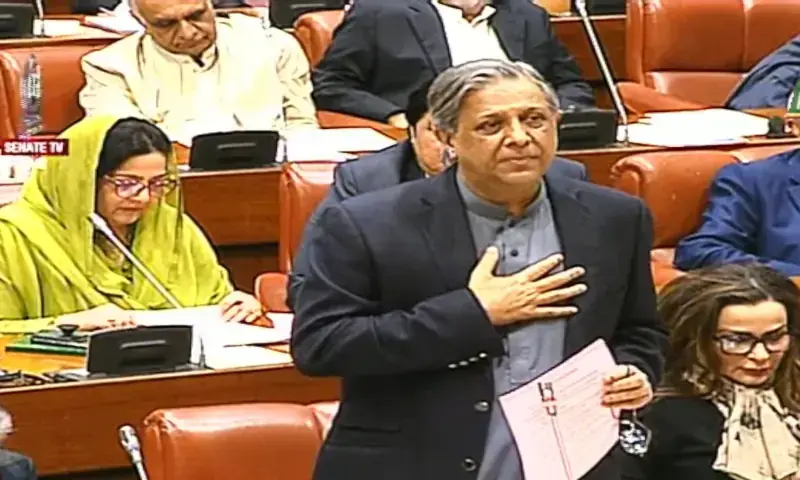
Tarar tables bill in Senate
The bill, which was tabled in the Senate by the law minister, proposed the formation of a Federal Constitutional Court, changes in the process for appointing high court judges, changes to the threshold for provincial cabinets, and changes to the military leadership structure.
At the outset of the session, Tarar — who had earlier in the day briefed the media on some features of the proposed legislation after the federal cabinet meeting — requested the suspension of the question hour and other house business so he could brief lawmakers on the amendment.
The law minister then moved the bill before the upper house, with Chairman Yousuf Raza Gillani referring it to the National Assembly and Senate standing committees on law and justice for review and consideration. He said that both committees may hold joint meetings for a detailed review and consideration, and the report would be presented before the House.
During the Senate session, PTI’s Ali Zafar said that debating the constitutional amendment was not appropriate when the leader of the opposition’s seat remained vacant. He said that the government and its allied parties appeared to be in a hurry to pass the bill.
“I would suggest that instead of sending it to the committee, let this Senate be treated as a committee as a whole,” he said, suggesting the bill be debated by all individuals. He further said that the opposition had received the draft today and had also not yet read a word of it.
“We cannot debate something we have not read,” he said.
Law minister details key clauses
Meanwhile, the law minister said that the bill would address five subject areas.
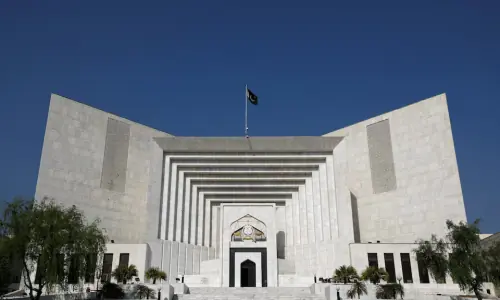
He highlighted that one of the things agreed in the Charter of Democracy signed in 2006 was the formation of a Federal Constitutional Court, which would have superior court judges from all provinces and hear constitutional matters, while regular courts would continue to hear all other matters.
“During consultations on the 26th Constitutional Amendment, some of our friends suggested that we refrain from making such a huge change and experiment by forming constitutional benches,” he said.
The minister said that constitutional benches had been formed, but judges spent most of their time listening to such matters and other cases during the rest of the time. “The fact of the matter is that five to six per cent of cases take 40pc of the court’s time and the rest of the cases remain as is,” he said.
He further stated that some argued that constitutional benches were a “court within a court” and also raised other objections.
“After detailed consultations with all political forces … We said that the wish and demand of a Federal Constitutional Court should be brought into the Parliament, which we have done through this bill,” he said.
He said that another issue concerned the process for the transfer of high court judges. This was addressed in the 1973 Constitution, which empowered the president to make the transfer on the advice of the premier in consultation. He said that the transfer could be made for two years without the judge’s consent, but longer periods would require it.
“In the 18th Amendment, the two-year condition was removed, and it was stated that the judge’s consent would be sought. In the 26th Amendment, the condition remained the same but concerns were raised about the interference of the executive,” he said.
He further said that it was proposed that the bit about the premier’s advice for the transfer of judges be removed and handed over to the Judicial Commission of Pakistan (JCP).
“It also has safeguards that a judge more senior than the chief justice will not be sent so that there is no dispute about that,” he said, adding that it was up to the JCP whether or not it wanted to seek the judge’s consent.
Talking about elections for the upper house of Parliament, he noted that they took place in Khyber Pakhtunkhwa after a delay of more than a year.
“The first thing after a Senate election is the election of the chairman and deputy chairman. To avoid any dispute in this regard, a clause has been introduced,” he said.
The minister further said that the bill also proposed increasing the 11pc provincial threshold for the cabinet to 13pc, noting that all provinces had voiced concerns apart from Punjab.
The Constitution allows the provinces to have cabinets not exceeding 15 ministers or 11pc of the total membership of their respective provincial assembly, whichever of the two is higher.
“Previously, there were five provincial advisers … now they have been increased to seven,” he said.
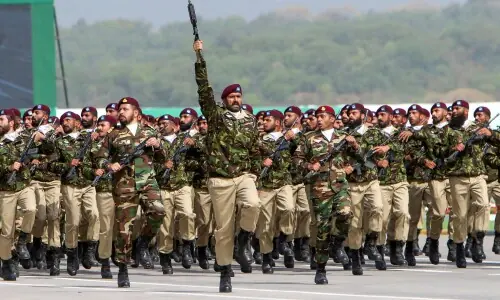
Talking about Article 243, which provides that the federal government “shall have control and command of the armed forces”, the minister said that certain clauses were being introduced.
He said that Chief of Army Staff Asim Munir had been awarded the title of field marshal. “This is a title, not a rank, not an appointment as such … whereas army chief is an appointment with a five-year tenure,” he said.
“Field marshal, or marshal of the air force, admiral of the fleet — these exist in different countries for land, navy and air forces — these have been mentioned, and it has been stated that these titles will be given to national heroes. These titles are for a lifetime. It is a title,” he said.
He further said that it was clarified that the “impeachment or reversal” of the title would not be at the premier’s authority but at Parliament’s.
He further said that the office of CJCSC would be abolished from November 27, 2025. “The present CJCSC is also our hero; it will be abolished after his appointment ends. Parliament cannot even think of depriving him of the role during his tenure,” he said.
The minister said, however, that there would be no new appointment because the COAS had been given the role of the chief of defence forces. He further said that the bill proposed that the prime minister, on the recommendation of the COAS, would appoint the commander of the National Strategic Command.
“Where the federal government promotes a member of the armed forces to the rank of field marshal, marshal of the air force or admiral of the fleet, such officer shall retain the rank, privileges and remain in uniform for life,” he said, reading from the bill.
“Upon completion of the term of his command, under the law, the federal government shall determine the responsibilities and duties of field marshal, marshal of the air force or admiral of the fleet in the interest of the state,” he read out from the draft.
Federal govt approves draft
Shortly before the Senate session, Prime Minister Shehbaz Sharif had chaired the cabinet meeting via video link from Azerbaijan, according to state-run PTV News.
“The federal cabinet approved the draft for the 27th Constitutional Amendment and welcomed it to the fullest extent,” it had added.
“Everyone made joint efforts for the 27th Constitutional Amendment for strengthening the Centre’s relations with the provinces and the country’s wider interests,” the premier was quoted as saying. He commended the law minister’s efforts, as well as those of the attorney general of Pakistan.
Shehbaz noted that he had taken PML-N President Nawaz Sharif into confidence for the amendments and sought his guidance on them. “I also took President Asif Ali Zardari into confidence regarding the Amendment and we are deeply grateful to him for their approval,” the premier said.
He went on to specifically thank PPP Chairman Bilawal-Bhutto Zardari and heads of other allied parties who held discussions with him and “strongly supported” the draft. The prime minister noted that Awami National Party (ANP) President Aimal Wali Khan, PML-Zia head Ijazul Haq and other politicians were also apprised of the legislation.
He stressed that everyone must work together for the country’s progress and prosperity.
PM Shehbaz had held consultations with multiple ruling allies on Thursday, meeting with the top leadership of the PML-Q, the Istehkam-i-Pakistan Party (IPP), the Muttahida Qaumi Movement-Pakistan (MQM-P), the Balochistan Awami Party, the ANP and the PML-Zia.
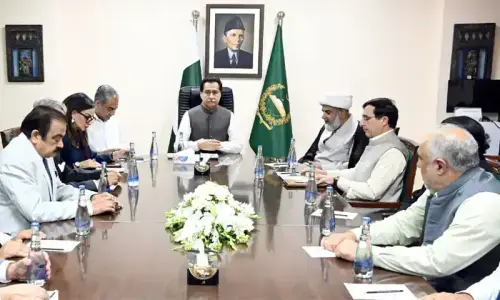
After the federal cabinet meeting in Islamabad, the law minister had briefed the media on some of the key features of the draft and informed that the bill would be tabled in the Senate.
Moreover, Tarar recalled that at the time of the 26th Constitutional Amendment, the MQM-P had contacted the prime minister and the PML-N seeking changes to Article 140A, which provides that the provinces will establish local governments (LGs).
“They had introduced a bill in the Senate, which was referred to a committee and on the directives of the premier, I, as the law minister, also gave a note in its support,” Tarar said.
“As that bill is already pending, the cabinet has also directed me today that when today’s bill is referred to the committee after being presented in the senate, the committee should also mull over [the one tabled by the MQM-P],” he said.
Tarar said that the government would try to convince its allied partners to develop a consensus on this bill so it could be passed, adding that a recent resolution by the Punjab Assembly regarding LGs would also be discussed.
He further said that Balochistan Awami Party (BAP) leaders, in their meeting with PM Shehbaz earlier this week, had directed his attention to a bill pertaining to an increase in the seats for the Balochistan Assembly.
“So both these bills, which are already pending before the law and justice standing committee, will be debated,” the minister said.
“Pakistan is going through very tough circumstances, and I think the country’s greatest need today is political consensus and political stability,” the law minister stressed.
The proposed constitutional tweaks have been heavily criticised by lawyers and politicians, who termed them an attempt to revoke provincial rights granted in the 18th Amendment.
The federal cabinet meeting was originally scheduled for Friday, but was postponed due to PM Shehbaz’s commitments in Azerbaijan, sources in the PM Office said. However, some were of the opinion that the meeting was put off due to a lack of consensus between the ruling PML-N and the PPP over the Amendment.
The PPP has said it would support amendments to Article 243, which defines the powers of the armed forces, but has rejected proposals related to provinces’ shares under the National Finance Commission (NFC) award and any rollback of the 18th Amendment.
The PPP’s Central Executive Committee (CEC) yesterday decided that it “agrees in principle with the idea that constitutional courts should be formed” — a proposal also mulled during the 26th Amendment discussions last year.
The MQM-P presented its own version of additions to the 27th Amendment, calling for strong and autonomous LGs across the country. The Jamiat Ulema-i-Islam-Fazl (JUI-F), which met with an MQM-P delegation on Thursday, has opposed any amendment that would reduce the powers granted to the provinces under the 18th Amendment.
The opposition PTI has criticised most of the tweaks, terming the proposed amendment an “attack“ on the Parliament. PTI Chairman Barrister Gohar Ali Khan said earlier this week that it would be inappropriate to claw back population and education from the provinces.
On the other hand, Parliamentary Affairs Minister Dr Tariq Fazal Chaudhry on Wednesday assured the National Assembly that the 18th Amendment would not be rolled back through the 27th Amendment.
On November 3, PPP Chairman Bilawal Bhutto-Zardari revealed that the government’s proposed amendments included “setting up [of] constitutional court, executive magistrates, transfer of judges, removal of protection of provincial share in NFC, amending article 243, return of education and population planning to the federation and breaking [the] deadlock on appointment of ECP”.