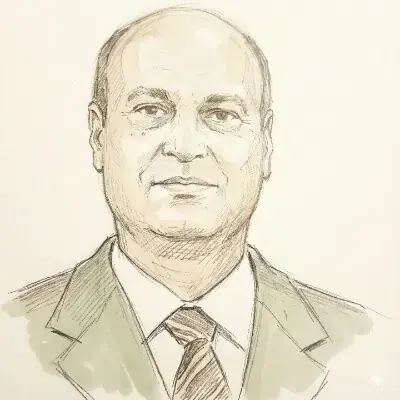
ISLAMABAD: Just hours after undergoing an awake brain operation, as claimed by a neurosurgeon in the federal capital, a 32-year-old patient was allowed to go home in a rare instance of medical advancement in the country.
The surgery was performed by Prof Dr Akbar Ali Khan, a neurosurgeon at Maroof International Hospital having the expertise in minimally invasive brain and spine surgery, on Asim Shehzad who was later advised to visit after a week for a follow-up examination.
In recent years, doctors at Shifa International Hospital in Islamabad and Aga Khan Hospital in Karachi have performed awake brain surgeries, also known as craniotomy, but mostly patients are not discharged the same day after the operation.
In a statement, Dr Khan said awake brain tumour surgery was a complex neurosurgical technique that he had been practising for last four years. “Through this technique, the tumour is removed, saving the patient from brain damage and paralysis. I am delighted that after four years of my hard work, I successfully conducted the most difficult and complicated operation in Pakistan. The biggest advantage of this surgery is that the patient had control over his limbs and speech throughout the operation,” he said.
Method reduces operation’s cost, claims Dr Akbar
He said awake brain surgeries were held in some countries, but discharging the patient the same day of the surgery was a dream that rarely came true across the world. “At present, Howard University in the US and a hospital in Toronto, Canada, have been performing awake brain surgeries in which patients are discharged the same day. I have worked in UK and till 2018, not a single such surgery was performed. Even after that I did not get any information that such a surgery has been performed to date,” Dr Khan said, adding that he was grateful to all doctors who had taken part in the operation.
In reply to a question, he said that during traditional surgeries patients had to stay for at least five days in the hospital due to which the cost of surgery increased a lot.
“As Pakistan is a developing country, it is not possible for a large number of patients to afford the cost of brain surgeries, but awake brain tumour surgeries will facilitate patients to get treatment at a much lower cost,” he said.
When asked about the patient, Dr Khan said the name of the patient, who allowed him to disclose his identity, was Asim Shehzad. “He was discharged from the hospital the same day just hours after the surgery. I have advised him to come for a follow-up visit after a week and then after six months he will undergo an MRI test to see if there is any re-growth the tumour,” he said.
He said it was an advanced surgery and hospitals should go for it as it reduced patients’ stay in the hospital and made the surgery affordable for a large number of patients. “It is a delicate surgery in which a mild anaesthesia is given and small cuts have to be ensured,” he said.
During the surgery, Dr Khan said he asked the patient “Pakistan Ka Matlab Kia?” and the patient actively responded: “Laila Ilaha IllAllah, Muhammad ur Rasool Allah.”
According to hospital sources, the patient was discharged within 12 hours of his surgery.
Meanwhile, a spokesperson for the Ministry of National Health Services, Mr Sajid Shah, said it was very positive and encouraging development that a private hospital in Islamabad had performed an awake brain surgery in which the patient was discharged the same day after surgery. “The private sector has been providing health treatment to 70 per cent of the country’s population and it has been contributing in managing the load of the patients,” he added.
Mr Shah expressed the hope that more such hospitals would come forward to bring innovation in their treatment facilities for the betterment of the patients and decreasing the financial burden on them.
Published in Dawn, August 15th, 2022