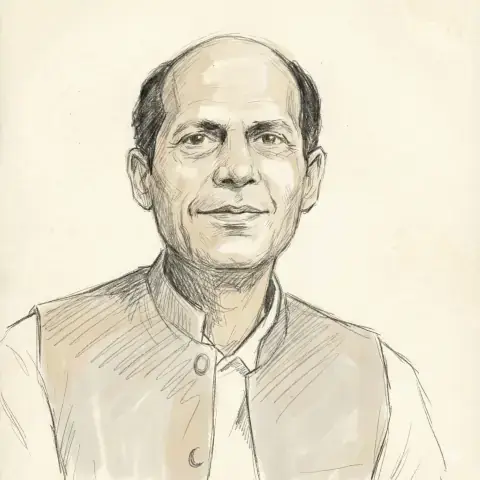
Close to two million Afghan refugees currently reside in Pakistan. While those registered have a legal right to stay, many are being pressured to return to a place they no longer consider ‘home’. How are refugees coping with the anti-Afghan rhetoric and what about the second and third generation of Afghans who have grown up in Pakistan? Images on Sunday takes a closer look at the Afghan refugee narrative and what it means for ordinary Afghans.
The end of a dream
Many second and third generation Afghans who have been born and raised in Pakistan are being asked to leave the only home they’ve ever known
Haji Mangal fled to Pakistan from war-ravaged Afghanistan in 1979, leaving behind fear and dread in his homeland. Young, newly-wed and eager to start a new life, he quit his job as a court officer in Afghanistan and crossed the border. He is a grandfather now, but after 37 years of living in Peshawar, when he is old and can’t walk without a crutch, he has to return to his country because Pakistan wants Afghans to leave.
In many ways, Mangal has lived an immigrant’s dream — not only did he do well for himself so did his children. Mangal became a father to six sons and three daughters in Pakistan — three of his sons have gone on to become doctors. His other children, too, are doing well for themselves.
Although the elderly man had gambled on making a new life in neighbouring Pakistan, he had managed to join the Commissionerate Afghan Refugees (CAR) in Peshawar as an associate. The CAR was set up by the federal government that same year in order to facilitate Afghan citizens entering Pakistan to find refuge due to the ongoing war in Afghanistan. CAR currently serves under the Ministry of States and Frontier Regions (SAFRON).
But things changed after December 16, 2014, when militants carried out a massacre at the Army Public School in Peshawar. In the popular imagination, there is a growing perception that terrorists are infiltrating into the country from Afghanistan in the guise of refugees. Repeated public statements by Pakistani politicians and government officials that Afghans should go back ‘home’ don’t help either.
Only this year, more than 380,000 registered Afghan refugees have returned home as authorities say that anxiety has shot up to unprecedented levels among refugees. Having painstakingly rebuilt a life once, Mangal and those in the same boat are being asked to construct a new life once again.
A second home
Since the Soviet invasion in Afghanistan in 1979, Pakistan has taken in over three million Afghans. According to the United Nations Commission for Refugees (UNHCR), after the Soviet invasion of Afghanistan, around 400,000 Afghans had arrived in Pakistan. By the end of the first year, however, another million Afghans poured over the border. The influx forced the UNHCR to sign an agreement with the SAFRON ministry to evolve a mechanism for the shelter of this ever-growing bulge of refugees.
“As the war settled into an intractable struggle, another million arrived in Pakistan in 1981 to raise the total number of registered refugees to 2.4 million,” explains Duniya Aslam Khan, a spokesperson for the UNHCR. She points out that while the rate of arrivals slowed after 1981, the registered population continued to nudge upwards through the rest of the decade, peaking at nearly 3.3 million in 1990.
Today, Pakistan hosts 54 Afghan refugee camps with the support of the UNHCR. The north-western Khyber Pakhtunkhwa province hosts 43 Afghan refugee camps, south-western province Balochistan has 10 and Punjab has one camp, in Mianwali.
Over the years, these camps have evolved into traditional Pakistani villages in Khyber Pakhtunkhwa and Balochistan. Children wearing dirty but colourful clothes play in dusty, unpaved streets and old men gossip outside their mud and semi-concrete houses. The women, meanwhile, stick to their traditional roles and rarely venture outside the home.
The UNHCR established schools and basic health facilities in these villages under a joint Government-UN Refugee Affected and Hosting Areas (Raha) initiative launched in 2009. Only this year, the agency has allocated 127 million dollars for projects to support refugees and their host communities, in coordination with the government of Pakistan.
“Over two million Afghans were repatriated in the 1990s,” says Khan, adding that the first-ever census of Afghans in Pakistan in 2005 showed that despite that early repatriation, around 3.04 million Afghans were still living in the country.
“Later in 2007, 2.153 million Afghans were issued Afghan refugees identity cards, also called Proof of Registration (PoR) cards, which were valid for three years. This followed a countrywide drive to register Afghan refugees with the National Database and Registration Authority (Nadra),” she says.
In theory, the PoR cards provided by the UNHCR also hand Afghan refugees the right to stay in the host country, Pakistan, until they need to. PoR also give them the right to enjoy the protection of the host government including from any forced return to Afghanistan. They can also appeal under international law on humanitarian grounds.
“The PoR cards provide Afghans with a temporary legal stay in Pakistan and protection to its bearer from extortion, arbitrary arrest and detention as well as deportation under Pakistan’s Foreigner’s Act,” assures Khan.
But on the ground, things are not cast in black and white.
Many Afghans allege that despite their legal right to stay in Pakistan, there is great scrutiny and harassment of refugees at the hands of law-enforcement officials.
Living in no man’s land
As the year 2016 draws to a close, the UNHCR estimates that it has facilitated the return of some 4.2 million Afghans since 2002. This year alone, more than 380,000 registered Afghan refugees have returned home. According to official statistic some 1.34 million registered and around 0.6 million unregistered Afghan refugees still remain in Pakistan.
Those still living in Pakistan are anxious despite the government’s official announcement to once again extend the deadline for the refugees to return until December 2017. Pakistan has already deferred this deadline a number of times since 2009. Many allege, however, that despite their legal right to stay in Pakistan, there is great scrutiny and harassment of refugees at the hands of law-enforcement officials.
“My house has been visited several times by the police to check our family’s refugee cards and to verify that we are not terrorists who have infiltrated into the country in the guise of Afghan refugees,” says Mangal’s daughter Malalai.
She is a mother to four sons, all of whom claim harassment at the hands of police whenever they step out of the home. Often, they are picked up by police and are released only after bribing law-enforcement officers. Whenever there is a major terrorist attack in Pakistan or when the Afghan government takes any hostile step towards Pakistan, many Afghan families including Malalai’s become targets of abuse. From being friends one day, they are blamed of being disloyal and spies among their hosts.
And yet, Malalai is unwilling to leave Pakistan.
The mother of four was born in Pakistan, married in Pakistan, and gave birth to all her children in Pakistan. The first Afghan generation to have migrated to Pakistan might not have strong claims to citizenship but the second and third certainly do.
Pakistan has also provided her children an opportunity to get the best education possible and a relatively secure future. Her eldest son is close to completing his chartered accountancy qualification. Three others are attending school while aspiring to follow in the footsteps of their brother.
“Whatever troubles I’m facing, I won’t leave Pakistan. There is no future in Afghanistan,” asserts Malalai as she helps her parents to fill their forms at the UNHCR repatriation centre in the outskirts of Peshawar. “I will stay here till the time I can despite all difficulties,” she asserts says determinedly.
Many others are similarly determined not to leave come what may.
“I will return only if they will throw me out. If they continue tolerating me like this, I will never go back,” says Taj Mohammad from Peshawar’s Khazana refugee camp. “I’d be among the last to return.”
Mohammad was arrested a few months back on suspicion of terrorism but managed to buy his release. He usually sets up a tuck shop at the main entrance of the dusty Khazana camp. Although there are government-provided electricity connections, the village is powered by solar panels. “We have light bulbs and we watch television,” he beams.
Pakistan has no specific law for refugees or asylum legislation that obstructs refugees’ access to legal employment and livelihood. But UNHCR says Pakistan has never objected to refugees working in the country, provided they are not involved in any crime.
“Officially Afghan refugees or refugees from any other country cannot seek employment in public offices but there is no legal restriction on Afghans working in private offices, having small-scale personal business, self-employed as teachers, doctors, domestic helpers and unskilled labourers,” explains Khan.
Many refugees who have established booming businesses in Pakistan against all odds, now face the prospect of huge financial losses if and when they are forced to return to Afghanistan.
“I had a cloth-selling business in Peshawar. I used to buy and bring cloth from Lahore and sell it in Peshawar. But it is doomed now because they are throwing me out of this country,” says Khalid Khan who is from Laghman province in Afghanistan and lived in Wazir Bagh, Peshawar.
“I will set up the same business in Kabul and will import cloth from Lahore. But I’m uncertain about the future of my business. I don’t know if it will work there or not,” he says.
Ahmed Noor is suffering the same fate.
“I have worked in this country for 40 years but Pakistan could not become my homeland. Now I will go back to Afghanistan and set up my cloth business there. I’ll work hard there and see if that country develops or not,” he says.
UNHCR’s Duniya Aslam Khan terms the situation as complex.
“The Afghan refugee situation is entering its fourth decade soon, making it the world’s largest protracted refugee population under UNHCR’s mandate. Given the different profiles and needs of the concerned people, the majority of whom have been born in Pakistan, a resolution of this situation requires an innovative and comprehensive approach with support from all stakeholders,” she says.
Meanwhile in Islamabad, the drive to send Afghan refugees back home is facing inertia. While the drive seemed to have great momentum in the immediate aftermath of the attack on the Army Public School in Peshawar, operational and logistics concerns have slowed the process down.
The long walk home
Afghan refugees who settle in Afghanistan at this stage are given meagre compensation — the UNHCR offers a one-time financial assistance of 400 dollars (around 41,600 rupees) to each returnee departing voluntarily. Unsurprisingly, most Afghans who are settled here and are either working professionals or well-to-do traders aren’t ‘motivated’ by this amount to move to Afghanistan.
For some registered Afghan refugees, however, going home in an ‘honourable’ way is more important than anything else.
“I have lived an honourable life in Pakistan and want to return to my country with the same honour,” says Abdul Quddus, an imam at a mosque in Kohat. “I should seize this opportunity to return with honour when my respectable hosts want me to leave. I should not wait for the moment when they will throw me out of their country with an insult.”
Mangal plans to make the most of his plans to return to Afghanistan and shall put the UNHCR assistance to good use. Dragging his feet towards his native province of Nangarhar in Afghanistan, Mangal is planning to rebuild his ruined family home and take charge of his agriculture land in a country where the threat from the Taliban and Daesh has intensified more than ever before.
Mangal is banking on one of his doctor sons who has secured a job in Afghanistan for support if need be. He hopes the other two will also bag similar jobs. And yet, despite the weight of experience, he remains unsure about the future. There was uncertainty when he first crossed the border of his country into Pakistan but there is great insecurity now. Will he be able to settle in a new place? Will his country ever come out of war? Will there be lasting peace and stability one day?
But this time he has a new question in mind: will he be able to die peacefully? Unlike the last time, there are no greener pastures on the other side of the border.
Citizenship for sale
The killing of Mullah Akhtar Mansour put fake CNICs in the spotlight. But how easy is it to make forged documents?
When the chief of Tehreek-i-Taliban Afghanistan, Mullah Akhtar Mansour, was killed in a drone strike in Balochistan in May this year, the disclosure that he held a computerised Pakistani national identity card (CNIC) and passport put pressure on the state to publicly crackdown on the use of fake ID cards.
The resulting campaign against stolen IDs was widely covered by the media and revealed that aliens, particularly Afghans, most of whom were probably refugees, had managed to get fake CNICs by bribing officials. In other words, the country’s citizenship was on sale.
According to the latest figures obtained from National Database and Registration Authority (Nadra) 66,662 people registered are with families who aren’t related to them. A source disclosed that these include some more high-profile Afghan militant leaders. However, Dawn wasn’t provided with any evidence that can corroborate this claim.
How are fake CNICs made
Government officials only agreed to talk about why and how fake CNICs are issued on the condition of anonymity as they are not allowed to talk to the media. According to interviews conducted for this story, most ‘stolen’ CNICs are issued to refugees and undocumented migrants on the basis of fake birth certificates issued by union councils and attested by officials. Given the way the system is designed, aliens are able to obtain a CNIC based on the presentation of a birth certificate.
“Our hands are tied when a person comes to us with an apparently genuine birth certificate and applies for a CNIC,” remarks a Nadra official. “Nadra has a standard operating procedure that we have to follow when the required documents are provided to us.”
He points out that underpaid clerks are in charge of issuing certificates and can easily be bribed. In addition, claims the official, there are few checks and balances in the system. The union councils, for instance, aren’t accountable to anyone and there’s no system for Nadra officials to liaise with union councils.
Another official, Rehman Afridi*, says that it is difficult to verify accounts of members who are living in remote areas of the country, and such data is often used in the application of fake CNICs. “An illiterate farmer living in a far-flung village would never know that the Nadra record has changed and he now has eight sons instead of three,” he explains.
A Nadra official also disclosed that thousands of printing sheets used to prepare birth certificates had gone missing from Khyber Pakhtunkhwa last year. An inquiry had been ordered but the matter was hushed up after the sacking of a few lower-grade officials.
Afridi also disclosed that thousands of printing sheets used to prepare birth certificates had gone missing from Khyber Pakhtunkhwa (KP) last year. An inquiry had been ordered but the matter was hushed up after the sacking of a few lower-grade officials. The inquiry officer was not allowed to proceed and ‘action’ was taken by the then KP director-general of Nadra.
There were also instances of fake CNICs being issued to individuals who didn’t produce any of the documents required. Afridi explains that it wasn’t possible to do so without the collusion of Nadra officials.
“The issuance of CNICs involves various stages including photograph for facial recognition, automated finger identification system, form uploading and the staff performing respective duties to access the system with a password. In some cases, the computer will show if the face of an applicant closely matches with an individual already in the Nadra database, after which the officials responsible can either identify the dubious applicant or clear the case by a simple click,” he adds.
The black market business of issuing fake CNICs seems to even have senior officials on its payroll. The 2011 murder of FIA’s deputy director in Peshawar is rumoured to be linked with the issuance of fake CNICs.
Afridi claims that he had attested forms of 93 families from three cities, but the CNICs could not be issued after an interesting revelation that the dates of birth of all those applicants were either January 1 or May 8, they all were from the same region and one person had attested all the forms.
The fake CNIC saga has produced many interesting cases highlighting how the system needs an overhaul.
In October 2009, the then federal minister for population welfare Dr Firdous Ashiq Awan had rejected her alleged involvement in a human trafficking scam after disclosures that according to the Nadra record, the unmarried minister had four children. Who made that record and why remains a mystery.
In 2011, it was disclosed, that the Nadra record of MPA Malik Ibrar showed that he had eight children instead of the actual four. In April, 2015, Interior Minister Chaudhry Nisar Ali Khan disclosed to the media that a drug lord, Ibrahim Koko, from Myanmar had been issued a Pakistani passport from the country’s embassy in Thailand. It was done so on the basis of a fake domicile apparently issued from Punjab’s Khushab district. His fraudulent passport was caught by FIA when Koko arrived in Pakistan.
Reportedly, this isn’t an isolated case. In the same press conference, the interior minister pointed out that there have been dozens of cases involving drug lords and dealers being sent to Pakistan with fake passports under an exchange of offenders’ agreement. The programme allows Pakistanis convicted abroad to complete their sentences in their home country’s prisons.
It is believed that the re-verification of CNICs, an initiative launched in July, may have been instrumental in catching redundancies in the system. Thousands of fake members were identified in various family trees maintained in Nadra’s database.
In addition, many aliens, fearing arrest, voluntarily surrendered their fake cards. By November 28 of this year, 3,584 had done so.
The number was 2,903 on November 7 and included 2,842 Afghans, 58 Bengalis, and one national each from India, Indonesia and Iraq.
A number of Nadra employees involved in the issuance of fake CNICs to aliens have already been arrested while many are on the run. A senior Nadra official confirmed that around a dozen employees involved in the large-scale issuance of fake CNICs had been identified and many of them have been arrested.
In a press conference held at the Nadra headquarters a few weeks ago, the interior minister mentioned the same case and stated that action has been taken against the Nadra employees who were involved.
He adds that others involved in individual cases of fraud had also been arrested, but the exact number of those under arrest and trial was “not available.”
Those government officials who face charges of committing ID fraud likely face a long prison sentence. The interior minister had announced earlier in the year that those found guilty of issuing fake CNICs could face imprisonment of up to 14 years.
While re-verification process may be completed by the government before the six-month deadline, far more needs to be done. Many insiders point out that birth certificates are still being ‘sold’ thus there needs to be a system that can double-check if the certificates issued by a union council are genuine or not.
The government also needs to reach out to citizens who reside in low-literacy rate areas since they may not use mobile phones or may be illiterate and therefore unable to read or respond to the messages sent to them by Nadra. Thus door-to-door canvassing may be helpful in these cases.
In addition, the Nadra offices in KP and Balochistan near the Afghan border need to be extra vigilant to prevent fraudulent entries. A mechanism to verify attestations from those issuing it might be helpful.
But can the system really become fool proof if people such as Mullah Akhtar Mansour can obtain cnics and passports?
*Name has been changed to preserve anonymity
The face of a nation
Sharbat Gulla’s saga has come to symbolise the plight of Afghan refugees in Pakistan
In 1985, a 12-year old with piercing green eyes became an instant global icon. Having caught the attention of a photographer at Nasir Bagh camp at the height of the Afghan war, Sharbat Gulla’s eyes haunted the world.
But while Steve McCurry, a well-known ‘disaster photographer’ won acclaim for his master piece and the magazine, the National Geographic, where Gulla’s photo was published, saw its ratings and sales rise, Sharbat’s fate was doomed.
As a five year old, Sharbat watched her parents die in a bombing. Like most Afghan refugees she lived in destitution in various camps and slums of Pakistan. Sharbat’s husband and daughter died of Hepatitis-C – she herself suffers from the ailment.
Back then, Gulla’s photo encapsulated the plight of Afghan refugees and their determination to survive. Thirty-one years later, her reappearance in the spotlight brought public attention to the catch-22 many Afghan refugees find themselves in.
In 2016, Sharbat found herself embroiled in a controversy when it was reported that she obtained a fake Pakistani identity card with the illegal support of government officials. Arrested on October 26 by Pakistan’s Federal Investigation Agency (FIA) for forging documents, Sharbat was sentenced to 15 days in jail.
But Gulla was probably no different than many of her compatriots (many of whom are born and raised in Pakistan) and who have no legal way to apply for Pakistani citizenship. Yet, they need to navigate in a country where the CNIC is needed for everything — from a working cell phone number to a job.
Predictably, Sharbat’s arrest drew global media attention and criticism. But Pakistani authorities failed to judge the iconic importance attached to Gulla. They only considered a lenient jail term for her on humanitarian grounds, instead of granting her a permanent stay in the country.
When a court in Peshawar ordered Sharbat’s deportation, an interior ministry official said “she could not be allowed a permanent stay in the country only because of her fame.”
Sharbat was initially reluctant to leave Pakistan — she told an interviewer that she considers Afghanistan as only her birthplace but Pakistan as her homeland and country. And she called the decision to deport her “heart-breaking.”
The government of Khyber Pakhtunkhwa appealed to the federal government to extend Sharbat’s stay until the general deadline for Afghan refugees to leave. However, before the federal government could make an official decision, the government of Afghanistan sprung into action, offering Sharbat a furnished flat in Kabul.
As soon as she reached Kabul, Afghanistan’s president Ashraf Ghani gave her state reception and called her “a representative of all the brave women of Afghan land.” She was also invited by the Indian government for her hepatitis-C treatment, an initiative seen by many as India’s diplomatic point-scoring against Pakistan.
At 45, Sharbat may finally see some form of a ‘happy ending.’ She may have been the face of the many millions who were pawns in the game between regional players. But in the diplomatic game of chess between Pakistan, Afghanistan and India, it’s finally Sharbat who has come out on top. —S.A
Additional reporting by Adil Zareef
Published in Dawn, Sunday Magazine, December 18th, 2016
Photographer
Iftikhar A. Khan is an Islamabad-based reporter for Dawn with over three decades of experience in journalism. He covers the parliament, the Election Commission of Pakistan, and the Interior Ministry.