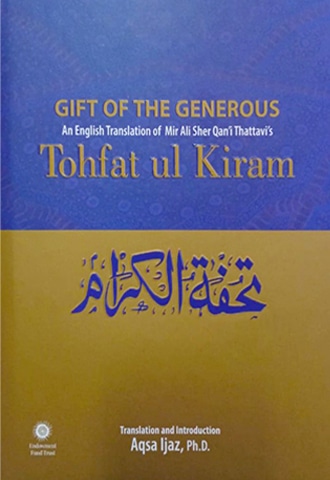
Gift of the Generous: An English Translation of Mir Ali Sher Qani Thattavi’s
Tohfat ul Kiram
By Mir Ali Sher Qani
Translated by Aqsa Ijaz
Endowment Fund Trust
ISBN: 978-969-9860-55-3
344pp.
The publication of a translation of Mir Ali Sher Qani Thattavi’s Tohfat ul Kiram represents a pivotal contribution to historical scholarship, precisely translating a masterpiece that previously suffered from limited accessibility due to its original Persian form.
This comprehensive English edition, by renowned scholar Aqsa Ijaz, is a culmination of various manuscripts and has been spearheaded by the Endowment Fund Trust (EFT) for the preservation of the heritage of Sindh, recognising the profound importance of safeguarding and disseminating Sindh’s rich literary legacy to a broader, global, English-speaking audience.
The original Tohfat ul Kiram — completed in 1767 — is intricately structured into three distinct volumes: the initial volume provides detailed accounts of prophets, rulers, caliphs, nobles and Muslim sultans. The second volume, known as Haft Aqlm, delves into a profound discussion on the genesis of creation, the circumstances of nobles, the lives and times of various saints and the scholarly and literary endeavours of poets. The third volume is entirely dedicated to a comprehensive history of Sindh.
In 1957, the Sindhi Adabi Board translated its third volume into Sindhi and Urdu, to preserve the literary heritage of Sindh. Gift of the Generous is an English translation of the book’s third volume. This contemporary English translation primarily concentrates on the historical and cultural narratives directly pertinent to Sindh, thoughtfully categorised into two principal parts.
An English translation of an almost 260-year-old classic offers profound insights into the intricate historical trajectory of Sindh
Part one accurately traces the trajectory of Islamic political rule in Sindh, commencing from the Rai dynasty and extending through the Kalhora rule, encompassing the intricate battles for the throne, the exile or surrender of local leaderships, and profound transformations in both architectural and folkloric history.
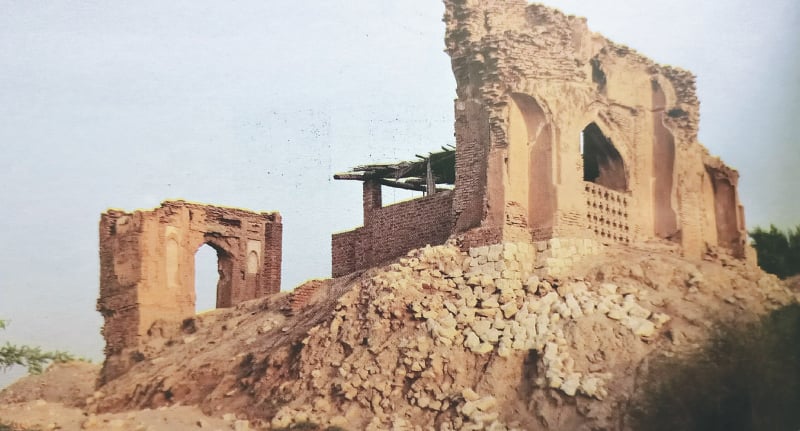
Part two, in contrast, delves into the spiritual histories of Sindh’s prominent cities, towns and locally administered regions, shedding light on influential nobles from significant locations such as Multan, Uch, Mau, Mathila, Sethpur, Bakhar, Sevestan, Hala Kandi, Bathora, Kakralah, Matiari, Nairoon Kot, Ganja Teela, Satiyar, Palichar, Sagra River and its surroundings, while even discussing the buried elders in historical sites such as Sonda, Kenjhar, Samui and Makli Hills.
A paramount strength of this English translation lies in the invaluable inclusion of scholarly notes by esteemed figures such as Syed Hussamuddin Rashdi, Dr Nabi Bux Khan Baloch and Akhtar Rizvi. These meticulously integrated annotations offer a crucial comparative perspective, adeptly addressing potential ambiguities and filling historical gaps that may have been present in earlier translated renditions of Qani’s work.
Furthermore, the translator`s own insightful explanations, precise corrections and supplementary notes collectively enhance the clarity of event-based realities, thereby providing a more accurate and nuanced understanding of Sindh’s intricate identity.
However, it is to be noted that a few arguments and certain historical facts presented in the exordium may not entirely align with the precise contextual realities of the region, which the text itself refers to as a form of “delusion” in some instances.
The book capably highlights the dynamic and evolving political structure of the ruling dynasties in monarchical succession, abdication, chosen succession, or usurpation. Pivotal historical moments, including Chach’s (the father of Raja Dahir and founder of the Chach Dynasty) significant entry into the Rai dynasty and Muhammad bin Qasim’s arrival during the Brahman Dynasty, are presented as transformative shifts that profoundly impacted Sindh’s socio-cultural and political landscape.
The subsequent conflicts, particularly between Chach’s successors and the Arabs, underscore Sindh’s adaptive capacity to dominant narratives, transitioning from religious to literary and linguistic ideas.
The development of the folktale of Sassi Punnu during the Umayyad rule is recognised as a major milestone in Sindh’s folkloric genre, showcasing universal themes of love, resistance and devotion. The explanation further chronicles a series of power shifts, beginning with the Abbasid governors overthrowing the Umayyads, followed by the Ghaznavids.
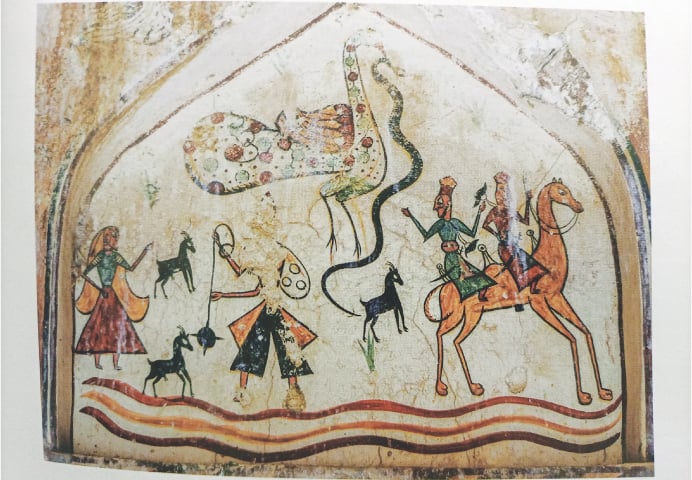
The subsequent periods of Soomra and Samma rule in Sindh are depicted as initiating a new and significant chapter in Sindh’s oral and literary history, enriching it with detailed accounts of local rulers and enduring folktales that remain a vital part of modern-day oral and literary traditions.
The recurring motif of external forces, whether from Khurasan or the Mughals, consistently attempting to capture Sindh, unequivocally highlights the region’s historical resilience and the persistent imposition of foreign cultures. This continuous struggle for power, frequently culminating in conflict and subsequent migration, emerges as a central and defining thread throughout Sindh’s history, which has been documented meticulously in this book.
To conclude, Gift of the Generous stands as an extensive and invaluable accumulation of knowledge, offering profound insights into the ancestral lifestyle and intricate historical trajectory of Sindh. This well-executed English translation should not only benefit academic scholars but also provide accessible and enriching information for a broader global audience, thereby fostering a deeper and more nuanced understanding of a region richly endowed with history and culture.
The very availability of this monumental work in English signifies a momentous step in universally sharing Sindh’s distinctive and compelling heritage.
The reviewer is an anthologist and researcher.
He can be reached via email at adilmir@anth.qau.edu.pk
Published in Dawn, Books & Authors, September 21st, 2025