ISLAMABAD, Feb 6: Critically ill patients often need to be put on a ventilator to maintain their breathing, but the state-run hospitals in the city are woefully short of the vital machines - to the grief of unlucky patients and their relatives.
On paper the Pakistan Institute of Medical Sciences (Pims) may have 50 ventilators in its intensive care units but 22 of them are of no use. They are dysfunctional - ‘out of order’ in the words of the hospital’s staff.
The situation is no better in the Polyclinic, the second biggest hospital in the public sector.
It has seven ventilators but only three are available to common patients as the other four are hitched to patients with infections and the equipment will have to be sterilised before it could be assigned to others.
Essentially, the ventilator is a machine designed to move breathable air in and out of the lungs of a patient who is physically unable to breathe, or is breathing insufficiently.
These sophisticated machines are mostly used in ICUs.
“Usually a ventilator is unhitched only after the patient dies. It is a harsh fact that only one in 20 patients put on ventilator recovers,” said a doctor.
A medical officer of Pims, requesting not to be identified, said that on the average a patient remains on the ventilator for 20 days when five to eight patients are brought every day to the hospital by families demanding the ventilator facility.
“We have asked the management many times to get the dysfunctional ventilators repaired but no one seems willing to resolve the problem,” he said.
A request for 30 ventilators was sent to the Planning Commission at the beginning of the current financial year. It did not reject the request but linked its approval to availability of funds.
“It seems our rulers have no money for the needs of the people.
Every week four to six patients die for want of a ventilator,” said the Pims officer, noting that one ventilator in the hospital is always kept in reserve for the president and prime minister of the country.
On the other the KRL Hospital has three ventilators and employees of KRL have a priority claim on one of them.
It is not that government leaders are not aware of the problem of ventilators.
Last year Chairman Senate Syed Nayyar Hussain Bukhari referred a patient to Pims to put on a ventilator but Pims had none free.
Angered, the chairman summoned the Executive Director of Pims Riaz Ahmed Warraich to explain the lapse.
Mohammad Naeem, a citizen, narrated the woes of his old, diabetic mother-in-law who fainted during a visit to the CDA Hospital for a radiological test of stomach.
“Doctors applied oxygen to her but said she should be put on a ventilator. The ventilator in the hospital was occupied so I took her to Polyclinic and Pims but both refused to admit her. Neither the three expensive private hospitals I turned to in desperation had any ventilator free for her,” he told Dawn.
“The next day a private hospital in F-10 informed me they had a ventilator available and we shifted her there. But the expenses are beyond me and I have been inquiring, hoping and praying to get her the facility at Pims or the Polyclinic.”
In the opinion of Pims’ neurosurgeon Dr. Khaliq-uz-Zaman the poor woman’s sugar level might have gone down due to some medication and put her in deep coma. Her chances of recovery lie in putting her on ventilator for 15 days, he said.
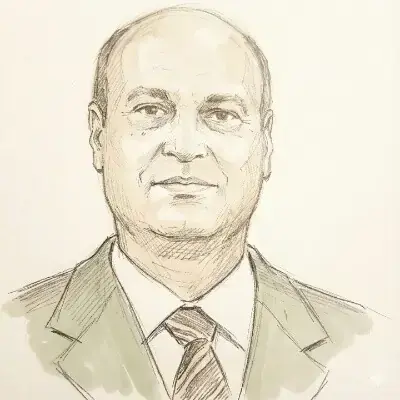
Pims Executive Director Dr Riaz Ahmed Warraich admits that unavailability of ventilator has become a big problem for the hospital’s management.
“We have asked for 30 more ventilators but have not received funds for them. As for spending money on repairing the 22 broken ventilators, it is preferable to buy new ones,” he told Dawn.
“We do not charge any fee for ventilators so people come to us for the facility. Even 200 ventilators would be insufficient in the situation - and you can imagine the sort of money required when one ventilator costs Rs2.5 million,” he said.