The situation in Sindh is grim after the recent passage of the Sindh People’s Local Government Act 2012 by the provincial assembly. Differences over the law have pitted the ruling Pakistan People’s Party against nationalist parties and other opponents of the law in the province.
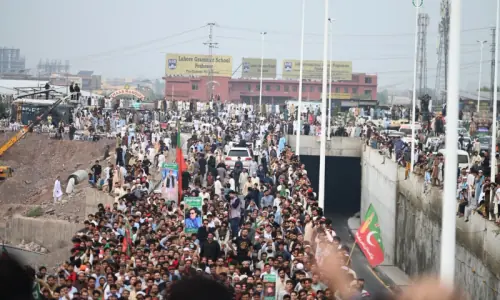
Both supporters and detractors of the new law have tried to demonstrate their political strength by staging public meetings. The PPP – considered the most popular party in Sindh – held a rally in Hyderabad on Oct 15 while the Sindh Bachayo Committee (SBC), a grouping of forces opposed to the local government law, and its component parties also staged similar shows.
The law, which envisages six powerful metropolitan corporations, has been reportedly passed to appease the Muttahida Qaumi Movement. It is believed that the MQM, an important ally of the PPP, wanted more powers in Karachi and Hyderabad. However, it has been opposed by many Sindhi leaders who term it a ‘dual system’ which may deepen the ethnic divide in Sindh. They have apprehensions that mayors of the two cities will be given the same powers as enjoyed by a chief minister.
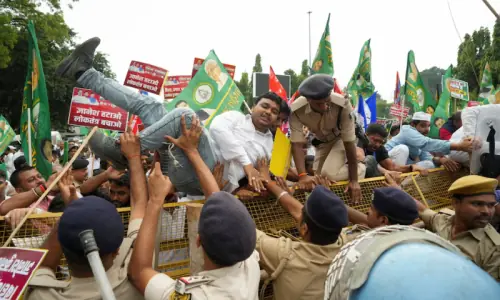
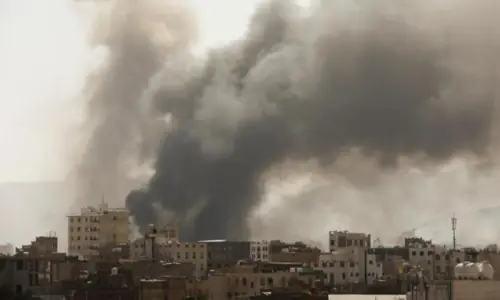
Protests started on Oct 1 when the controversial bill was adopted by the Sindh Assembly without considering the objections raised by the PPP’s estranged allies in the house. The protests turned violent when gunmen opened fire on a PPP rally in Khairpur killing several people and improvised explosive devices were left outside the houses of PPP’s ministers and MPAs.
Some observers say People’s Party’s mandate in Sindh has suffered a setback.
In order to counter growing opposition to the new law, the PPP showed its political strength by holding the public meeting in Hyderabad on Oct 15. Some political pundits, however, termed holding the rally another PPP blunder after the passage of the local government law, claiming that the party’s stance on the new law was against popular opinion. The law has been opposed not only by the nationalists but also by writers, intellectuals and common people.
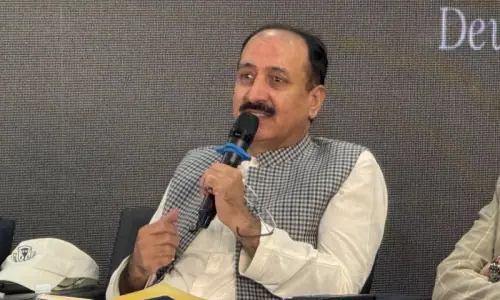
Jalal Mehmood Shah, head of the Sindh United Party and convener of the SBC, says people have rejected the local government law and rulers should respect public opinion and withdraw it. Awami Tehrik’s Ayaz Latif Palejo believes the law insults the sentiments of people. Riaz Chandio of the Jeay Sindh Mahaz also opposes the new law.
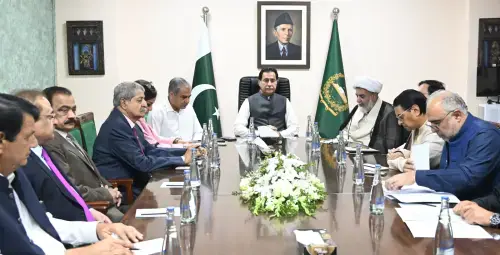
Although a PPP core committee’s meeting presided over by President Asif Ali Zardari decided to hold talks with the estranged allies and nationalists. However, so far neither has the PPP approached the protesting parties nor has a conducive environment been created for talks.
Nationalists are not ready to hold any talks till the law is withdrawn. The situation is worsening because provocative statements are being issued from both sides.
Saner elements are trying to find a middle path. They say the MQM can help the PPP get out of hot water by accommodating Sindhi people’s viewpoint on the new law.
Barrister Zameer Ghumro, an SBC member, suggests that by altering three sections and one schedule this ‘divide’ can be bridged, provided the MQM gives up its ‘obstinacy’.
Uncertainty in Sindh continues as a popular party and the popular discourse are in conflict with each other. How can this clash between the two be averted?
Jami Chandio, a writer, says an alternative political party is an ideal solution but he thinks that in the present case such an idea cannot be implemented. A broad-based forum modelled along the lines of the Palestine Liberation Organisation or African National Congress can fill the gap for a transition period, but this seems too idealistic, as for one the nationalists themselves have failed to resolve differences among themselves. However, the Anti-One Unit Movement, when people had created an alternative leadership, may serve as a model that can be emulated to deal with the prevailing crisis.