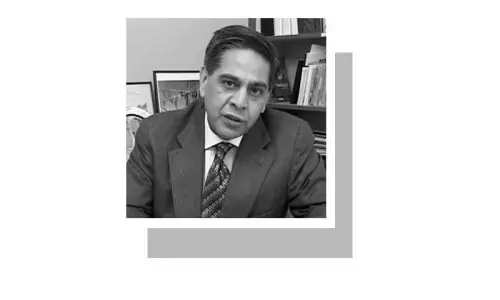
Mahnaz Rahman, resident director of Aurat Foundation, Karachi, explains the impact of women-friendly laws to Moniza Inam. Following are the excerpts from the interview
Could you explain how the women’s movement and the legislation process have fared through the decades?
At the time of Pakistan’s inception, our leadership was relatively more progressive, enlightened and committed to the ideals of democracy and egalitarianism. This tolerant and free nation state which our founding fathers envisioned failed to materialise following the premature death of Quaid-i-Azam, which gave way to a vacuum in the political leadership. Theocratic and religious fractions filled this void by politicising legal and bureaucratic institutions, to not only further their own political power, but also to impose their ideological dogmas upon others. Ironically enough, some of the fanatics were against the idea of a separate Muslim state and had dubbed the Quaid-i-Azam as Kafir-i-Azam and Pakistan as Ahmaqistan.
Mr Jinnah's reputation as a progressive proponent of gender equality was well-known. To contribute to the cause of women empowerment, he took Fatima Jinnah to every public event and once left a meeting when people objected to her presence. In the early decades, there was ample space for women in the public arena. Begum Rana Liaquat Ali Khan formed Apwa and there was the National Guard Scheme in which military training was imparted to women—though later it was scrapped due to public pressure. Female volunteers also helped the government in relief work for refugees.
Coming to the first and major progressive legislation, it was the Muslim Family Laws Ordinance (MFLO) in 1961 and its primary aim was to discourage polygamy and regulate divorce. It was hailed by women activists across the country. In the ’70s women were given representation in the assemblies and in 1975 UN celebrated the International Women Year and Islamabad actively participated in it. At that time our society was open, tolerant and creative and there was more room for dissent and debate. This was in sharp contrast to Zia's regime, which turned out to be the darkest period for women in Pakistan.
With the promulgation of Hudood Ordinances in 1981, jails were suddenly full of women and the rest, as they say, is history. In the following three decades, women rights movement made efforts to change these oppressive laws which negate even the basic human rights principles, but with little success. There are, to an extent, some bright spots as the recent promulgation of some pro-women laws shows. The last seven years (2004-11) are monumental in the context of legislative upsurge and it has been achieved through a joint struggle of women rights activists, women in political parties and successive governments.
What positive change will the promulgation of such laws bring to women’s lives?
I have a firm belief that societies continue to move forward not backwards as this is the cycle of history and it only goes ahead. On the same note, we, as a nation, have abandoned Ijtehad which is an important principle of Islam. There are some elements that are averse to it and they encouraged Taqleed which suits them. Allama Iqbal also supported the idea of Ijtehad and while our media continues to play his poetry day in and day out, we fail to ever give any thought to his teachings.
What is the future strategy of the women’s movement and civil society?
Well, after the valiant struggle of many decades we believe that the catch lies in implementation. However, we also consider that the biggest hurdle is a lack of political will and the prevalence of a patriarchal mindset. Mere enactment of laws can’t change deeply entrenched attitudes and cultural practices which attract moral legitimacy in society. Time and Herculean efforts are needed to evoke gender sensitivity and consciousness in society at large.
Most importantly, we should not ignore that the discriminatory laws—read Hudood Ordinances—are still a part of our constitution and our fight will go on until the abrogation of all such laws which deprive women of their basic human and civil rights.