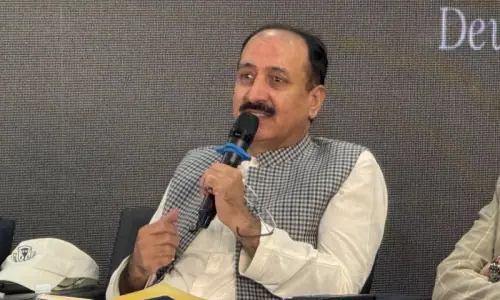
KARACHI, July 20: Fazl-e-Ali Naseer, a member on the managing committee of the Khoja Isna Asheri Jamaat disputes the notion that more people are dropping down from middle class into the ranks of the poor: “At least, that is not happening in my community”, he asserts.
And he may well be right, for the ‘Jamaat’ takes care of its members, literally, from cradle to grave. The community has constructed hospitals where medical care is subsidized; schools, that provide not just free education and books and uniforms, but also mid-day meals to the students. There are orphanages, benevolent funds, monthly ration shops, and even a well-maintained community graveyard — all catering to those in need.
The finances are raised in part by contributions from members but mainly from donations from philanthropist industrialists and businessmen. The ‘Jamaat’ has constructed several housing colonies for families without shelter. “Is it imaginable that a flat costing Rs1.2 million or more could be given out for free”, asks Fazl-e-Ali, adding, “But that is happening”. Such community support is a great advantage. With no worries about rent, education and healthcare, the people in the community can spend more on non-essentials and even save and invest.
Fazl-e-Ali Naseer talks of years before sixties when majority of the community members who had migrated from India, lived in shanty localities. As their children grew up and were educated through community support, they could land better jobs, so that examples abound of families, who have risen out of poverty into higher middle class: One that can afford a nice flat, good education for their children, all modern day amenities including a car.
But such support system is prevalent in only a few well-knit communities, and predominantly in big cities, especially Karachi. Bohras, take care of their members and so do the Ismailies. The latter expect their members to do the maximum for themselves, but help is available in distress cases. Subsidized healthcare and education is available. The community also has a good number of two income people, where both husband and wife work. Such community support programmes also include arranging for marriages and dowry for the bride in case the family is unable to do so. Even the Memon community have low-cost dispensaries, educational institutions and other projects for the welfare of its members. Fazl-e-Ali Naseer ponders for a while, before admitting: “Without the help of the ‘Jamaat’, it is possible that more people may have been among the poor then in the middle class...and perhaps there may have been a beggar or two on the streets — which thank God there are none”. — DH