KOH KONG (Cambodia): A new bridge linking southern Cambodia to Thailand is promising to transform the lives of tens of thousands of villagers once dependent on marijuana plantations and organised crime.
Known for years as Cambodia’s “Wild West”, a haven for drug deals, human-trafficking and prostitution, the province of Koh Kong is on the brink of a new era, provincial officials say.
But many experts fear improved transport links will benefit international criminal syndicates as much as the community.
Until the late 1990s, the provincial capital of Koh Kong on the southwest tip of Cambodia’s coast with Thailand was a paradise for gun-toting gangsters, a hub for the multi-million dollar illegal logging industry and a production zone for some of Asia’s finest quality marijuana, grown in staggering quantities.
Now, after several years of anti-logging campaigns and drug crackdowns, Koh Kong is trying to rebuild a friendlier image and steer the economy away from the black market.
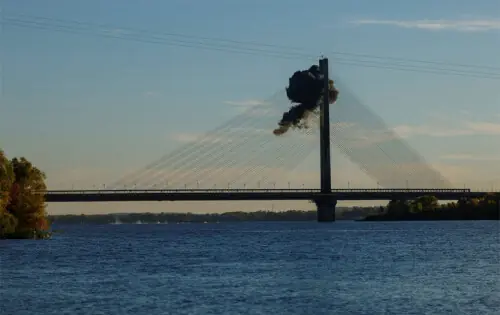
The new bridge opened in April spans a two kilometre bay separating Koh Kong town from Thailand’s southern Trat province to the west.
The bridge is the first land link with the Thai province and construction is underway on a road connecting Koh Kong to the Cambodian capital Phnom Penh.
Hopes are the bridge will increase tourism and trade from Thailand, and give the once infamous Cambodian coastal town the facelift it is seeking.
But it could also lead to a resurgence of organised crime.
CANNABIS CASH CROP: Roads to Koh Kong were cut in the 1970s by communist Khmer Rouge rebels, and, until earlier this year the province — just 175 kms southwest of the capital Phnom Penh — was only accessible by boat.
Virtually isolated, the “island” province and its estimated 130,000 population were easy prey for the gangsters.
Slipping just a few kilometres across the Thai border, criminals found fertile ground in Cambodia to grow marijuana, traffic women and children and chop down hardwood forests.
Drug lords gave farmers tools, seeds and fertilizer to grow cannabis in big jungle plantations. At harvest time they would buy the crop back from farmers, Yuth Phouthang said.
BRIDGE TO THE FUTURE: Sok Siphana, a senior commerce ministry official in Phnom Penh, believes the Koh Kong bridge will also be a key link in connecting Vietnam and Thailand by road.
If Cambodia has its way, goods now transported by sea between Thailand and Vietnam will one day pass by road through Cambodia.—Reuters