India's move to withdraw high-value rupee bills from circulation to crack down on corruption and counterfeit currency has hurt rural women particularly hard, as most of them are outside the banking system, activists said.
The shock currency move cancelling 500 and 1,000-rupee notes from circulation overnight, announced by Prime Minister Narendra Modi last week, aims to bring billions of dollars worth of unaccounted wealth, or "black money", into the mainstream economy and check corruption.
But it has also curbed consumption, hurt the agriculture and real estate sectors, and triggered long lines at banks and ATMs as people wait to deposit cash, withdraw money and exchange old notes. At least a dozen people are reported to have died while standing in queues across the country.
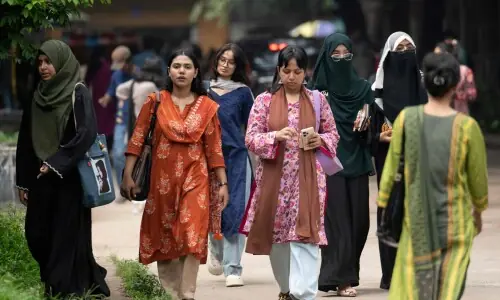
The move has had a disproportionate impact on women, more than three-quarters of whom are outside the banking system. Daily labourers and informal workers, who tend to save their money in cash, have also been hurt, activists said.
"The impact on such women is disastrous; they are facing a severe financial crisis," said Kiran Moghe, national joint secretary of the All India Democratic Women's Association.
"Women in villages and in tribal areas use only cash, and they scrimp and save to put aside money. Now they cannot even buy daily necessities," she told the Thomson Reuters Foundation.
Women often put aside money without the knowledge of their husbands, building a nest egg for themselves and their children, and as a safety net for emergencies, Moghe said.
These women do not have bank accounts as they do not have the minimum amount required, or because their husbands have an account, or because they lack the necessary documentation, according to a World Bank study of rural Jharkhand state.
Demonetisation will hurt India's informal sector workers, numbering about 482 million, who earn cash incomes, according to consulting firm Deloitte.
In Mumbai's red-light district of Kamathipura, commercial sex workers who get paid in cash have had to settle for smaller payments and rely on brothel owners to exchange their money, leaving them vulnerable to further exploitation, said Manju Vyas, director at Apne Aap Women's Collective.
'Sacrificing their own needs'
While banks are exchanging old notes for new, making the trip to a bank may involve seeking permission from the husband or employer, the loss of a daily wage and perhaps the loss of the nest egg itself, Moghe said.
"This is not black money - it's their hard-earned money, put aside with a great deal of sacrifice. Now suddenly, they are left with useless notes," she said.
In villages, daily-wage workers are out of work or are not being paid on time, said Lalit Babur, who works with an agriculture co-operative in Sangola in Maharashtra state.
"The women are often the last priority for employers, so they are suffering more," he said by phone.
"Yet it is the woman's responsibility to feed the family. They are doing so by sacrificing their own needs," he said.
Not everyone is critical of the currency move. Nobel laureate Kailash Satyarthi has welcomed the action, saying it would also help curb human trafficking and child slavery.
But for women in India's villages and for migrant workers who do not have bank accounts, it may take a while to recover, Moghe said.
"This sort of a blow can have a long-term impact on the women. Nothing has prepared them for something like this," she said.