Amnesty terms Section 144 a draconian law, calls for release of all PTI workers

Amnesty International on Monday urged Pakistan government to immediately release hundreds of Pakistan Tehreek-i-Insaf's (PTI) activists and asked that people be allowed to exercise their right to peaceful assembly.
The human rights watchdog also declared the crackdown as violation of right to freedom of expression and peaceful assembly.
"There is no justification for this repressive crackdown. Pakistan’s constitution guarantees people the rights to freedom of assembly, expression and movement," said Director Amnesty International South Asia Champa Patel in a statement released on Monday.
"The authorities should immediately and unconditionally release all the people arrested solely for exercising their rights and allow them to protest peacefully," Patel said.
Amnesty termed the Section 144 of the Pakistan Penal Code (PPC) as a "draconian colonial-era law".
Section 144 forbids the gathering of more than four people at any public place.
"Section 144 is a draconian colonial-era law that clearly has no place in a rights-respecting society. It should never be used to unduly restrict the right to freedom of peaceful assembly and needs to be repealed," the statement added.
Amnesty in its statement had added that in case of violence, it is the responsibility of the state to identify responsible people rather than using the law to suppress the rights of the majority.
“If sporadic incidents of violence occur, the authorities should identify the responsible people. Using the violent acts of a few as a pretext to restrict or impede the rights of a majority is in clear violation of Pakistan’s obligations under international law,” read the statement.
Champa Patel also showed concern over threats to journalists demanding favourable coverage.
“Journalists and human rights defenders play an important role during protests. All media workers covering the protests should be allowed to do their jobs freely and without fear of attacks or intimidation,” said Champa Patel.
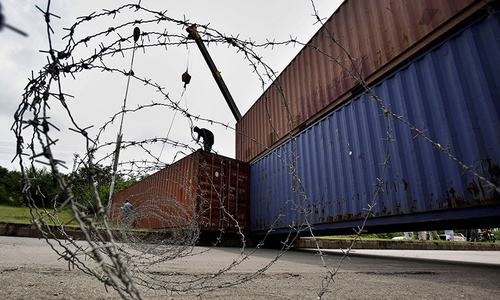
Human rights watch's call came as the government had intensified their crackdown on supporters of PTI by using excessive force. Police used tear gas and rubber bullets against protesters who were trying to march towards the country's capital to demand accountability after Panama papers leak.
Since last week, the government has arrested several party members, including parliamentarians en route to Islamabad to mount a protest against the sitting government of Prime Minister Nawaz Sharif. The protests are expected to intesify on November 2.