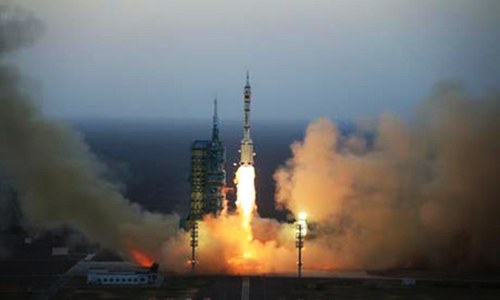
Pakistan's permanent representative to the United Nations (UN) in Geneva Ambassador Tehmina Janjua has called for steps to prevent the weaponisation of outer-space, saying it would adversely affect regional and international peace and security.
"Weaponisation of outer space is not science fiction anymore," Janjua told the UN General Assembly's Disarmament and International Security Committee on Wednesday.
"With the ever growing use of outer space by an increasing number of states, both for civilian and military purposes, the potential and the risk of its weaponisation cannot be ruled out," she said during a debate on Outer Space matters.
“Weapons in space would lead to instability, and negatively affect international and regional peace and security," the envoy added.
The 1967 Outer Space Treaty prohibited the placement of nuclear weapons and other weapons of mass destruction (WMDs) in outer space, she said, while pointing out that it does not cover the placement of other types of weapons including conventional weapons.
Concerned about the negative implications of the development and deployment of anti-ballistic missile defence systems and the pursuit of related advanced military technologies, Ambassador Janjua said those weapons were destabilising and could have wide reaching implications for regional and international security.
"The effects of the introduction of such systems can be destabilising for sensitive regions like South Asia," the envoy said, adding that all those concerns needed to be addressed in a legally binding treaty.
It was essential to redouble efforts toward an agreement that addresses the development, deployment and proliferation of such systems, she said, noting that Pakistan was the co-sponsor of two draft resolutions on the prevention of an arms race in outer space and on no-first-placement of arms in outer space.
The envoy pointed out that space was no longer considered an exclusive preserve of a few developed states.
"Today developing countries, including my country, are tapping into space technology in diverse areas ranging from meteorology and disaster management to economy and telecommunications," she said, adding, "Their reliance on space technology will grow further in the years to come."
"The dominance enjoyed by certain countries in outer space owing to their current technological prowess, therefore, cannot last forever," Ambassador Janjua said.
"And this time," she added, "the developing countries will neither carry the burden of non-proliferation, nor will they accept any discriminatory restrictions which hamper their peaceful pursuits in outer space."