JERUSALEM: Israeli and Turkish leaders on Monday lauded a deal reached at the weekend to restore ties after six years of acrimony over a deadly raid on a Gaza-bound aid flotilla.
Prime Minister Benjamin Netanyahu stressed Israel's maritime blockade of the Hamas-run Gaza Strip would remain after the agreement, though Turkey obtained aid concessions for the Palestinian enclave.
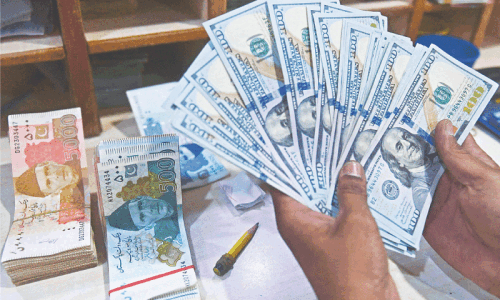
His Turkish counterpart Binali Yildirim said that “to this end, our first ship loaded with over 10,000 tonnes of humanitarian aid will leave for Israel's Ashdod port on Friday.” Yildirim also noted Israel's commitment to pay $20 million in compensation over the 2010 raid that killed 10 Turkish activists, in exchange for all claims against Israeli soldiers being dropped.
Netanyahu pointed to the economic benefits for Israel, with his country in search of regional customers for gas exports and talk of a potential pipeline to Turkey.
Speaking in Rome after meeting US Secretary of State John Kerry, Netanyahu described the agreement as having “immense implications for the Israeli economy”.
“I mean positive, immense implications,” he said.
Kerry also hailed the deal as a “positive step”, while UN chief Ban Ki-moon, on a visit to Israel and the Palestinian territories, called it a “hopeful signal for the stability of the region”.
Turkish President Recep Tayyip Erdogan and Palestinian president Mahmud Abbas spoke by phone overnight, with the Turkish leader explaining the agreement's main points, a statement from the Palestinian presidency said.
Erdogan also met with Doha-based Hamas leader Khaled Meshaal on Friday in anticipation of the agreement.
After the deal is signed on Tuesday, the approval process will start in both countries, and the Turkish premier said Ankara would appoint an ambassador to Tel Aviv within weeks.