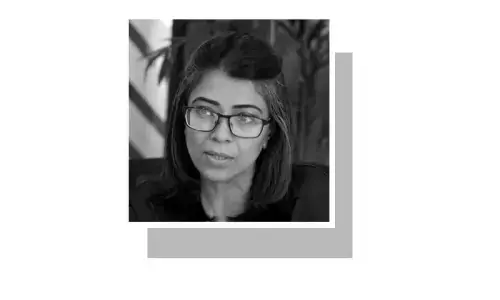
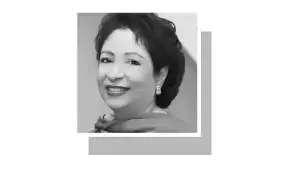
EIGHT years ago, a young woman from Khairo Dero (Larkana district) was so touched by the plight of her people that she decided to work for their uplift.
She had been fortunate to receive a privileged education abroad, was doing a lucrative job and had all that one could wish for in life. Today, she has renounced these privileges to work for her people. .
Thus Naween Mangi set out on her journey of creating a model village for development in Khairo Dero.
She established the Ali Hasan Mangi Memorial Trust (AHMMT) in 2008 in memory of her grandfather, a populist politician of Sindh who didn’t allow the rough and tumble of politics to dim his love for his people. His humanist granddaughter took another route to work for a quiet revolution in the life of the 4,000 residents.
A memorial trust faces opposition from the powers that be.
With her understanding of economics, her sense of ownership of her culture and an abundance of compassion, Naween went about her work in a way that promised to be sustainable.
She has involved stakeholders fully in the project and has mobilised them and created a lot of enthusiasm and awareness in her community. She herself lives mostly in Khairo Dero and keeps a low profile. Her projects run on a shoestring budget with funds being raised from family and friends. Above all, she is mindful of the dignity and self-esteem of her people.
Has there been a change? Certainly. Most importantly, all the 1,200 or so children of schoolgoing age there are now enrolled in one of the seven institutions adopted or facilitated by the AHMMT. Over 400 women and men have been through the adult literacy programme.
These figures indicate progress on the education front, which, in turn, promises a brighter future.
In the health sector, the progress is even better. The village had no health facility previously. Now it has a small clinic which provides treatment and free medicines to about 200 people every week. Since 2010, over 4,500 people have received healthcare in one way or another, and treatment has also included cataract surgery for 47 people and 12 heart surgeries.
The home improvement programme has benefited 343 families out of 450. Many were provided house-building material with technical advice, gas connections and water pumps. Over 100 women have benefited from the micro loan and business support loan programmes.
At this rate, the AHMMT should be well on its way to becoming a model trust. Unfortunately, this is not the case because of the hurdles being encountered.
Perween Rahman, an iconic development worker, called it the ‘mindset’ problem that she found the most difficult to change. Naween elucidates further. All her staff is from the village. They have grown up together and have been trained by her. But no one has worked before in a professional environment.
Hence they cannot fit into the institutional structure and envisage themselves reporting to someone appointed in a senior position who they have always regarded as their equal. This leads to petty jealousies as they vie to win her attention.
Many leave in a huff even when no serious issues are involved. Emotional outbursts have become a serious obstacle in the process of institution-building and this has been her “greatest anxiety from day one”. She attributes the problem to an absence of a sense of ownership of and drive for the project, though she is constantly reminding the residents that what they are creating is their own. Yet she is hopeful of creating “systems and mechanisms” so that the project becomes sustainable.
I share her hope because on a visit to Khairo Dero I was impressed by the sense of commitment of the people I met. Besides, eight years are nothing in the life of an institution. And there are no insecurities of the kind that haunt many founders of institutions.
The real problem I feel is the opposition and harassment from the powers that be. Unbelievable though it may seem, but there are exploiters in positions of power and influence who do not want the underprivileged to be uplifted. They have threatened Naween, driven her out of her three-room accommodation forcing her to move to the community centre where she has to brave insect bites and pollution as it is located outside the developed area of the village.
They have demonstrated their power by preventing an FIR being registered by the police. It was only when others with clout stepped in on her behalf that the harassment stopped.
We lost Perween Rahman whose life was snuffed out by vested interests three years ago. Civil society can no longer afford to be complacent. It needs to raise its voice and not allow yet another brave development worker, a friend of the poor, to be silenced by ruthless power-hungry and greedy elements.
Published in Dawn, April 29th, 2016