ISLAMABAD: Pakistanis appear to be convinced that India will not make it to the Nuclear Suppliers Group (NSG), despite having the support of the United States, and are relying on China to this end.
Pakistan’s former permanent representative at the United Nations in Geneva and envoy at the Conference on Disarmament said on Wednesday that the “chances of India gaining entry into NSG are virtually nil”.
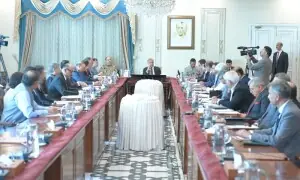
Ambassador Zamir Akram was speaking at a conference on the International Nuclear Order, organised by the Strategic Vision Institute and Konrad Adenauer Stiftung.
This is the second time in a month that a senior official involved in the country’s nuclear affairs has dismissed India’s chances. At a conference late last month adviser to the National Command Authority, retired Lt Gen Khalid Kidwai, had said: “We also have friends in NSG who would not let it happen.”
Mr Akram opined that China would not allow India to enter the coveted group because this would affect its nuclear cooperation with Pakistan. He said China is committed to ensuring that both India and Pakistan gain membership at the same time.
Other than China, he said there are some countries that are upset by the “double standards” being shown in India’s case, and are calling for an approach based on criteria.
The situation is reminiscent of 2008, when India received a country-specific safeguards agreement at the International Atomic Energy Agency (IAEA), which paved the way for exemptions from the NSG for nuclear trade with India, despite the fact that it is not a signatory of the Nuclear Non-Proliferation Treaty.
On that occasion, both China and Pakistan initially indicated their opposition to an India-specific agreement with the IAEA, but when Islamabad later succumbed to US pressure, Beijing too withdrew its objection.
Discussing the global nuclear order, Mr Akram said it had been destabilised by a number of factors, including the world powers’ double standards and discriminatory exemptions granted to India.
For a balanced nuclear order, Mr Akram suggested the resolution of political disputes, a reduction in the reliance on nuclear weapons for deterrence, dialogue between nuclear weapon states on disarmament or controlling or containing nuclear arsenals, ending discriminatory policies followed by the US and other Western countries, and commitment to not building any more destabilising weapons.
Former chairman of the Joint Chiefs of Staff Committee, Gen Ehsanul Haq, while inaugurating the conference asked Pakistani diplomats to demonstrate self-confidence “based on the legitimacy of our case and the credibility of our capabilities”.
Gen Ehsan also criticised the world nuclear order for being “highly discriminatory and obstructive”.
He said Pakistan’s nuclear programme would continue “no matter how adverse the environment, to provide us the credible deterrence against the existential threats we confront”.
SVI president Dr Zafar Iqbal Cheema, too, expressed disapproval of the nuclear order. He said the world powers were using the NPT and the Non-Proliferation Regime (NPR) for their political, strategic and foreign policy objectives, thereby diminishing their credibility.
He said Pakistan was a victim of the West’s discriminatory attitude. He said the Indo-US nuclear deal provides India with fissile material for 50 additional warheads every year by sparing local resources.
He said the proposed brackets for mainstreaming Pakistan in the nuclear order were tantamount to dismantling its deterrence capability.
At the conclusion of the seminar, the think tank recommended that the government continue challenging the discrimination faced by Pakistan and seek an equitable and inclusive regime in the transforming global nuclear order.
SVI also called for maintaining credible deterrence capability against India, and advised against compromising security for mainstreaming in the nuclear order.
Published in Dawn, April 14th, 2016