ISLAMABAD: Federal Minister for Planning and Development Ahsan Iqbal said on Thursday that the China-Pakistan Economic Corridor (CPEC) was a “fate-changer” project for people of Pakistan and the region, the latter having a population of three billion souls.
Speaking at a seminar on “The Promises of CPEC” organised by the Institute for Policy Reforms (IPR), he said that the project should not be politicised because it was beneficial for all provinces and regions of the country. Investment to be made in the CPEC projects would boost national economy and create synergies for sustained growth.
Also read-editorial: CPEC transparency
Mr Iqbal said that the CPEC would create a transformational impact on the region and even India would realise one day that the economic corridor offered it the shortest route to trade with China.
The Deputy Chief of the Mission at the Chinese Embassy, Zhao Lijian, reiterated the commitment of the Chinese government to the CPEC and said that the project would strengthen relations between his country and Pakistan.
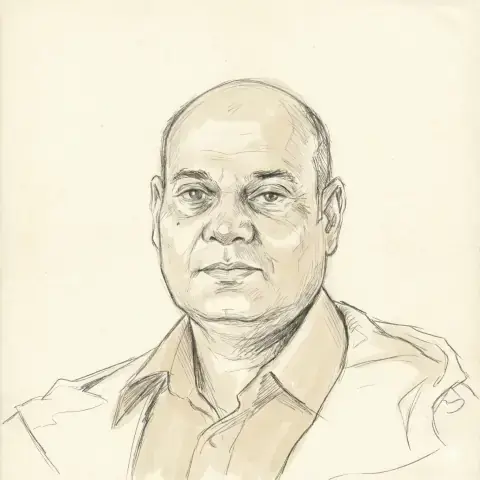
But IPR Chairman Humayun Akhtar Khan called for an in-depth debate on the CPEC and urged the government to elaborate upon project completion timelines, financing plan and implementation strategy.
Humayun Khan calls for an in-depth debate on the initiative
After the completion of the CPEC, he said, (new) connections between markets, within the country and with the region, would change the fundamentals of doing business in Pakistan and the region.
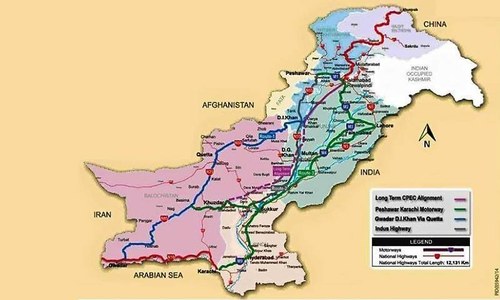
In an overview of the economic corridor, Ashraf Hayat, executive director of the IPR, said that it would connect a large number of countries through a complex network of roads, rails, ports and oil pipelines.
“A major share of $46 billion investment to be made in the CPEC will go to power projects to be undertaken by private sector,” he said.
He asked the government to explain how many of such projects had achieved financial close or were close to it.
“These projects should have been under construction by now if they are to become operational by 2018,” he added.
He raised questions over different aspects of the CPEC, including government plans to ensure sustainability of external debt obligations.
“By 2020, the CPEC will add $3bn to Pakistan’s already high debt repayment. With this addition, total repayment obligation will rise to $10bn,” he said.
Published in Dawn, December 18th, 2015