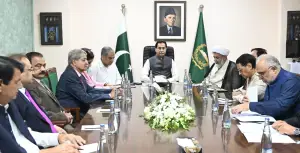
ISLAMABAD: Participants of a seminar at the launch of Uks’ ‘Gender Just Media Drive’ said on Wednesday that women are being portrayed as commodities in the mainstream media and on entertainment channels.
A short film screened at the event featured clippings from daily broadsheets and tabloids sensationalising women and focusing more on their physical appearance than on their actions.
It cited the example of Ayyan Ali, who has been popular with the media with regards to a money laundering case. However, her attire in court was discussed about more than her involvement in the case itself.
The film showed how the media also focused more on fashion and accessories when it comes to women in politics, as opposed to their work.
Practitioners say media’s commoditisation of women must end
Uks has also re-launched its Pakistani Women Media Complaint Cell (PWMCC) and called on viewers to play their roles as media monitors by informing the complaint cell about gender insensitive content. The cell will note the complaint and approach the media organisation in question.
In a survey of nine daily newspapers, 98 hours of electronic media and 686 advertisements in one week, the monitoring cell found a striking number of incidents of gender bias.
In one example, women were often shown in domestic roles – in the kitchen or cleaning up after their family members. In another, certain newspapers were shown to use the term ‘lady reporter’ in their bylines.
The seminar included several journalists.
The Daily Basharat’s Nasir Mehmood said: “You can already see some changes being made. The use of the word ashna (lover) has been banned by many newspapers and many other derogatory words that were once used to describe women are not in use anymore.”
Jehan Zeb from Radio Pakistan Hyderabad agreed with Mr Mehmood, and added that journalists would not use derogatory language towards women if they think of their own daughters.
Speakers agreed that bringing about these changes would be a long process. Shaista Yasmeen, the project coordinator, said the PWMCC aims to bring about these changes through a consultative process.
She said: “We want the people so involved in the cause that the media has no choice but to change the way they depict women.”
Anila Shaheen, a Channel 24 reporter from Peshawar, praised the fact that this discussion was taking place.
“Criticising others is easy,” she said. “We have begun criticising ourselves and I can’t decide if this is a good or bad thing. Is this problem so big that we have to undertake measures against ourselves?”
National Commission on the Status of Women (NCSW) chairperson Khawar Mumtaz said that the commoditisation of women needs to end, and that media monitoring would soon become a permanent part of the NCSW.
“Change is not as effective if it is forced on people. You have to make people think about the issue,” she added.
One way to make people think, Kishwar Naheed – a women’s rights activist and renowned poet and writer – said is for women in the media to interact with young girls, especially in rural areas.
“Seeing you will encourage them and make them think about what they want to do with their lives,” she said.
Published in Dawn October 29th, 2015
On a mobile phone? Get the Dawn Mobile App: Apple Store | Google Play